


Franz Haas
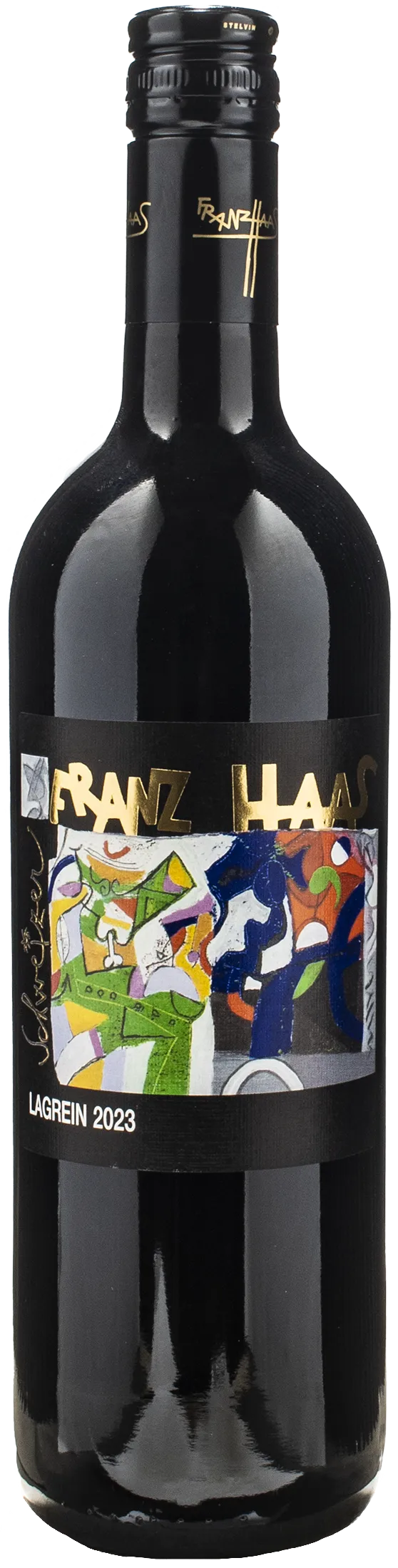
Lagrein 2023
| Denomination | DOC Alto Adige Lagrein |
|---|---|
| Size | 0,75 l |
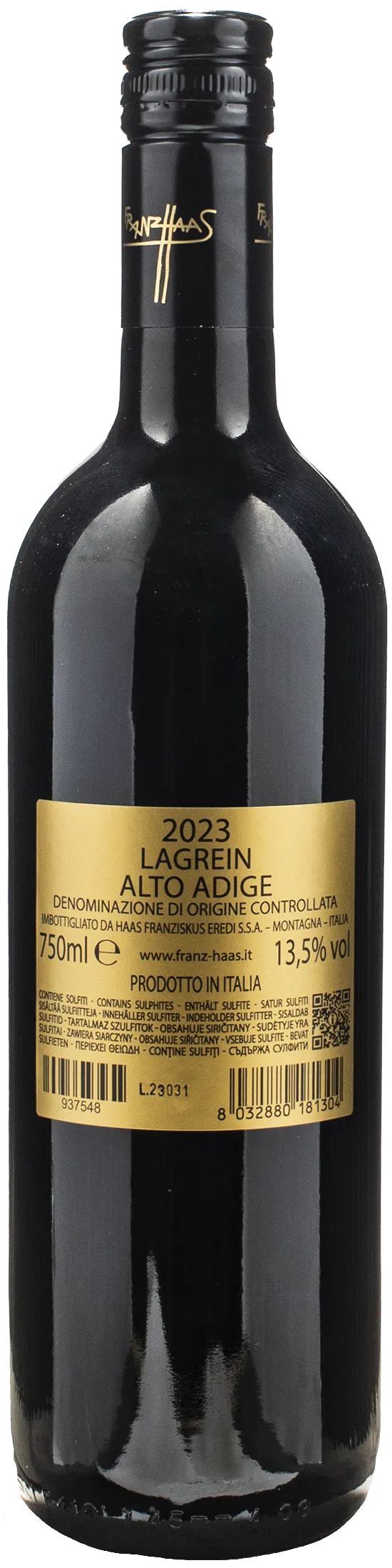
| Alcohol content | 13.5% by volume |
| Area | Trentino Alto Adige (Italy) |
| Grape varieties | 100% Lagrein |
| Aging | After fermentation, the wine is racked into tonneaux (larger oak casks) where malolactic fermentation and maturation take place for 10-12 months. Finally, bottle ageing of a few months follows. |
Description
Still red wine from Alto Adige, 13.5% ABV, produced by Franz Haas. 100% Lagrein, 2023 vintage. A wine born from the passion of a family that has been making wine for seven generations, constantly striving for perfection. Lagrein grows in sunny areas at altitudes ranging from 220 to 250 meters above sea level. Its bouquet is very intense and broad, ranging from ripe red fruits to violets, from spicy notes to fresh grass and cocoa. On the palate, the wine seduces with its bold personality, firm and velvety tannins, a pleasant fullness, and a long and enveloping finish.
Tasting notes

Perfume

Color

Taste
Serve at:
14 -16 °C
Longevity:
05 - 10 years
Decanting time:
1 hour
- Start up year: 1880
- Oenologist: Stefano Tiefenthaler
- Bottles produced: 450.000
- Hectares: 60
Franz Haas is not just a winery, it is not just a brand. Franz Haas is a man, a family who has been producing wine for seven generations, and for seven generations has put into its wines the same philosophy of life: the constant and endless pursuit of perfection. Each Franz Haas with his own touch and style.
According to Franz Haas, science and calculations are indeed necessary to obtain superb wines, but it is love, passion, and determination that are essential to give them character and complexity.
It takes art, the one you have in your blood, a loving creative genius, like the one of Franz Haas VII, who today leads the winery with his team. Read more


| Name | Franz Haas Lagrein 2023 |
|---|---|
| Type | Red still |
| Denomination | Alto Adige DOC |
| Vintage | 2023 |
| Size | 0,75 l |
| Alcohol content | 13.5% by volume |
| Grape varieties | 100% Lagrein |
| Country | Italy |
| Region | Trentino Alto Adige |
| Vendor | Franz Haas |
| Climate | Lagrein, one of South Tyrol's indigenous grape varieties, grows in sunny areas at altitudes ranging from 220 to 250 metres above sea level. Exposure: South and southwest. Thanks to this microclimate, Lagrein, as a late variety, reaches full maturity. |
| Soil composition | The warm, deep soil is of alluvial origin, with a high percentage of gravel. |
| Yield per hectare | 60 hl |
| Wine making | After careful selection in the vineyard, the grapes are gently destemmed and fermented in open vats. To avoid excessive tannin extraction, not too many pumpovers and fulling are carried out during vinification. |
| Aging | After fermentation, the wine is racked into tonneaux (larger oak casks) where malolactic fermentation and maturation take place for 10 2 months. Finally, bottle ageing of a few months follows. |
| Allergens | Contains sulphites |