


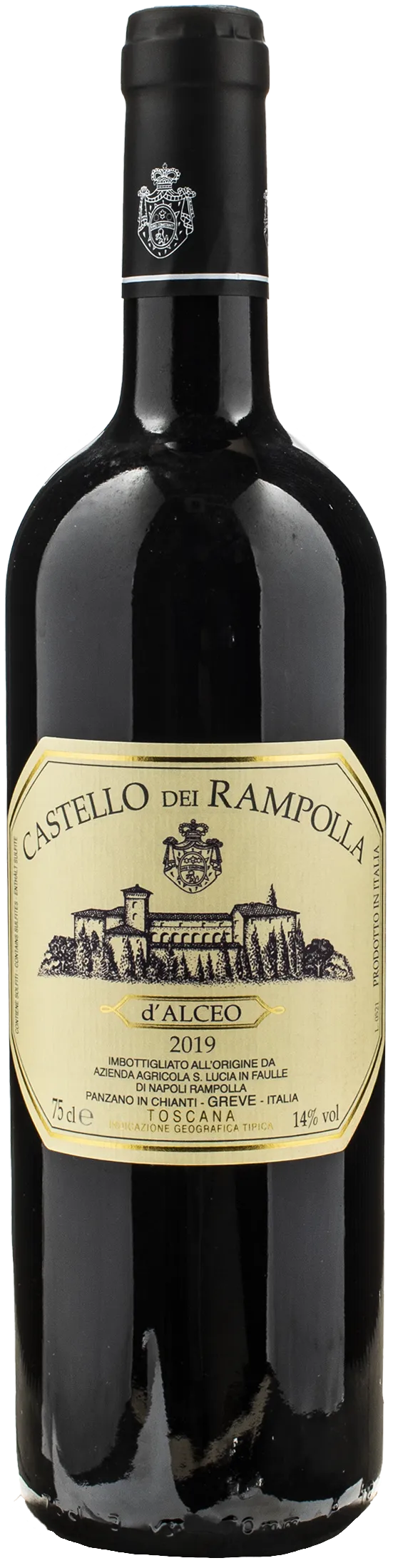
Castello dei Rampolla
Vigna d'Alceo 2019
Other years:
2020| Denomination | IGT Toscana |
|---|---|
| Size | 0,75 l |
| Alcohol content | 14.0% by volume |
| Area | Tuscany (Italy) |
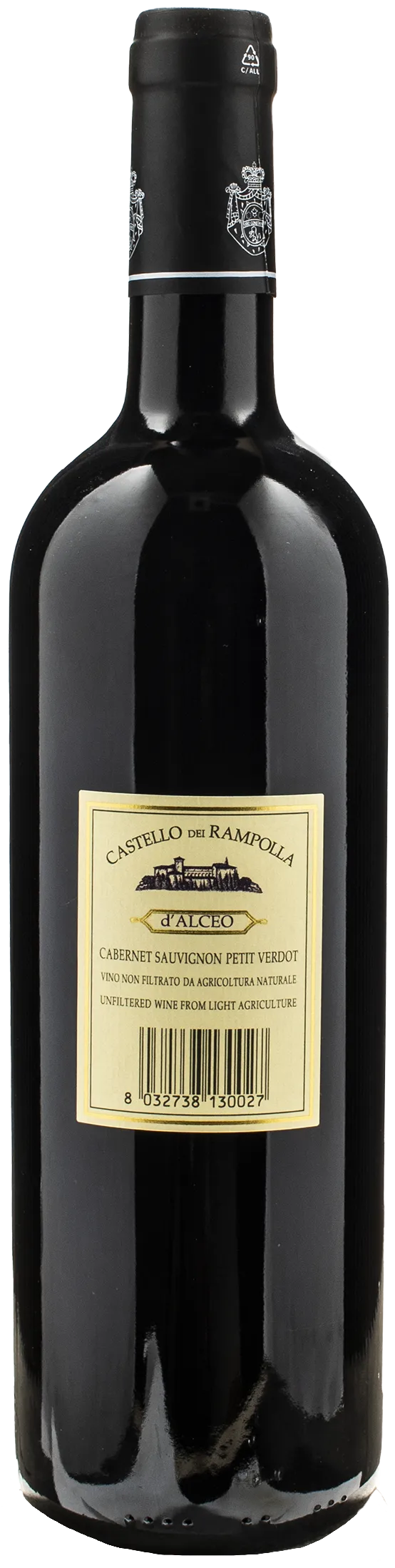
| Grape varieties | 85% Cabernet Sauvignon, 15% Petit Verdot |
| Aging | Aged in barriques for 20 months. |
| Other years | 2020 |
- Grape varieties: Rosso Toscana IGT, 85% Cabernet Sauvignon, 15% Petit Verdot
- Details: 2019 vintage from Panzano in Tuscany, 0.75 l size, 14% vol.
- Winemaking: Manual harvesting, fermentation in concrete or barriques, unfiltered wine
- Aromas: Black fruits, Mediterranean scrub, dark spices and mineral accents
- Palate: Austere, almond-like finish; 98 Parker points and 97 Vinous
Description
What type of wine it is
Vigna d'Alceo from Castello dei Rampolla is a still red wine with a Tuscan geographical indication, made from Cabernet Sauvignon and Petit Verdot grapes. In the glass, it presents with a ruby hue and releases an aromatic profile reminiscent of small black fruit jam, intertwined with notes of forest floor and dark spices. On the palate, the impact is austere and decidedly concentrated, supported by exuberant tannins that guide the sip towards a persistent almondy finish. On a technical level, the ageing process takes place in barriques or tonneaux and the liquid undergoes no filtration.
Where it comes from
The wine comes from vineyards located in Panzano, within the suggestive Conca d'Oro in Tuscany, where the vine roots sink into a peculiar limestone and rocky soil. The Di Napoli family has been carrying out wine production in this prestigious geographical area since 1964. Vigna d'Alceo was created in 1996 at the behest of Alceo's children, who decided to dedicate this specific production in his honour, thus crystallising his memory in the company's history.
How it is produced
In the vineyard, the grapes are harvested by hand, constantly working without the use of chemical treatments. Once brought to the cellar, the bunches undergo alcoholic fermentation, which takes place in concrete tanks or barriques, while malolactic fermentation takes place exclusively in barriques. The production process then moves towards the maturation phase, in which the wine's ageing is completed by resting steadily in barriques or tonneaux; at the end of this period, the production choice is not to carry out any filtration operations.
History and facts
Vigna d'Alceo embodies the long-standing dedication of the Di Napoli family, producers of excellence since 1964 in the famous Conca d'Oro of Panzano. This prestigious red was first released in 1996, masterfully created by Alceo's children in his honour. The artisanal care is absolute: the harvest is carried out by hand without any chemical treatment, and the wine matures proudly without any filtration. An exclusive oenological masterpiece with limited production, consisting of exactly 13,749 bottles and just 200 precious magnum formats.
Awards
-
2019
 4
Italian Sommelier Foundation (FIS) guide This has been one of the most prestigious wine guides in Italy for over 10 years.
-
2019
 98
/100
The prestigious international wine guide from the renowned Robert Parker, the world's most experienced and trusted wine taster.
-
2019
 97
/100
Vinous is the online guide from Antonio Galloni, one of the world's leading wine connoisseurs.
-
2019
 4
Italian Sommelier Association (AIS) guide
Tasting notes

Perfume

Color

Taste
Serve at:
18 - 20 °C
Longevity:
10 - 15 years
Decanting time:
1 hour

- Start up year: 1965
- Oenologist: Luca di Napoli Rampolla
- Bottles produced: 80.000
- Hectares: 30


| Name | Castello dei Rampolla Vigna d'Alceo 2019 |
|---|---|
| Type | Red still |
| Denomination | Toscana IGT |
| Vintage | 2019 |
| Size | 0,75 l |
| Alcohol content | 14.0% by volume |
| Grape varieties | 85% Cabernet Sauvignon, 15% Petit Verdot |
| Country | Italy |
| Region | Tuscany |
| Vendor | Castello dei Rampolla |
| Story | History and facts Vigna d'Alceo embodies the long-standing dedication of the Di Napoli family, producers of excellence since 1964 in the famous Conca d'Oro of Panzano. This prestigious red was first released in 1996, masterfully created by Alceo's children in his honour. The artisanal care is absolute: the harvest is carried out by hand without any chemical treatment, and the wine matures proudly without any filtration. An exclusive oenological masterpiece with limited production, consisting of exactly 13,749 bottles and just 200 precious magnum formats. |
| Origin | Panzano (Florence), Tuscany, Italy |
| Soil composition | Calcareous, rocky. |
| Cultivation system | Tablemount |
| Harvest | The grapes are harvested by hand, without any chemical treatment. |
| Fermentation | 15–20 days (alcoholic fermentation); or 3 months in concrete tanks |
| Production technique | Hand-harvested; fermentation in concrete tanks and/or barriques with malolactic fermentation in barriques; ageing in barriques/tonneaux; unfiltered wine. |
| Wine making | Manual harvest without chemical treatments. Alcoholic fermentation in barriques (15–20 days for Cabernet Sauvignon and 15–20 days for Petit Verdot) with malolactic fermentation in barriques; or fermentation for 3 months in concrete tanks. Ageing in barriques/tonneaux for 12–15 months or 20 months, unfiltered wine. |
| Aging | Aged in barriques for 20 months. |
| Year production | 13749 bottles |
| Allergens | Contains sulphites |