


Bernard Baudry
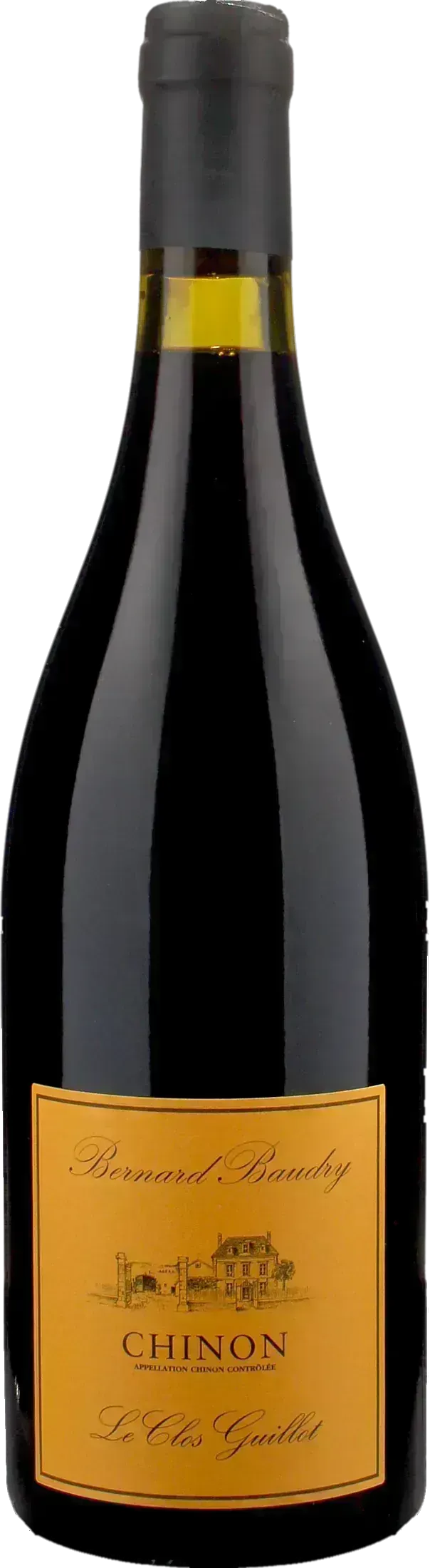
Chinon Le Clos Guillot 2022
| Denomination | AOC Chinon |
|---|---|
| Size | 0,75 l |
| Alcohol content | 13.5% by volume |
| Area | Loire (France) |
| Grape varieties | 100% Cabernet Franc |
| Aging | Aged for 20 months in oak barrels, followed by 9 months in unlined concrete tanks; bottled in September around two years after the harvest; no filtration. |
- Type and grape variety: Organic AOC Chinon red wine from Cabernet Franc, 2022 vintage
- Aromas and colour: Purplish ruby, scents of sour cherry, dark fruits and violet
- Taste and finish: Fresh and juicy on the palate, soft tannins and a long aromatic persistence
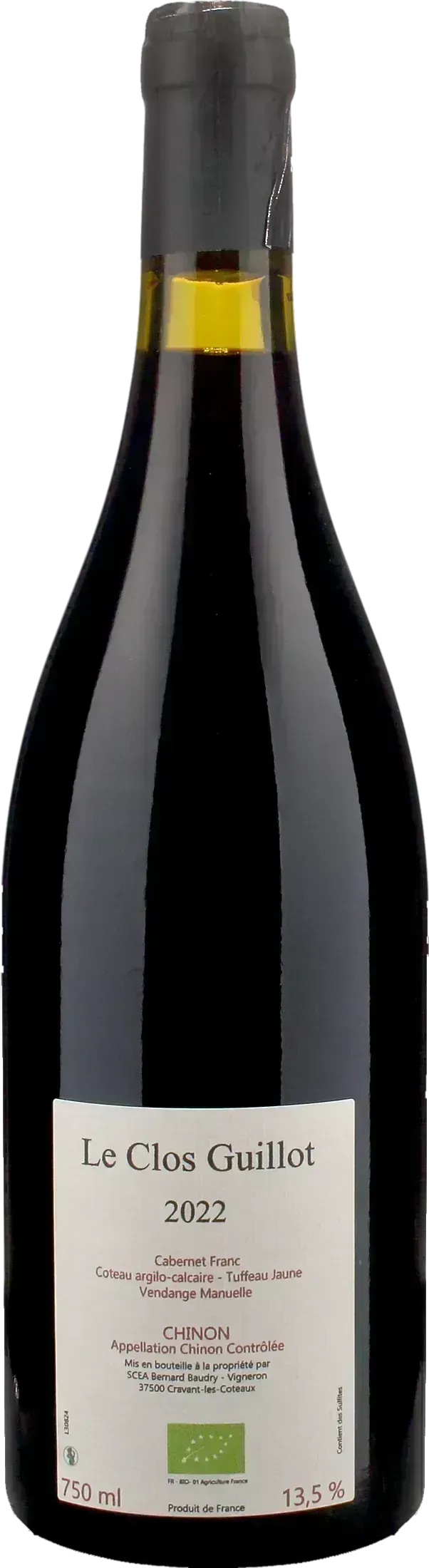
- Origin and soil: Cravant-les-Coteaux (Loire); clay-limestone soils and yellow tuff
- Vinification: Manual harvesting, fermentation in wood and concrete, no filtration
Description
What kind of wine it is
Bernard Baudry's Chinon Le Clos Guillot is a still organic red wine from the Loire Valley, belonging to the Chinon appellation and made from Cabernet Franc grapes. In the glass, it presents a ruby red colour enhanced by violet reflections; on the nose, it releases an aromatic profile where ripe red fruits, sour cherries, small black fruits, and violets stand out. On the palate, it is lively, fresh, and juicy, supported by velvety tannins that accompany the tasting towards a long and persistent finish, with an ageing potential of up to fifteen years. Ageing takes place in oak barrels and concrete tanks, ensuring a faithful expression of the grape variety as the wine is unfiltered.
Where it comes from
The vineyards are located in Cravant-les-Coteaux, in the Chinon area of the Loire Valley in France, and benefit from a favourable south and south-west exposure. The vineyard soil is characterised by a complex clay-limestone matrix at the top of the hill, which progressively gives way to yellow tuff as it descends the slope. This precise geological composition of the farmland is decisive for the final organoleptic characteristics, as it helps to enhance the freshness and clear definition of the Cabernet Franc fruit.
How it is produced
The careful production process begins with a rigorous manual harvest of the grapes. Fermentation then lasts for about two weeks and takes place in concrete or oak vats. Subsequently, the wine undergoes a long period of organoleptic maturation involving twenty months of ageing in oak barrels, followed by approximately nine months in unlined concrete tanks. This calibrated transition between different vessels defines the structure, while in the final phase, the wine is not filtered to maintain its natural expression intact.
History and interesting facts
The vines of this red wine were planted between 1993 and 2000 in the commune of Cravant-les-Coteaux. The hill of origin holds a unique geological curiosity: descending the slope, the soil composition changes, moving from clay and limestone to the peculiar yellow tuff. This fascinating transition of the terroir, combined with the decision to preserve the wine with zero filtration, ensures a pure and authentic identity. These characteristics provide a formidable ageing potential, allowing for a splendid evolution for up to fifteen years.
Awards
-
2022
 94
/100
Vinous is the online guide from Antonio Galloni, one of the world's leading wine connoisseurs.
Tasting notes

Perfume

Color
Taste
Serve at:
16 - 18 °C
Longevity:
10 - 15 years
Decanting time:
1 hour
- Start up year: 1975
- Hectares: 32
His son Matthieu studied in the Mâcon area, then in Bordeaux, and, after a year working in Tasmania and California, joined his father in 2000.Our domain now has 32 hectares of vineyards spread across the AOC Chinon, in Cravant les Coteaux and Chinon. The grape is grown primarily Cabernet Franc (90%) plus a small production of Chenin Blanc (about 10%).
The vineyards are located on very varied terroirs of gravel in the plain, limestone clay on coteau and sandy limestones plateaus. This diversity offers us the possibility of applying piecemeal winemaking. Read more


| Name | Bernard Baudry Chinon Le Clos Guillot 2022 |
|---|---|
| Type | Red organic still |
| Denomination | Chinon AOC |
| Vintage | 2022 |
| Size | 0,75 l |
| Alcohol content | 13.5% by volume |
| Grape varieties | 100% Cabernet Franc |
| Country | France |
| Region | Loire |
| Vendor | Bernard Baudry |
| Story | History and interesting facts The vines of this red wine were planted between 1993 and 2000 in the commune of Cravant-les-Coteaux. The hill of origin holds a unique geological curiosity: descending the slope, the soil composition changes, moving from clay and limestone to the peculiar yellow tuff. This fascinating transition of the terroir, combined with the decision to preserve the wine with zero filtration, ensures a pure and authentic identity. These characteristics provide a formidable ageing potential, allowing for a splendid evolution for up to fifteen years. |
| Origin | Cravant-les-Coteaux, Chinon, Loire Valley, France |
| Soil composition | Calcareous with clay and yellow tuff |
| Fermentation | About two weeks |
| Production technique | Manual harvest; fermentation for approximately 2 weeks in concrete or oak vats; ageing in oak barrels and unlined concrete tanks; bottling approximately 2 years after the harvest; no filtration. |
| Wine making | Hand-harvested; fermentation for approximately 2 weeks in concrete or oak vats; ageing for 20 months in oak barrels followed by 9 months in unlined concrete tanks; bottled in September, approximately two years after the harvest; no filtration. |
| Aging | Aged for 20 months in oak barrels, followed by 9 months in unlined concrete tanks; bottled in September around two years after the harvest; no filtration. |
| Allergens | Contains sulphites |