


Salvioni - La Cerbaiola
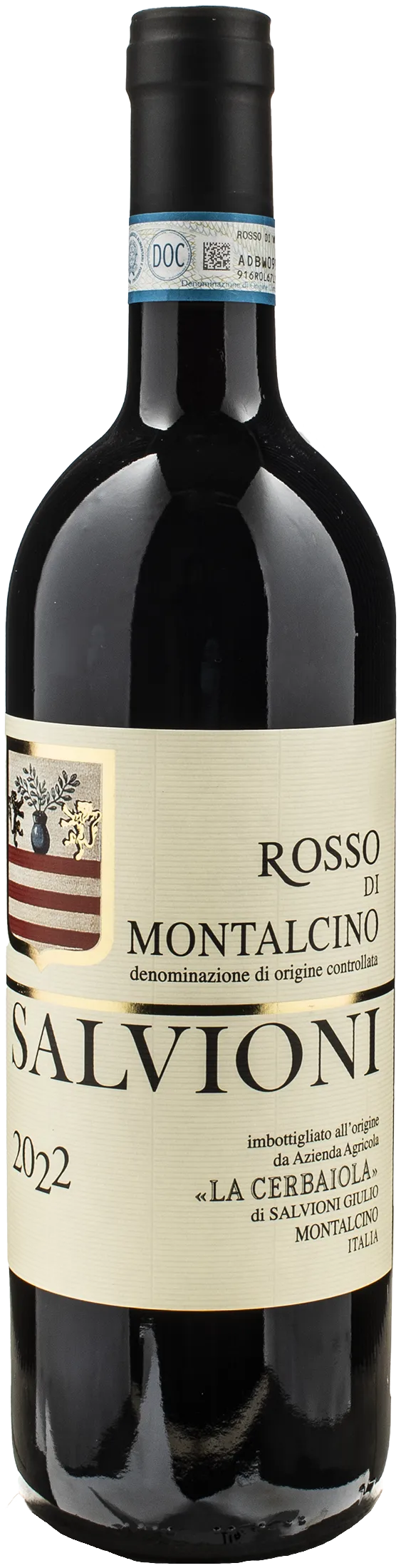
Rosso di Montalcino 2022
| Denomination | DOC Rosso di Montalcino |
|---|---|
| Size | 0,75 l |
| Alcohol content | 14.5% by volume |
| Area | Tuscany (Italy) |
| Grape varieties | 100% Sangiovese |
| Aging | After racking, the clean wine remains in stainless steel for a further few months during which it undergoes malolactic fermentation in the normal way, at the end of which it is put into barrels. For maturing the wine, the company has always used large 18/22 hectolitre barrels of medium toasted Slavonian oak. Today the barrels are divided into two cellars: one directly on the estate where the older barrels are located and the other located in the historic centre of the village under the family home where the newer barrels are located and where tastings of the vintages are usually held with customers. The Rosso di Montalcino remains about 12 months in the barrels and is released on the market the second year after the harvest after some ageing in the bottle. |
| Other years | 2023 , 2024 |
Description
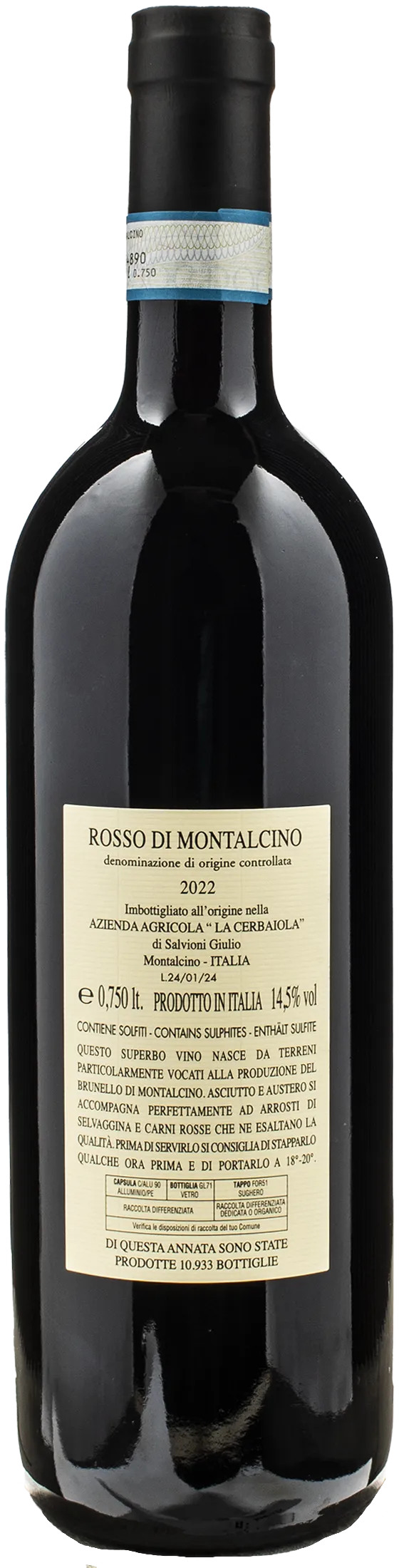
Still red from Rosso di Montalcino DOC, 14.5% ABV, 100% Sangiovese, produced by Salvioni - La Cerbaiola, a historic Montalcino winery. Vintage 2022. A wine born from a careful selection of grapes and meticulous vinification, with 12 months of aging in large Slavonian oak barrels and further bottle aging. Intensely spicy and smoky aromas open to softer notes of ripe cherry, blueberry, graphite, black tea, and face powder. The color is clear and transparent, somewhere between ruby red and garnet. On the palate, it is taut, balanced, enveloping, and warm, supported by silky tannins and leading to an excellent progression on the finish.
Awards
-
2022
 4
4Italian Sommelier Foundation (FIS) guide This has been one of the most prestigious wine guides in Italy for over 10 years.
-
2022
 92
92/100
Decanter is a wine and lifestyle magazine, published monthly in around 90 countries. The magazine includes industry news, classic guides and advice on wine and spirits.
-
2022
 92
92/100
The prestigious international wine guide from the renowned Robert Parker, the world's most experienced and trusted wine taster.
-
2022
 3
3One of the most prestigious wine guides in Italy.
-
2022
 93
93/100
Vinous is the online guide from Antonio Galloni, one of the world's leading wine connoisseurs.
-
2022
 4
4Italian Sommelier Association (AIS) guide
Tasting notes

Perfume

Color

Taste
Serve at:
16 - 18 °C
Longevity:
10 - 15 years
Decanting time:
1 hour
- Start up year: 1985
- Oenologist: Attilio Pagli
- Bottles produced: 10.000
- Hectares: 4
The different geological nature of soils corresponds to as many expressive variables in grapes matured. The consolidated relationship between Giulio and Attilio Pagli, company winemaker, guarantees continuity in the quality of production: "If the Brunello does not deserve, I only make Red"; So Julius clearly expresses, revealing an almost maniacal attention to the quality of the grapes. Moreover, it is only from perfectly matured grapes that it is possible to produce a great wine, capable of achieving excellence in every year of its marketing.
The balance and the perfect balance of wines comes from a rare mixture of freshness (we are 420 at sea level), exposure to the morning sun (southeast), clayey matrix and plant density not exaggerated to allow Plants have plenty of space available, favoring air circulation.
Read more


| Name | Salvioni La Cerbaiola Rosso di Montalcino 2022 |
|---|---|
| Type | Red still |
| Denomination | Rosso di Montalcino DOC |
| Vintage | 2022 |
| Size | 0,75 l |
| Alcohol content | 14.5% by volume |
| Grape varieties | 100% Sangiovese |
| Country | Italy |
| Region | Tuscany |
| Vendor | Salvioni - La Cerbaiola |
| Origin | The vineyards are situated at an altitude of around 420/440 metres above sea level, facing south/east with respect to the Montalcino hillside and are well ventilated with an excellent microclimate |
| Soil composition | The soil is galestrous and, together with the altitude, makes the wines soft and well-balanced in acidity. |
| Production technique | The different age of planting of the vines determines different characteristics starting with the density of vines per hectare which, in the older vineyard, is 3000 vines/ha with a planting pattern of 3 metres while the younger vineyard has a density of 5000 vines/ha with a planting pattern of 2.50 metres. The training system used is the simple spurred cordon in the younger plants and the double spurred cordon where the distance between plants is greater. During pruning only one bud is left and from this derives a considerable reduction in the quantity of the fruit. After the green cleaning and the subsequent phases of flowering and fruit set of the grapes we carry out a further pruning called "green harvest" during which a first but essential thinning out is carried out to ensure that each shoot left carries only one bunch to maturity. From these operations comes an almost maniacal attention to the quality of each bunch, which ensures that there is never an abundant quantity of grapes, but rather a focus on their remarkable quality. Further repassing in the vineyard, even during the ripening period, ensures that the quality of each bunch is controlled to such an extent that we arrive at the harvest with low quantity but very high quality. Harvesting usually starts at the end of September - early October. The ripeness of the grapes is checked by frequent analyses. |
| Wine making | Vinification takes place in the estate's cellar next to the vineyards in 40/35 hectolitre stainless steel vats and usually lasts 28/30 days depending on the vintage. Fermentation takes place spontaneously in the days following the harvest in rooms that do not have air conditioning, which means that the high temperatures need to be regulated with frequent pumping over throughout the day and often with délestage, which allows the wine boiling in other tanks to cool down. |
| Aging | After racking, the clean wine remains in stainless steel for a further few months during which it undergoes malolactic fermentation in the normal way, at the end of which it is put into barrels. For maturing the wine, the company has always used large 18/22 hectolitre barrels of medium toasted Slavonian oak. Today the barrels are divided into two cellars: one directly on the estate where the older barrels are located and the other located in the historic centre of the village under the family home where the newer barrels are located and where tastings of the vintages are usually held with customers. The Rosso di Montalcino remains about 12 months in the barrels and is released on the market the second year after the harvest after some ageing in the bottle. |
| Allergens | Contains sulphites |