


Prunotto
Barbaresco Secondine 2021
| Denomination | DOCG Barbaresco |
|---|---|
| Size | 0,75 l |
| Alcohol content | 14.0% by volume |
| Area | Piedmont (Italy) |
| Grape varieties | 100% Nebbiolo |
| Aging | The wine has matured for at least 12 months in oak barrels and has further refined in the bottle for several months before being released to the market. |
- Name and variety: Barbaresco DOCG produced with Nebbiolo grapes from Piedmont
- Aromatic characteristics: Notes of raspberry and rose combined with tobacco, white pepper and liquorice
- Taste profile: Refined structure, soft and velvety tannins, balanced palate
- Vinification process: 10 days maceration and 12 months ageing in oak barrels
- Serving method and awards: Decant for 1 hour; Vitae AIS recognition with 4 vines
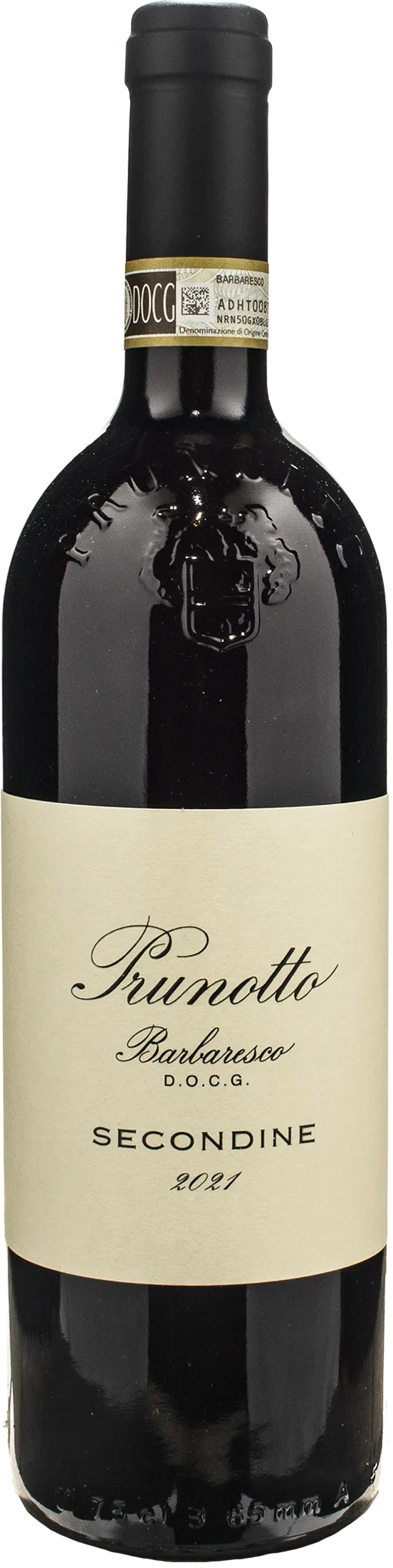
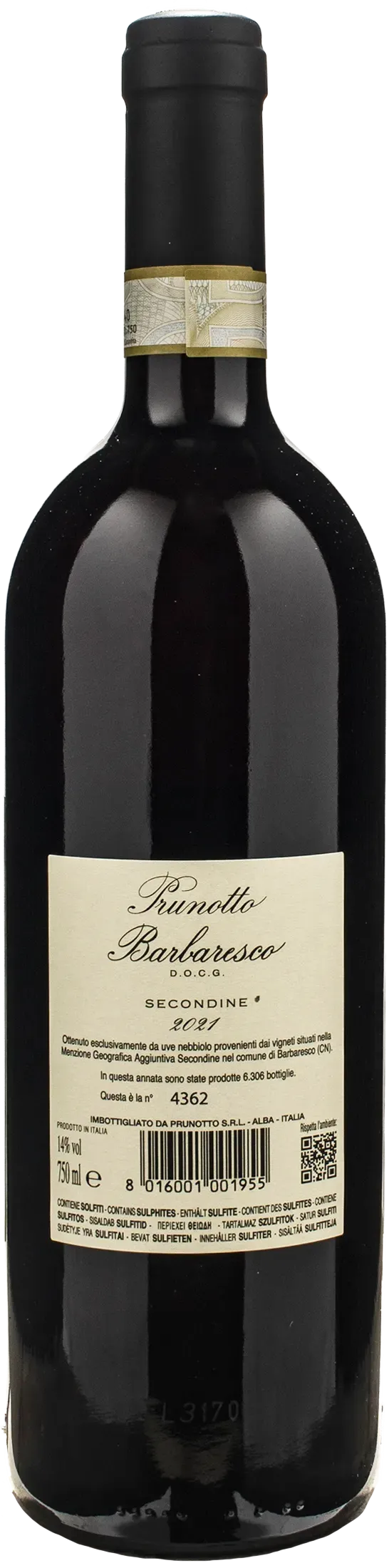
Description
What kind of wine it is
Barbaresco Secondine by Prunotto is a still red wine with Denomination of Controlled and Guaranteed Origin, made from Nebbiolo grapes grown in the heart of Piedmont. It presents a garnet red colour enriched with subtle brick-coloured highlights. The bouquet is deep and complex, characterised by notes of raspberry and rose that blend harmoniously with hints of tobacco, white pepper and liquorice. On the palate, it reveals a structure of great elegance, supported by sweet and velvety tannins that allow for a balanced evolution over time. The qualities of this Barbaresco have been recognised and awarded by the prestigious Vitae AIS guide.
Where it comes from
This wine originates from Secondine, a historic subzone of Barbaresco located in a picturesque natural amphitheatre that stretches from the Tanaro river towards Moccagatta, crossing the Pajè basin. The typical silty soils of this area provide the ideal environment for the vine, shaping the refined style of the wine and decisively supporting the finesse of its tannic structure. The extraordinary vocation of this territorial strip has been known since the late nineteenth century and is also celebrated in Renato Ratti's historic vineyard map.
How it is produced
In the winery, the grapes are destemmed and crushed to begin a ten-day maceration at a maximum temperature of 30°C. Malolactic fermentation is completed before the onset of winter, stabilising the wine and giving it a harmonious texture. The maturation period lasts for at least twelve months in oak barrels, an essential step in defining the aromatic profile. The production process concludes with a bottle ageing of several months, aimed at ensuring maximum precision and expressive elegance.
History and Curiosities
Secondine is one of the historic areas of Barbaresco, a magnificent natural amphitheatre characterised by particularly suitable silty soil. This prestigious area, already recognised at the end of the nineteenth century and mentioned in the famous map by Renato Ratti, offers ideal conditions for the cultivation of Nebbiolo. The wine produced by Prunotto provides a faithful and profound interpretation of this precious territory, standing out for its extraordinary elegance and the refined presence of sweet and velvety tannins on the palate.
Awards
-
2021
 4
4Italian Sommelier Foundation (FIS) guide This has been one of the most prestigious wine guides in Italy for over 10 years.
-
2021
 2
2This guide is highly respected and offers the most comprehensive review of Italian wines. It has a long tradition and is based on blind tastings carried out by over 100 experts.
-
2021
 3
3One of the most prestigious wine guides in Italy.
-
2021
 4
4Italian Sommelier Association (AIS) guide
Tasting notes

Perfume

Color

Taste
Serve at:
18 - 20 °C
Longevity:
10 - 15 years
Decanting time:
1 hour

- Start up year: 1904
- Oenologist: Gianluca Torrengo
- Bottles produced: 1.116.400
- Hectares: 70
The Antinori family, charmed by such rich natural beauty, unique vineyards and soils, decided to invest time and energy in this terroir confident that their efforts would make Prunotto what it is today, one of the most important winemaking estates in the Piedmont region. Read more


| Name | Prunotto Barbaresco Secondine 2021 |
|---|---|
| Type | Red still |
| Denomination | Barbaresco DOCG |
| Vintage | 2021 |
| Size | 0,75 l |
| Alcohol content | 14.0% by volume |
| Grape varieties | 100% Nebbiolo |
| Country | Italy |
| Region | Piedmont |
| Vendor | Prunotto |
| Story | History and Curiosities Secondine is one of the historic areas of Barbaresco, a magnificent natural amphitheatre characterised by particularly suitable silty soil. This prestigious area, already recognised at the end of the nineteenth century and mentioned in the famous map by Renato Ratti, offers ideal conditions for the cultivation of Nebbiolo. The wine produced by Prunotto provides a faithful and profound interpretation of this precious territory, standing out for its extraordinary elegance and the refined presence of sweet and velvety tannins on the palate. |
| Origin | Secondine, Barbaresco (Piemonte) |
| Soil composition | Silty soil |
| Fermentation temperature | Maximum temperature of 30 °C |
| Fermentation | Approximately 10 days |
| Production technique | Destemming and crushing; maceration for about 10 days at a maximum temperature of 30 °C; malolactic fermentation |
| Wine making | Upon arrival at the winery, the grapes were destemmed and crushed. Maceration took place over approximately 10 days at a maximum temperature of 30°C. Malolactic fermentation was completed before winter. |
| Aging | The wine has matured for at least 12 months in oak barrels and has further refined in the bottle for several months before being released to the market. |
| Allergens | Contains sulphites |