


Oltrenero
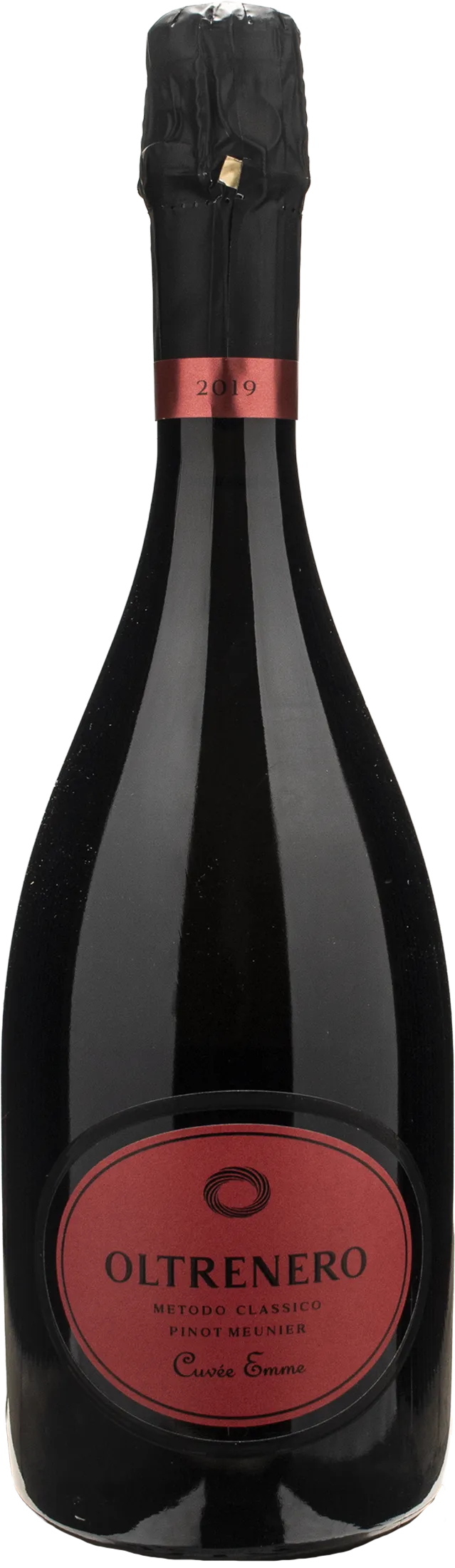
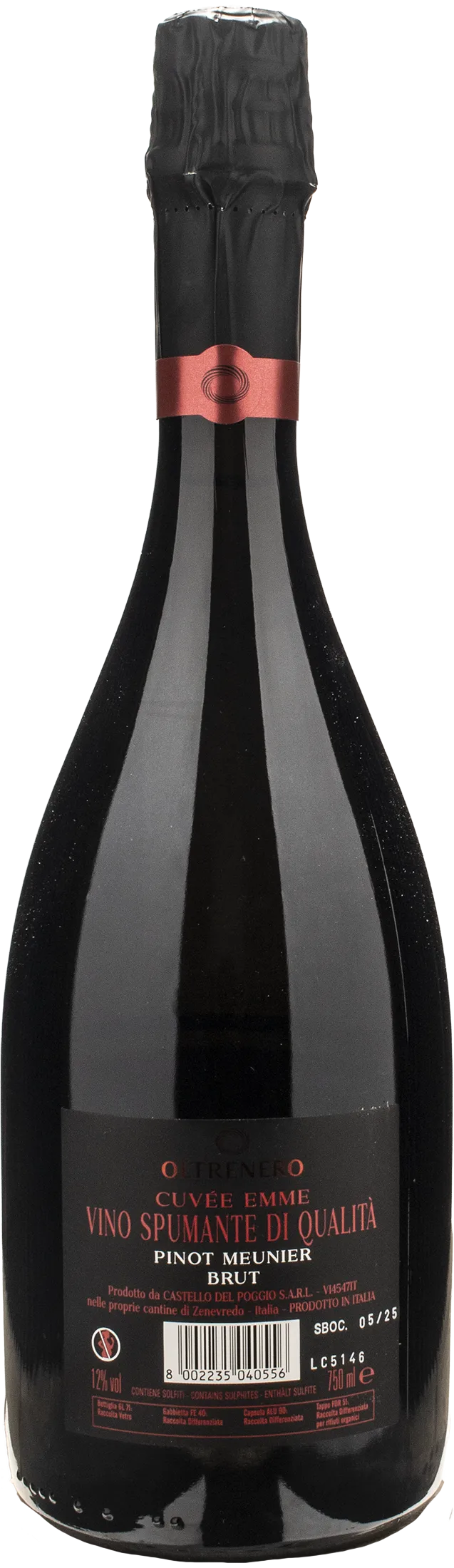
Cuvee Emme Metodo Classico Brut 2019
| Denomination | VSQ |
|---|---|
| Size | 0,75 l |
| Alcohol content | 12.0% by volume |
| Area | Lombardy (Italy) |
| Grape varieties | 100% Pinot Meunier |
| Aging | Second fermentation in the bottle with 24 months on the lees; maturation for about 3 months in the bottle after disgorgement. |
- Type: Metodo Classico Brut 2019, blanc de noirs from 100% Pinot Meunier
- Ageing: 24 months on the lees and 3 months in the bottle, Brut dosage 5 g/L
- Aromas: mint, apricot, yellow plum and almond, colour with coppery highlights
- Palate: fresh and creamy, elegant pastry finish with a hint of marzipan
- Pairings and awards: smoked salmon, asparagus, raw dishes, 92 points James Suckling
Description
What kind of wine it is
Cuvée EMME by Oltrenero is a Metodo Classico Brut blanc de noirs made from Pinot Meunier grapes. This sparkling wine from Oltrepò Pavese displays a bright colour with subtle copper highlights. On the nose, it reveals menthol notes, apricot, yellow plum and sweet almond, while on the palate it offers a fresh profile with a distinctly creamy texture, finishing with elegant hints of pastry and marzipan. Its solid flavour structure was awarded ninety-two points by critic James Suckling.
Where it comes from
The grapes originate from the area of Zenevredo, near the locality of Il Bosco, situated in the heart of Oltrepò Pavese. The vines, trained using the Guyot system and over twenty-five years old, draw nourishment from deep soils with a clay-silt-limestone matrix and a significant presence of marl. This specific geological composition is essential for imparting the typical flavour tension to Pinot Meunier. The area's microclimate, with its mild winters and regular rainfall, ensures a gradual ripening of the grapes, enhancing the natural structure and identity of the variety.
How it is produced
The grapes are harvested by hand around mid-August. After gentle pressing, the must undergoes primary fermentation in steel tanks for twelve days and then rests on fine lees for about six months, gaining volume and finesse. The prise de mousse strictly follows the principles of the Metodo Classico, with ageing on the lees for a period of twenty-four months. The process concludes with a balanced Brut dosage, ensuring a harmonious drink and a clean, precise finish.
History and Curiosities
The name of this cuvée pays tribute to Pinot Meunier, known as the “Miller’s Pinot” due to the white fuzz on its leaves. Produced in the Il Bosco vineyard in Zenevredo, this sparkling wine is a rarity among Italian Metodo Classico wines made from a single grape variety. The vines, over 25 years old, yield exceptional grapes, refined for 24 months on the lees with a Brut dosage of 5 g/L. This meticulous care gives the wine an elegant creaminess, which has been awarded 92 points by James Suckling.
Awards
-
2019
 4
4Italian Sommelier Foundation (FIS) guide This has been one of the most prestigious wine guides in Italy for over 10 years.
-
2019
 2
2This guide is highly respected and offers the most comprehensive review of Italian wines. It has a long tradition and is based on blind tastings carried out by over 100 experts.
-
2019
 92
92/100
James Suckling is an influential American wine critic and journalist who worked at Wine Spectator for 30 years. He left the magazine in 2010 to start his own website and guidebook (JamesSuckling.com). He specialises in Italian and Bordeaux wines.
-
2019
 2
2One of the most prestigious wine guides in Italy.
Tasting notes

Perfume

Color

Taste
Serve at:
06 - 08 °C
Longevity:
05 - 10 years

- Start up year: 1987
- Oenologist: Cristiano Trambusti
- Bottles produced: 680.000
- Hectares: 100
But what is the winemaking history of the Oltrepò Pavese? It was probably the Barbarians who named the land they encountered after crossing the river Po on their way down from the north. Inhabited by the Ligurians and the Insubri Gauls, Oltrepò came under Roman domination after the famous battle of Clastidium (today's Casteggio) in 222 BC.
With the Romans, the territory underwent strong development, thanks also to the construction of the main communication routes. At that time, as recorded in the chronicles of Pliny The Elder, viticulture was successfully practised and, as Columella recounts, good wines were drunk. After the fall of the Western Roman Empire, it was the Barbarians who occupied these lands.
In the Middle Ages, famous noble and clerical families took over the territory. It was the Malaspina, the Visconti, the Beccaria, the Dal Verme, and the Sforza who controlled the territory and signed the history of the Oltrepò, leaving traces of their ancient power also in the towers, castles, churches and beautiful palaces that can be admired today in the towns and villages of Pavia.
Over the centuries, Oltrepò has been a much disputed land. Through peace treaties it passed into the hands of the great powers of the time: France, Spain, then Austria, which, under the reign of Maria Luisa, ceded Oltrepò to the crown of Sardinia with the Treaty of Worms (1743).
The first studies on ampelography and the cadastral censuses carried out at the end of the 18th century testify to the high oenological vocation of the territory and the great diffusion of viticulture. At the beginning of the 19th century, after a brief return to the French under Napoleon, Oltrepò was still part of the Kingdom of Sardinia, and it was during this period that Piedmontese winegrowers began cultivating Pinot Noir grapes in the lands east of the historic Langhe, Asti and Monferrato areas. It was only from 1860 that the Oltrepo became Lombard territory.
In this land also known as 'Old Piedmont', Italian sparkling wine production began at the end of the 19th century, thanks to the Pinot Nero grapes, an excellent vine particularly suited to being vinified in white and then giving rise to noble sparkling wines produced with the classic method.
The winery has been owned by the Zonin family since 1987, who, having understood the value of this territory, expanded the area under vine from the initial 30 hectares to the current 104 (of which 84 are under vine). In this expansion phase, priority was given to the great wealth of noble native varieties such as the amazing Croatina and Barbera, which achieve exceptional quality standards here. But the undisputed king of the estate and the princely variety of Oltrepò, is Pinot Noir, which has expressed all its class and personality here for over two centuries. In fact, currently about 75% of the Pinot Noir cultivated in Italy is located in the Oltrepò Pavese. Read more


| Name | Oltrenero Cuvee Emme Brut 2019 |
|---|---|
| Type | White classic method sparkling wine brut |
| Denomination | VSQ |
| Vintage | 2019 |
| Size | 0,75 l |
| Alcohol content | 12.0% by volume |
| Grape varieties | 100% Pinot Meunier |
| Country | Italy |
| Region | Lombardy |
| Vendor | Oltrenero |
| Story | History and Curiosities The name of this cuvée pays tribute to Pinot Meunier, known as the "Miller’s Pinot" due to the white fuzz on its leaves. Produced in the Il Bosco vineyard in Zenevredo, this sparkling wine is a rarity among Italian Metodo Classico wines made from a single grape variety. The vines, over 25 years old, yield exceptional grapes, refined for 24 months on the lees with a Brut dosage of 5 g/L. This meticulous care gives the wine an elegant creaminess, which has been awarded 92 points by James Suckling. |
| Origin | Il Bosco, Zenevredo, Oltrepò Pavese |
| Climate | Mild winter, spring without major temperature fluctuations and average rainfall |
| Soil composition | Deep, clayey-silty-calcareous soil with the presence of marl. |
| Cultivation system | Guyot |
| Plants per hectare | 4500 plants/ha |
| Yield per hectare | 70 q/ha |
| Harvest | Mid-August (15–20 August) |
| Fermentation | Second fermentation in the bottle with ageing on the lees for 24 months; further maturation in the bottle for about 3 months |
| Production technique | Metodo classico (seconda fermentazione in bottiglia) |
| Wine making | Manual harvest in mid-August; gentle pressing and vinification in stainless steel, with alcoholic fermentation lasting about 12 days and ageing for 5–6 months on fine lees. Sparkling wine production using the Traditional Method (second fermentation in the bottle), 24 months ageing on the lees, Brut dosage at 5 g/L, and approximately 3 months resting in the bottle after disgorgement. |
| Aging | Second fermentation in the bottle with 24 months on the lees; maturation for about 3 months in the bottle after disgorgement. |
| Residual sugar | 5.0 gr/L |
| Allergens | Contains sulphites |