


Monsupello
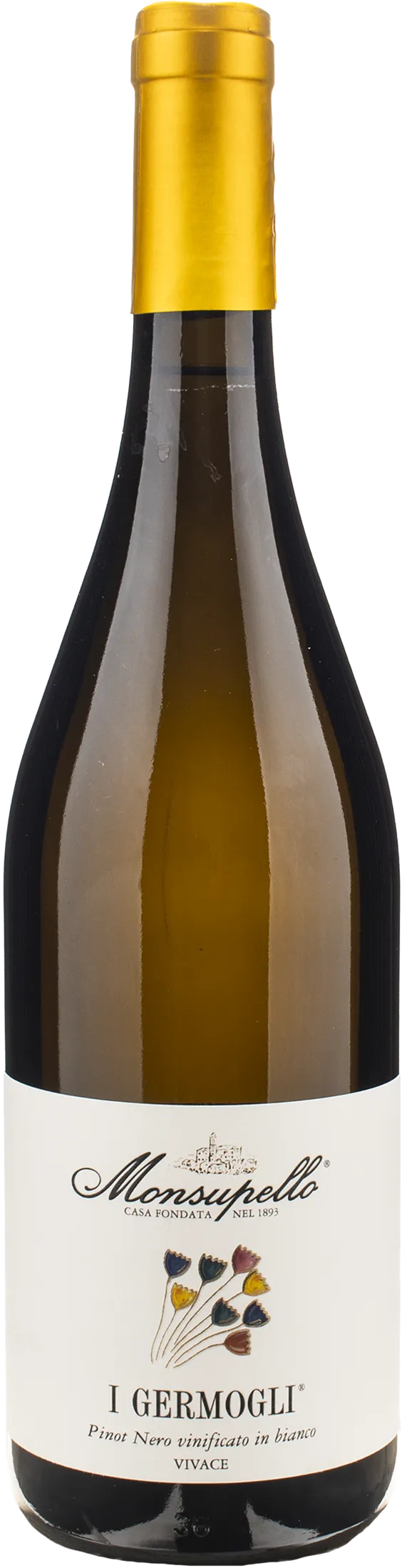
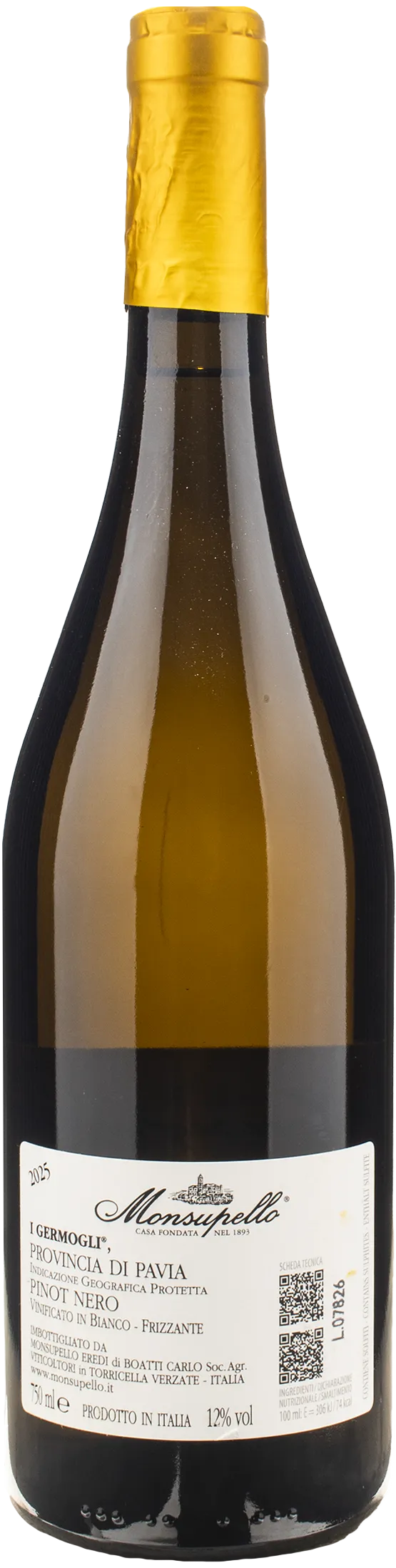
I Germogli 2025
| Denomination | IGT Provincia di Pavia |
|---|---|
| Size | 0,75 l |
| Alcohol content | 12.0% by volume |
| Area | Lombardy (Italy) |
| Grape varieties | 100% Pinot Nero |
| Aging | After further rackings and stabilisations, the wine is blended with sweet must and selected yeasts and undergoes refermentation in a pressurised tank, before being microfiltered and bottled. |
- Sparkling white IGT: Province of Pavia, 2025 harvest, 0.75 l, 12% vol
- Grapes and style: Pinot Noir vinified as a white wine with the addition of Chardonnay
- Vinification: gentle pressing, steel at 18°C, second fermentation in a pressurised tank
- Aromas and colour: hints of flowers, currant, green apple; straw yellow with greenish highlights
- At the table: ideal as an aperitif, with shellfish, seafood soups and risottos; serve at 8°C
Description
What kind of wine it is
I Germogli Monsupello is a sparkling white with a typical geographical indication from the Province of Pavia. It is created from a skilful blend of Pinot Noir and Chardonnay, vinified in steel and refermented in a pressurised tank to offer a glass with pronounced aromatic clarity, a pale straw yellow colour with bright greenish highlights. The sensory profile reveals distinct floral notes, accompanied by fresh hints of currant and green apple that enliven the bouquet. On the palate, it is soft and pleasantly savoury, with a lively backbone and a harmonious sip that pairs perfectly with shellfish, seafood soups and risottos.
Where it comes from
This label comes to life in the landscape of Oltrepò Pavese, along the first hilly belt of the municipalities of Oliva Gessi and Torricella Verzate. The vines sink their roots into a clay-limestone soil that imparts a particular structural finesse to the wine. The south-east exposure of the hills ensures a consistent ripening of the grapes, maximising the pedoclimatic qualities of the Province of Pavia. The viticulture is based on the Guyot training system, carried out with careful attention to the plant. Originally created in 1982, this wine quickly established itself as a benchmark for quality dining.
How it is produced
The winemaking process begins with meticulous manual harvesting, followed by a gentle pressing of whole bunches to promptly separate the must from the skins. After a brief rest for clarification, the must undergoes primary fermentation in stainless steel tanks at a controlled temperature, preserving the clear fragrance of the varietal aromas. The uniqueness of this label lies in the subsequent addition of must and selected yeasts, which trigger a carefully managed refermentation in a pressurised tank. This step gives the wine its characteristic liveliness, ensuring a dynamic and clean flavour profile before bottling.
History and Curiosities
Produced by Monsupello, a historic winery founded in 1893, I Germogli made its debut in 1982 as a novelty from Oltrepò Pavese. Created as an innovative interpretation of Pinot Noir vinified as a white wine, this Provincia di Pavia IGT has established itself as a great classic in the restaurant industry.
Tasting notes

Perfume

Color

Taste
Serve at:
08 - 10 °C
Longevity:
03 - 05 years

- Start up year: 1893
- Oenologist: Stefano Torre, Federico Fermini
- Bottles produced: 320.000
- Hectares: 50
Daring what is new, dreaming it, imagining it, and making it real: in the name of the father, Carlo Boatti, and today with his children Pierangelo and Laura. With different sensitivities and attitudes, they are interpreters of future horizons, in the contemporaneity of their sparkling wines. Read more


| Name | Monsupello I Germogli 2025 |
|---|---|
| Type | White bubbly |
| Denomination | Provincia di Pavia IGT |
| Vintage | 2025 |
| Size | 0,75 l |
| Alcohol content | 12.0% by volume |
| Grape varieties | 100% Pinot Nero |
| Country | Italy |
| Region | Lombardy |
| Vendor | Monsupello |
| Story | History and Curiosities Produced by Monsupello, a historic winery founded in 1893, I Germogli made its debut in 1982 as a novelty from Oltrepò Pavese. Created as an innovative interpretation of Pinot Noir vinified as a white wine, this Provincia di Pavia IGT has established itself as a great classic in the restaurant industry. |
| Origin | First hilly belt of the municipalities of Oliva Gessi and Torricella Verzate (PV), Oltrepò Pavese, Lombardy, Italy |
| Climate | Exposure: South-East. |
| Soil composition | Clay-limestone |
| Cultivation system | Guyot |
| Plants per hectare | 5000 |
| Yield per hectare | 90 q/ha |
| Harvest | End of August |
| Fermentation temperature | 18 °C |
| Production technique | Soft whole-bunch pressing, fermentation in steel tanks and refermentation in an autoclave |
| Wine making | White vinification begins with the gentle pressing of whole grapes to separate the must from the skins and stems; the clarified must, racked after about a day, ferments in stainless steel tanks at a controlled temperature of 18°C. Further rackings and stabilisations follow; then sweet must and selected yeasts are added and refermentation takes place in a pressurised tank, followed by microfiltration and bottling. |
| Aging | After further rackings and stabilisations, the wine is blended with sweet must and selected yeasts and undergoes refermentation in a pressurised tank, before being microfiltered and bottled. |
| Total acidity | 6.3 gr/L |
| PH | 3.12 |
| Residual sugar | 9.5 gr/L |
| Dry extract | 21.0 gr/L |
| Allergens | Contains sulphites |