


Cantine Leonardo da Vinci
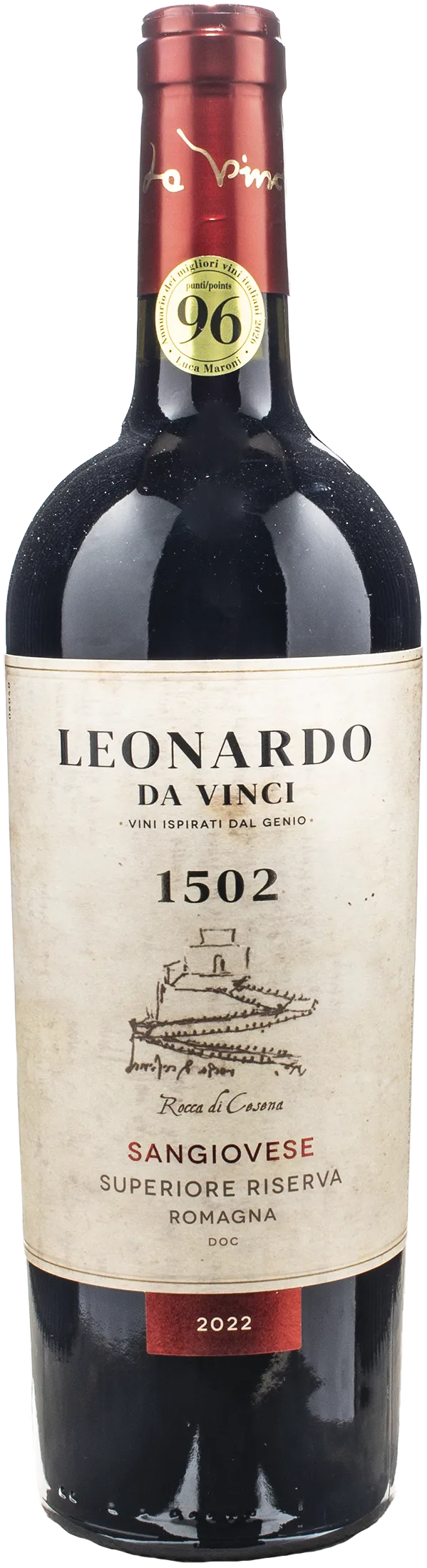
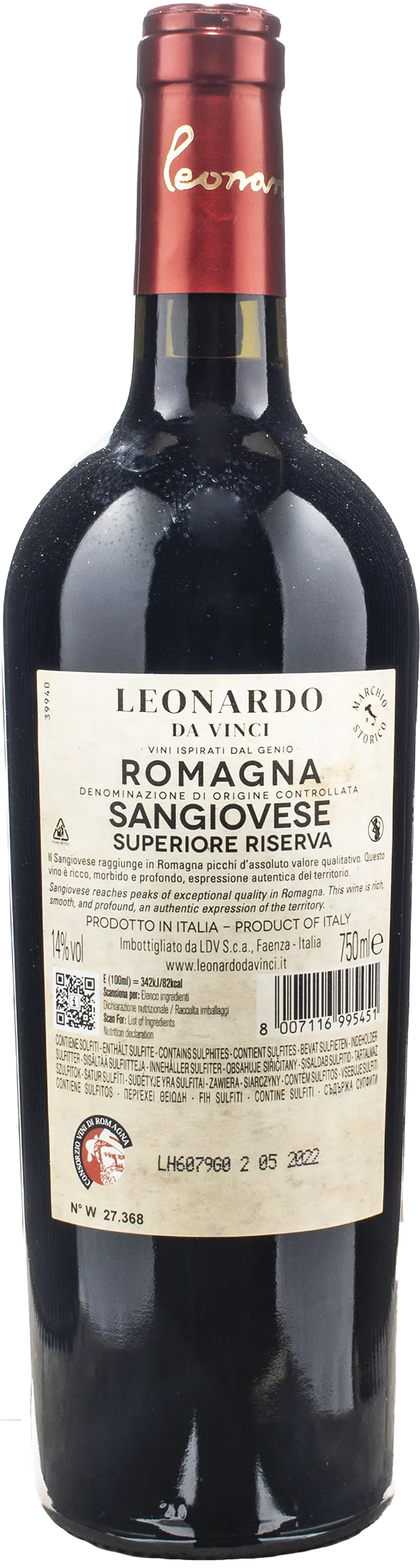
1502 Sangiovese Superiore Rocca di Cesena Riserva 2022
| Denomination | DOC Romagna Sangiovese Superiore Riserva |
|---|---|
| Size | 0,75 l |
| Alcohol content | 14.0% by volume |
| Area | Emilia-Romagna (Italy) |
| Grape varieties | 85% Sangiovese, 15% Syrah |
| Aging | Aged for 10–12 months in French and American oak barriques; French oak barriques and tonneaux with medium toasting, first and second use. |
- Blend and designation: Romagna DOC; 85% Sangiovese, 15% Syrah and other red grape varieties
- Drying and ageing: controlled; 10–12 months in French and American oak barriques
- Aromas: cherry, wild berries, iris, violet, hints of dried herbs and sweet spices
- Palate: full-bodied structure, soft tannins, balanced acidity, persistent finish with vanilla
- Serving and pairings: 16–18 °C, decant for 1 hour; roasts, red meats, game, cheeses
Description
What kind of wine it is
Rocca di Cesena Sangiovese Superiore Riserva by Leonardo da Vinci is a still red wine from Romagna, enhanced by ageing in oak barrels. This blend of Sangiovese and Syrah, with the addition of other red grape varieties, displays a ruby colour enriched with garnet highlights. The bouquet reveals notes of cherry and wild berries, iris and violet, complemented by hints of dried herbs, leather and sweet spices. On the palate, it is rich, supported by soft tannins and a pleasant acidity, pairing ideally, after decanting for an hour, with roasted meats, game and mature cheeses.
Where it comes from
The grapes grow in the renowned areas of Castrocaro Terme, Predappio, Meldola and Bertinoro. The vineyards stretch between two hundred and fifty and three hundred and fifty metres above sea level, with a south and south-east exposure that favours optimal ripening of the bunches. The soil varies significantly across the production area: from the deep clay soils of Predappio to the marl-sandstone substrates rich in stones typical of Bertinoro. This geological complexity gives the wine a broad structure, offering a faithful expression of the Emilia-Romagna region.
How it is produced
The harvest, overseen by Leonardo da Vinci, takes place between late September and early October. The bunches undergo controlled temperature drying, with constant monitoring of humidity and ventilation to concentrate the aromas. This is followed by fermentation at twenty-six degrees with selected yeasts and a maceration phase. The wine then rests for about ten to twelve months in French and American oak barrels, using medium-toast wood of first and second passage. The ageing process imparts depth of flavour and a final note of vanilla.
History and Curiosities
Part of the 1502 Da Vinci Romagna collection, this captivating Sangiovese Superiore Riserva is inspired by Leonardo's naturalistic observations. It takes us back to 1502, right in the heart of Romagna, to admire the excellence of nature and the wisdom of the winemakers, conveying genuine and timeless values linked to the historic Rocca di Cesena.
Awards
-
2022
 96
96/100
One of the most prestigious wine guides in Italy.
Tasting notes

Perfume

Color

Taste
Serve at:
16 - 18 °C
Longevity:
05 - 10 years
Decanting time:
1 hour
- Start up year: 1961
- Oenologist: Riccardo Pucci
- Bottles produced: 5.000.000
- Hectares: 750
The original headquarters, restructured and enlarged, are still the operative centre today. The winery is situated in the borough of Vinci, just 5 kilometres from the birthplace of the world famous artist and inventor Leonardo.
The co-operative takes its name from the great man, paying homage to the mind of the man who was universally recognised as a genius and to emphasise its deep-rooted bond with the territory, the same bond which Leonardo felt and whose surname is specifically associated with the village where he was born on 15 April 1452.
Today, Cantine Leonardo da Vinci is a pioneering co-operative, innovative and modern, which relies on the work and grape production of its 160 members. Read more


| Name | Leonardo da Vinci 1502 Sangiovese Superiore Rocca di Cesena Riserva 2022 |
|---|---|
| Type | Red still |
| Denomination | Romagna DOC |
| Vintage | 2022 |
| Size | 0,75 l |
| Alcohol content | 14.0% by volume |
| Grape varieties | 85% Sangiovese, 15% Syrah |
| Country | Italy |
| Region | Emilia-Romagna |
| Vendor | Cantine Leonardo da Vinci |
| Story | History and Curiosities Part of the 1502 Da Vinci Romagna collection, this captivating Sangiovese Superiore Riserva is inspired by Leonardo's naturalistic observations. It takes us back to 1502, right in the heart of Romagna, to admire the excellence of nature and the wisdom of the winemakers, conveying genuine and timeless values linked to the historic Rocca di Cesena. |
| Origin | Castrocaro Terme, Predappio, Meldola, Bertinoro |
| Climate | Altitude: 100-250 m a.s.l. Exposure: South - East. |
| Soil composition | Clay soils at the foot of the hill; marly-sandstone and skeletal soils towards the Apennines. |
| Cultivation system | Guyot and spurred cordon |
| Harvest | Last week of September, early October |
| Fermentation temperature | 26 °C |
| Production technique | Appassimento with controlled temperature, humidity and ventilation; fermentation at controlled temperature (26 °C) with inoculation of selected yeasts; maceration; ageing for 10–12 months in French and American oak barriques |
| Wine making | Appassimento with controlled temperature, humidity and ventilation; fermentation at controlled temperature (26 °C) with inoculation of selected yeasts, with fermentation and maceration; ageing for 10–12 months in French and American oak barriques. |
| Aging | Aged for 10–12 months in French and American oak barriques; French oak barriques and tonneaux with medium toasting, first and second use. |
| Allergens | Contains sulphites |