


Cantine Leonardo da Vinci
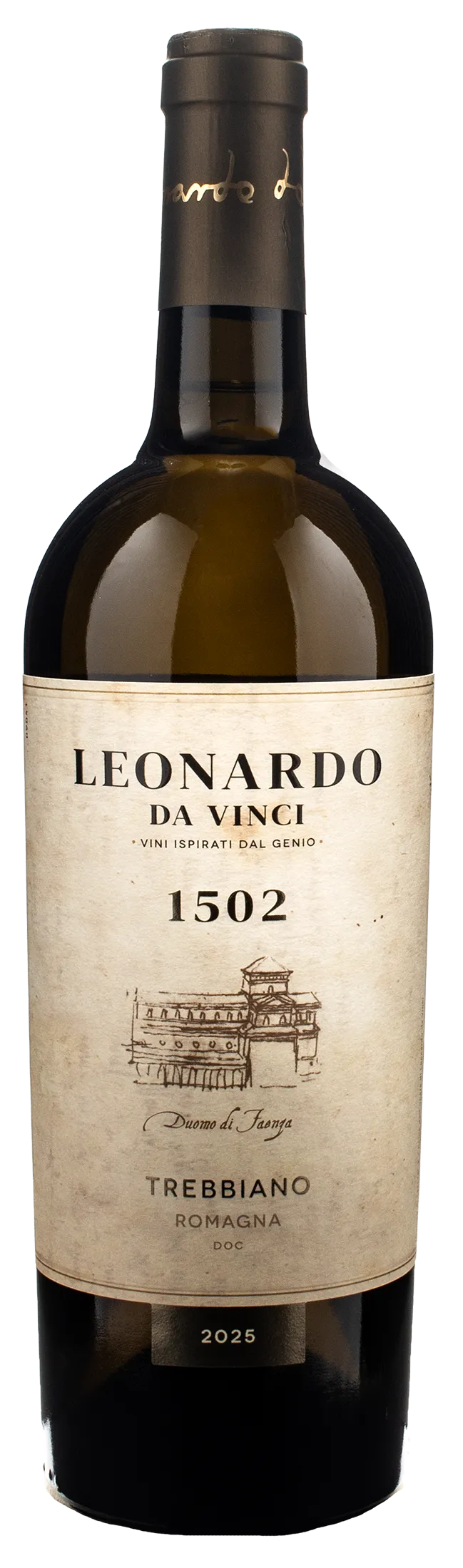
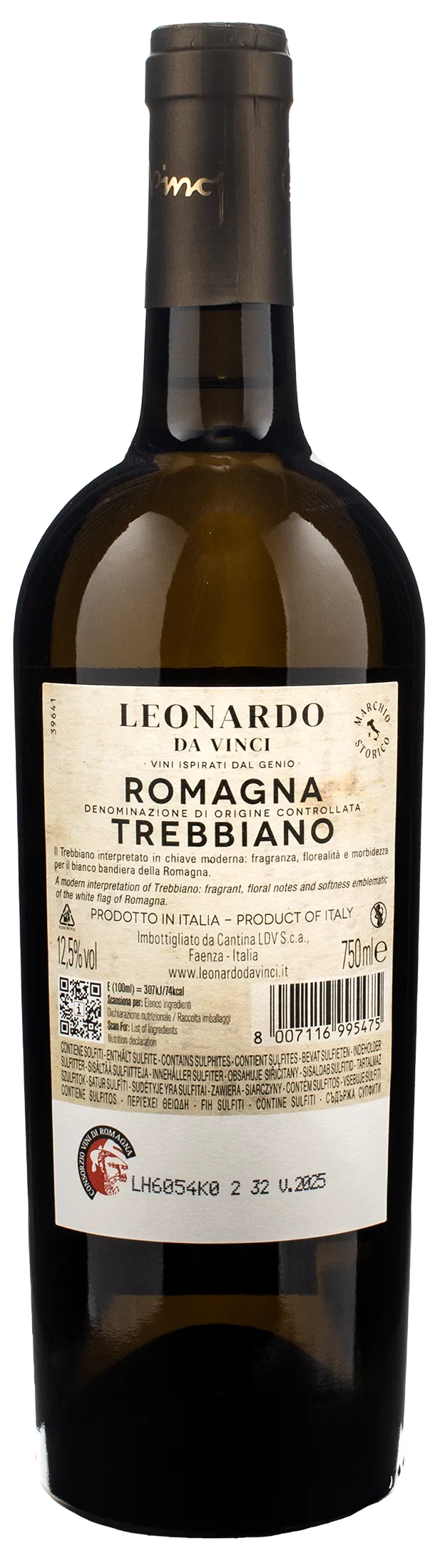
1502 Duomo di Faenza Trebbiano 2025
| Denomination | DOC Romagna Trebbiano |
|---|---|
| Size | 0,75 l |
| Alcohol content | 12.5% by volume |
| Area | Emilia-Romagna (Italy) |
| Grape varieties | Trebbiano Romagnolo |
| Aging | Ageing in stainless steel with bâtonnage on fine lees for 2 months, then maturation in stainless steel tanks before bottling. |
- Identity: still white wine Romagna DOC 2024, 12.5% vol
- Grape variety: 85% Trebbiano and 15% other local white varieties
- Aromas: notes of grapefruit, lemon, green apple, yellow peach and broom
- Production: gentle pressing and fermentation in steel at a maximum of 13°C
- Pairings: ideal as an aperitif, with fish or grilled vegetables; serve between 8 and 12°C
Description
What kind of wine it is
Duomo di Faenza Trebbiano by Cantine Leonardo da Vinci is a still white wine produced in Emilia-Romagna. Made from a blend of Trebbiano and other local white grapes, it offers an intense aromatic profile with notes of citrus, apple, yellow peach and broom flowers. On the palate, it is dry, characterised by an enveloping freshness that perfectly balances its structure. The sip finishes with a pronounced savouriness, refined minerality and a slight creaminess, ensuring a clean and persistent finish.
Where it comes from
The grapes come from the hills of Forlì, located within the renowned Romagna area. The vineyards are cultivated using Guyot and spur cordon systems, in a pedoclimatic context that favours a pure and dry expression of the fruit. The vines sink their roots into medium-textured clay-silt soils, perfect for giving the wine harmony and a pleasant mineral streak. This terroir is reflected in a straightforward character, offering a flavoursome drink and a marked gustatory persistence.
How it is produced
The harvest, carried out in September, is followed by a gentle pressing aimed at preserving the integrity of the delicate primary aromas. The cold fermentation in stainless steel, conducted at a controlled temperature, fully enhances the natural floral and fruity notes of the grape variety. Ageing continues in steel tanks, where bâtonnage on the fine lees for two months enriches the body of the wine, giving it a pleasant roundness and perfect gustatory balance.
History and Curiosities
The Romagna DOC Trebbiano from Cantine Leonardo da Vinci celebrates the genius of Leonardo and the historic hills of Forlì. The label recalls the year 1502 and the majestic Faenza Cathedral, blending art and the memory of the region. Produced under the guidance of oenologist Riccardo Pucci, this wine is created through careful cold fermentation in steel and a two-month period on fine lees. This meticulous process gives the glass a splendid harmony and a delicate creaminess, perfect for enhancing its fruity aromas.
Tasting notes

Perlage

Perfume

Color

Taste
Serve at:
08 - 10 °C
Longevity:
03 - 05 years
- Start up year: 1961
- Oenologist: Riccardo Pucci
- Bottles produced: 5.000.000
- Hectares: 750
The original headquarters, restructured and enlarged, are still the operative centre today. The winery is situated in the borough of Vinci, just 5 kilometres from the birthplace of the world famous artist and inventor Leonardo.
The co-operative takes its name from the great man, paying homage to the mind of the man who was universally recognised as a genius and to emphasise its deep-rooted bond with the territory, the same bond which Leonardo felt and whose surname is specifically associated with the village where he was born on 15 April 1452.
Today, Cantine Leonardo da Vinci is a pioneering co-operative, innovative and modern, which relies on the work and grape production of its 160 members. Read more


| Name | Leonardo da Vinci 1502 Duomo di Faenza Trebbiano 2025 |
|---|---|
| Type | White still |
| Denomination | Romagna DOC |
| Vintage | 2025 |
| Size | 0,75 l |
| Alcohol content | 12.5% by volume |
| Grape varieties | Trebbiano Romagnolo |
| Country | Italy |
| Region | Emilia-Romagna |
| Vendor | Cantine Leonardo da Vinci |
| Story | History and CuriositiesThe Romagna DOC Trebbiano from Cantine Leonardo da Vinci celebrates the genius of Leonardo and the historic hills of Forlì. The label recalls the year 1502 and the majestic Faenza Cathedral, blending art and the memory of the region. Produced under the guidance of oenologist Riccardo Pucci, this wine is created through careful cold fermentation in steel and a two-month period on fine lees. This meticulous process gives the glass a splendid harmony and a delicate creaminess, perfect for enhancing its fruity aromas. |
| Origin | Lower hills of Forlì |
| Soil composition | Rich clay-silt soils, medium texture |
| Cultivation system | Guyot and spurred cordon |
| Harvest | A partire dalla seconda decade di settembre |
| Fermentation temperature | Maximum 13 °C |
| Production technique | Metodo Leonardo |
| Wine making | Fermentation at low temperature in stainless steel with selected yeasts (maximum temperature 13°C) and gentle pressing; fermentation at controlled temperature; ageing in stainless steel with batonnage on fine lees for 2 months, then maturation in stainless steel tanks before bottling. |
| Aging | Ageing in stainless steel with bâtonnage on fine lees for 2 months, then maturation in stainless steel tanks before bottling. |
| Allergens | Contains sulphites |