


Cantina Roccafiore
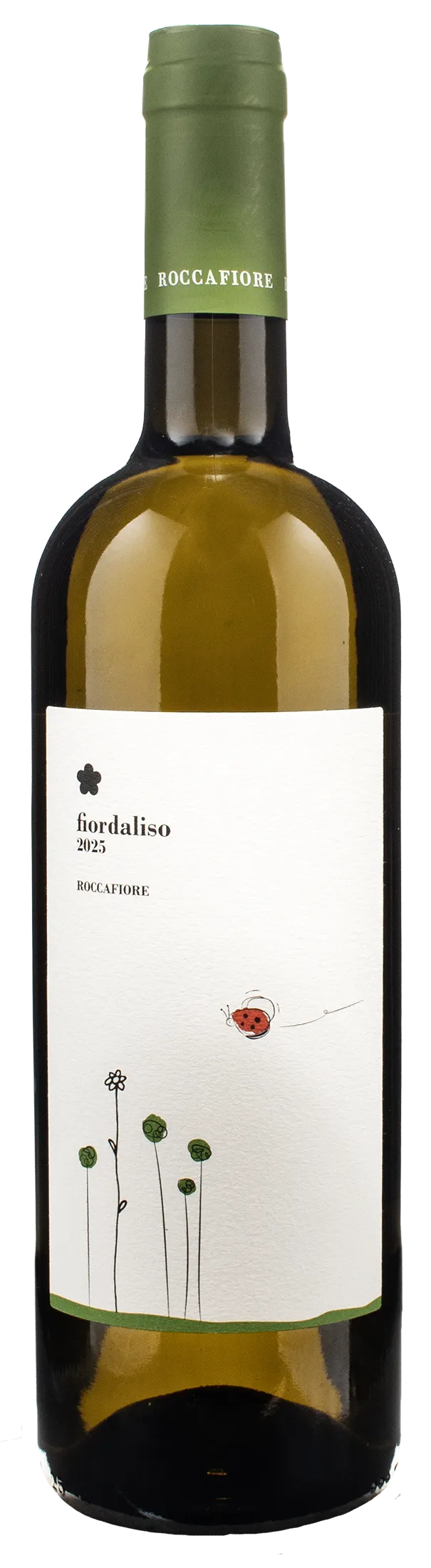
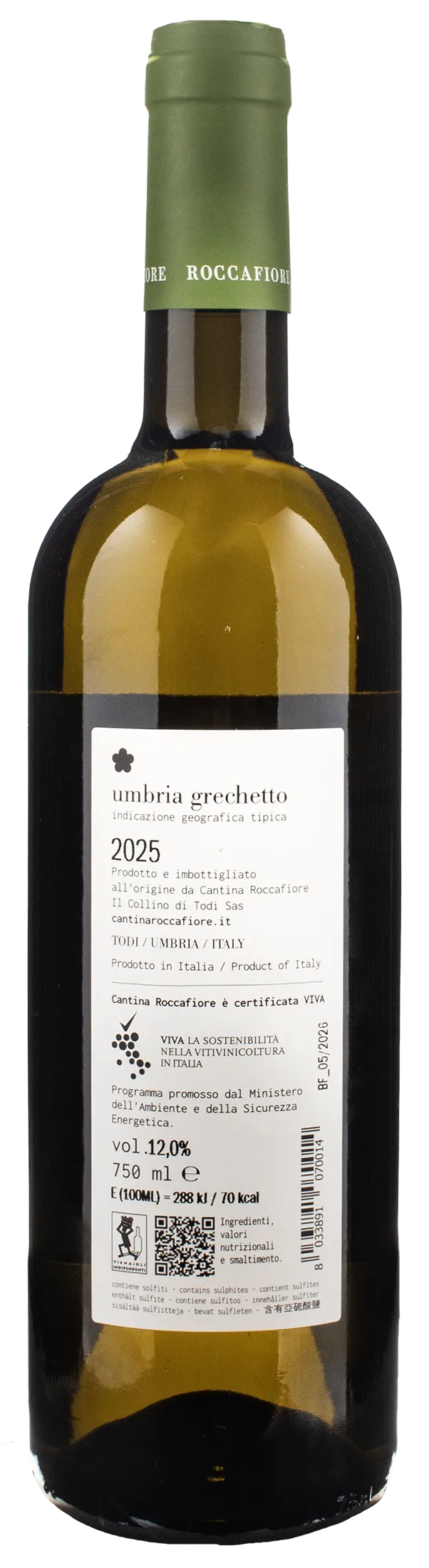
Grechetto Fiordaliso 2025
| Denomination | IGT Umbria |
|---|---|
| Size | 0,75 l |
| Alcohol content | 12.0% by volume |
| Area | Umbria (Italy) |
| Grape varieties | 100% Grechetto |
| Aging | 6 months in stainless steel in contact with the fine lees; after bottling, it rests for a minimum of 3 months in the bottle. |
- Type: Still dry white wine, 100% Grechetto, IGT Umbria, 12.5% vol.
- Aromas: Hints of white flowers, pink grapefruit and green apple; crisp and fragrant olfactory profile
- Palate: Dry, fresh and savoury taste, with pronounced minerality and a long, clean finish
- Production: Manual harvesting of the grapes; spontaneous fermentation in stainless steel with indigenous yeasts
- Pairings: Organic and vegan, ideal with lean fish and flavourful cheeses
Description
Wine style
Fiordaliso di Roccafiore is a still white wine with a Typical Geographical Indication (IGT) that expresses the essence of Umbria through Grechetto grapes, fermented in stainless steel. On the nose, it offers a clear aromatic profile, where notes of white flowers, green apple and pink grapefruit emerge. On the palate, it proves dry and sapid, characterised by a vibrant minerality that gives a clean and elegant persistence. The crisp texture is enriched by slight hints of candied fruit, supported by excellent volume. Certified organic and vegan, it is ideal for accompanying lean fish dishes and flavourful cheeses.
Provenance
This wine originates on the hills of Todi, where Roccafiore cultivates the vineyards following a strict sustainable philosophy. The vines take root in white clay and calcareous marl soils, which confer a deep savoury structure. The east and south-east exposure ensures optimal solar radiation for a balanced ripening of the bunches. Guyot training and high planting density allow for limited yields, concentrating the identity of the terroir. These environmental conditions define a dry style orientated towards maximum clarity of the fruit.
How it is produced
Production begins with a manual harvest, followed by gentle pressing of the bunches. The must is clarified by natural decantation and ferments spontaneously in temperature-controlled stainless steel tanks. The use of indigenous yeasts and the absence of malolactic fermentation preserve the aromatic precision of the grape variety. Ageing involves a six-month rest on the fine lees, fundamental for giving structure without sacrificing freshness. Subsequent bottle ageing stabilises the gustatory balance, defining the final profile of the wine.
History and Interesting Facts
Founded in Todi in 2000, Roccafiore expresses the soul of Umbria through a deep vocation for environmental sustainability. The Grechetto Fiordaliso, an organic and vegan label awarded 3 Bicchieri (3 Glasses) Gambero Rosso, originates on well-suited hills characterised by white clays and calcareous marls.
Tasting notes
Perfume

Color

Taste
Serve at:
08 - 10 °C
Longevity:
03 - 05 years
- Start up year: 2000
- Oenologist: Alessandro Biancolin
- Bottles produced: 100.000
- Hectares: 16
Respect for the locations is expressed in the exaltation of the unique facets of the native vines that have been grown here for centuries. This requires commitment, technique and knowledge, resulting in the production of wines bearing an unmistakable style and identity, in which the bold choices, patience and attention are distilled. This is to underline that Roccafiore does not pursue innovation as means to an end but rather as the realisation of visions and objectives that Leonardo and Luca seek to faithfully convey in their wines. Read more


| Name | Cantina Roccafiore Grechetto Fiordaliso 2025 |
|---|---|
| Type | White green still |
| Denomination | Umbria IGT |
| Vintage | 2025 |
| Size | 0,75 l |
| Alcohol content | 12.0% by volume |
| Grape varieties | 100% Grechetto |
| Country | Italy |
| Region | Umbria |
| Vendor | Cantina Roccafiore |
| Story | History and Interesting Facts Founded in Todi in 2000, Roccafiore expresses the soul of Umbria through a deep vocation for environmental sustainability. The Grechetto Fiordaliso, an organic and vegan label awarded 3 Bicchieri (3 Glasses) Gambero Rosso, originates on well-suited hills characterised by white clays and calcareous marls. |
| Origin | Hills of Todi (Umbria), Italy |
| Soil composition | White clays and calcareous marls |
| Cultivation system | Tablemount |
| Plants per hectare | Six thousand five hundred |
| Yield per hectare | 95 quintals per hectare |
| Harvest | First ten days of September |
| Production technique | Manual harvest; soft/gentle pressing; clarification of the must by natural settling only; spontaneous fermentation in temperature-controlled stainless steel tanks with indigenous yeasts (without malolactic fermentation); ageing for 6 months in stainless steel in contact with the fine lees; minimum 3 months' rest in the bottle. |
| Wine making | Manual harvest during the first ten days of September; soft pressing of the grapes; clarification of the must by natural settling only; spontaneous fermentation in stainless steel tanks at a controlled temperature with indigenous yeasts; no malolactic fermentation; ageing for 6 months in stainless steel in contact with the fine lees, followed by a minimum of 3 months' resting in the bottle. |
| Aging | 6 months in stainless steel in contact with the fine lees; after bottling, it rests for a minimum of 3 months in the bottle. |
| Allergens | Contains sulphites |