


Monsupello
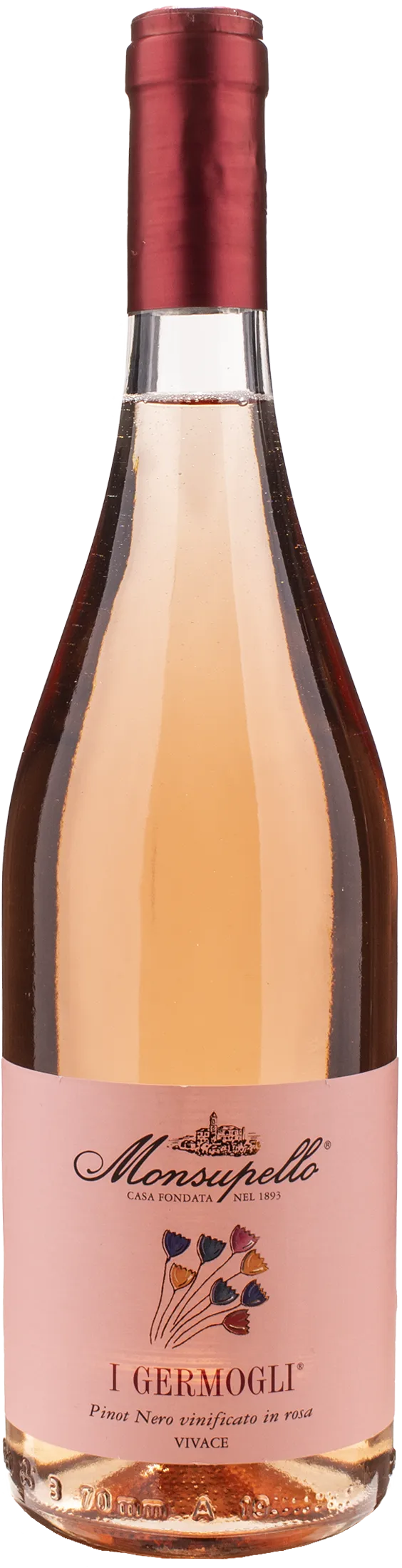
I Germogli Rosa 2024
| Denomination | IGT Provincia di Pavia |
|---|---|
| Size | 0,75 l |
| Alcohol content | 12.0% by volume |
| Area | Lombardy (Italy) |
| Grape varieties | 100% Pinot Nero |
| Aging | After further racking and stabilisation, selected yeasts and sweet must are added and the rosé base undergoes refermentation in a pressurised tank; finally, microfiltration and bottling. |
- Origin and vintage: Lombardy, Indicazione Geografica Tipica Province of Pavia, harvest 2024, 0.75 l
- Grape variety and style: 100% Pinot Noir, still rosé with a fresh and lively profile
- Vinification: Cold maceration for 12 hours, gentle pressing and fermentation at 18°C
- Aroma and colour: Pale, bright pink; notes of currant and rose, intense and persistent
- Pairings: Ideal with aperitifs, light dishes, fish, shellfish, paella, salt cod and cured meats

Description
What kind of wine it is
I Germogli Rosa is a rosé from Lombardy produced by Monsupello, made from Pinot Noir grapes and an expression of the territory of the Province of Pavia. It appears in the glass with a clear and bright pink colour. The aromatic bouquet is fruity, characterised by pleasant notes of currant and rose. On the palate, it is soft and harmonious, standing out for its fresh drinkability and pronounced savouriness, qualities that make this lively rosé the ideal companion for aperitifs and light dishes.
Where it comes from
The grapes come from the vineyards of Verzate, located in the area of the Province of Pavia. The vines are trained using the Guyot system, with a carefully planned planting density and a favourable south-east exposure. The distinctive feature of the area is the presence of clay-limestone soils, essential for imparting a natural savouriness and excellent structural balance to the flavour profile. This specific winegrowing environment enhances the vineyards, ensuring a controlled yield for a wine with precise and immediate drinkability.
How it is produced
Production begins at the end of August with the destemming of the bunches and a cold maceration on the skins for about twelve hours, a crucial stage for extracting the delicate colour shade. After gentle pressing, the must ferments at a controlled temperature. The base is then combined with selected yeasts and sweet must to start the refermentation in autoclave, which gives the wine its lively character. Careful microfiltration finally stabilises the acidity and the residual sugar before bottling.
History and Curiosities
Founded in 1893 in Verzate, the Monsupello winery embodies Lombard excellence through I Germogli Rosa 2024. This elegant IGT Provincia di Pavia is produced with Pinot Noir grapes cultivated using the Guyot method. The skilful refermentation in autoclave gives the wine a lively and captivating character, perfectly balanced between natural acidity and a delicate residual sweetness. A creation signed by expert oenologists that enhances the renowned Italian sparkling wine tradition, offering an extraordinarily fresh, savoury and memorable tasting experience.
Tasting notes

Perlage

Perfume

Color

Taste
Serve at:
10 - 12 °C
Longevity:
03 - 05 years

- Start up year: 1893
- Oenologist: Stefano Torre, Federico Fermini
- Bottles produced: 320.000
- Hectares: 50
Daring what is new, dreaming it, imagining it, and making it real: in the name of the father, Carlo Boatti, and today with his children Pierangelo and Laura. With different sensitivities and attitudes, they are interpreters of future horizons, in the contemporaneity of their sparkling wines. Read more


| Name | Monsupello I Germogli Rosa 2024 |
|---|---|
| Type | Rosé still |
| Denomination | Provincia di Pavia IGT |
| Vintage | 2024 |
| Size | 0,75 l |
| Alcohol content | 12.0% by volume |
| Grape varieties | 100% Pinot Nero |
| Country | Italy |
| Region | Lombardy |
| Vendor | Monsupello |
| Story | History and Curiosities Founded in 1893 in Verzate, the Monsupello winery embodies Lombard excellence through I Germogli Rosa 2024. This elegant IGT Provincia di Pavia is produced with Pinot Noir grapes cultivated using the Guyot method. The skilful refermentation in autoclave gives the wine a lively and captivating character, perfectly balanced between natural acidity and a delicate residual sweetness. A creation signed by expert oenologists that enhances the renowned Italian sparkling wine tradition, offering an extraordinarily fresh, savoury and memorable tasting experience. |
| Origin | Verzate (PV) |
| Soil composition | Clay-calcareous |
| Cultivation system | Guyot |
| Plants per hectare | 5000 |
| Yield per hectare | 90 q/Ha |
| Harvest | End of August |
| Fermentation temperature | 18 °C |
| Production technique | Cold maceration on the skins (about 12 hours), soft pressing and refermentation in an autoclave |
| Wine making | In rosé vinification, the Pinot Noir is destemmed in the pneumatic press and left to macerate cold on the skins for about 12 hours. This is followed by gentle pressing of the whole grapes to obtain the rosé must, which is then fermented at a controlled temperature of 18°C. After further racking and stabilisation, selected yeasts and sweet must are added and the rosé base undergoes a second fermentation in a pressurised tank; finally, microfiltration and bottling take place. |
| Aging | After further racking and stabilisation, selected yeasts and sweet must are added and the rosé base undergoes refermentation in a pressurised tank; finally, microfiltration and bottling. |
| Total acidity | 6.3 gr/L |
| PH | 3.12 |
| Residual sugar | 11.0 gr/L |
| Dry extract | 22.0 gr/L |
| Allergens | Contains sulphites |