


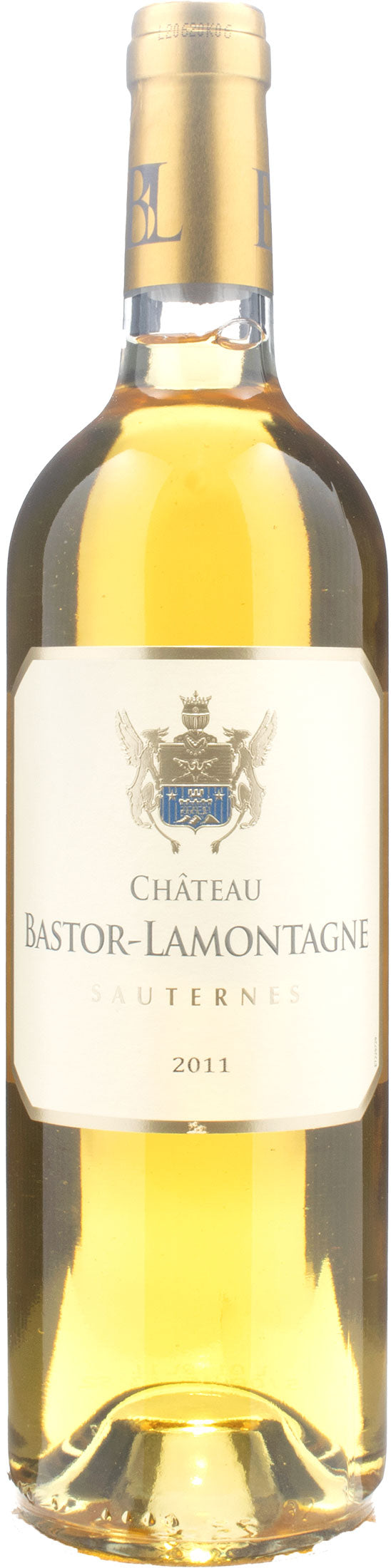
Chateau Bastor-Lamontagne
Sauternes 2011
Other years:
2023| Denomination | AOC Sauternes |
|---|---|
| Size | 0,75 l |
| Alcohol content | 14.0% by volume |
| Area | Bordeaux (France) |
| Grape varieties | Sauvignon, Semillon |
| Aging | After fermentation, the wines were aged on the lees for several months. |
| Other years | 2023 |
Description
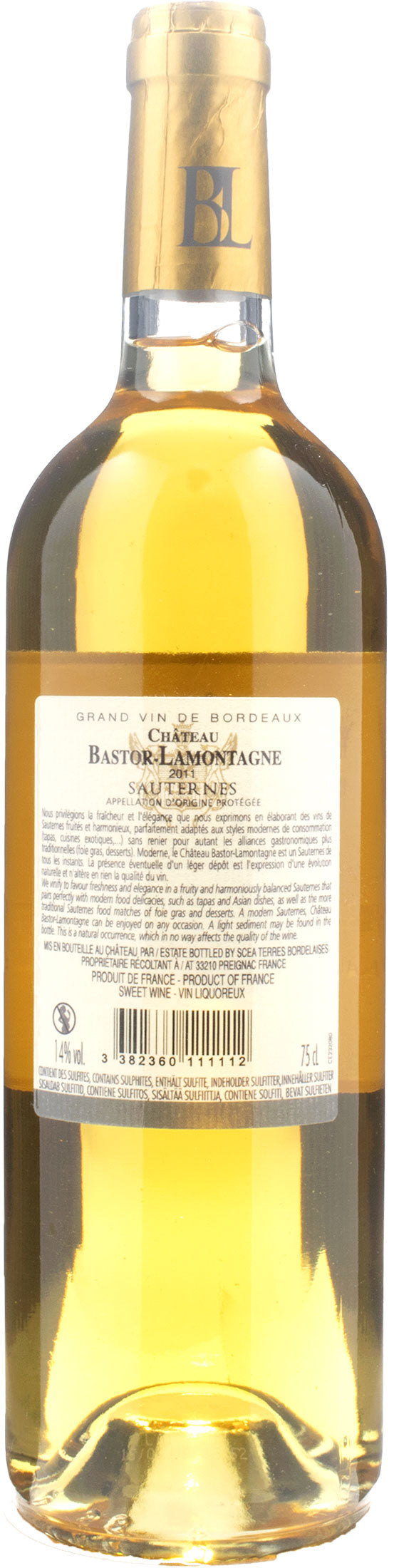
A sweet white passito from the prestigious Sauternes region of Bordeaux, France, 14% ABV, produced by Chateau Bastor-Lamontagne. Blend of Sauvignon and Semillon. 0.75L bottle, 2011 vintage. A wine that embodies the tradition of great French passito wines, with a history dating back to 1711. The estate, now organic, is one of three Sauternes properties to hold the "Bio" certification. The soil is gravelly-siliceous with a limestone base. Harvested by hand. After fermentation, the wines were aged on the lees for several months. The aroma is delicate and floral, with notes of white fruit (peach, pear) and candied apricots. The color is a beautiful, deep gold that invites tasting.
Awards
-
2011
 90
90/100
James Suckling is an influential American wine critic and journalist who worked at Wine Spectator for 30 years. He left the magazine in 2010 to start his own website and guidebook (JamesSuckling.com). He specialises in Italian and Bordeaux wines.
-
2011
 89
89/100
Vinous is the online guide from Antonio Galloni, one of the world's leading wine connoisseurs.
Tasting notes
Perfume
Color
Taste
Serve at:
10 - 12 °C
Longevity:
15 - 25 years
- Hectares: 56
This ancient royal property with three centuries of history has converted its winemaking to organic ("biological") farming since 2010. Château Bastor-Lamontagne is one of the three properties of the sauternes appellation detaining an « Organic » certification. Read more


| Name | Chateau Bastor Lamontagne Sauternes 2011 |
|---|---|
| Type | White dessert wine dessert wine |
| Denomination | Sauternes AOC |
| Vintage | 2011 |
| Size | 0,75 l |
| Alcohol content | 14.0% by volume |
| Grape varieties | Sauvignon, Semillon |
| Country | France |
| Region | Bordeaux |
| Vendor | Chateau Bastor-Lamontagne |
| Story | Owned by the King of France (successor to the King of England in 1453), the Bastor estate was transferred in 1711 to Sieur Vincent de La Montaigne, councillor to the Parliament of Bordeaux. The estate kept the name of the first owner family (La Montaigne became 'Lamontagne') to which the name Bastor (today 'Bastor') was later added. Bastor-Lamontagne was bought in 1839 by the Larrieu family, which had already owned Château Haut Brion and Château Pick since 1836. Viticulture became the main activity. This wine is made from the vines of Château Bastor-Lamontagne, a famous vintage of the Sauternes appellation. |
| Origin | Preignac (France) |
| Soil composition | Gravelly-siliceous on a limestone base. |
| Harvest | By hand. |
| Fermentation temperature | 18-20 °C |
| Wine making | The musts were extracted, using a pneumatic press, and fermented in barrels (50% of the harvest) or in stainless steel vats at a controlled temperature (18-20 °C), after a slight decanting of the must at a low temperature. |
| Aging | After fermentation, the wines were aged on the lees for several months. |
| Allergens | Contains sulphites |