


Arianna Occhipinti
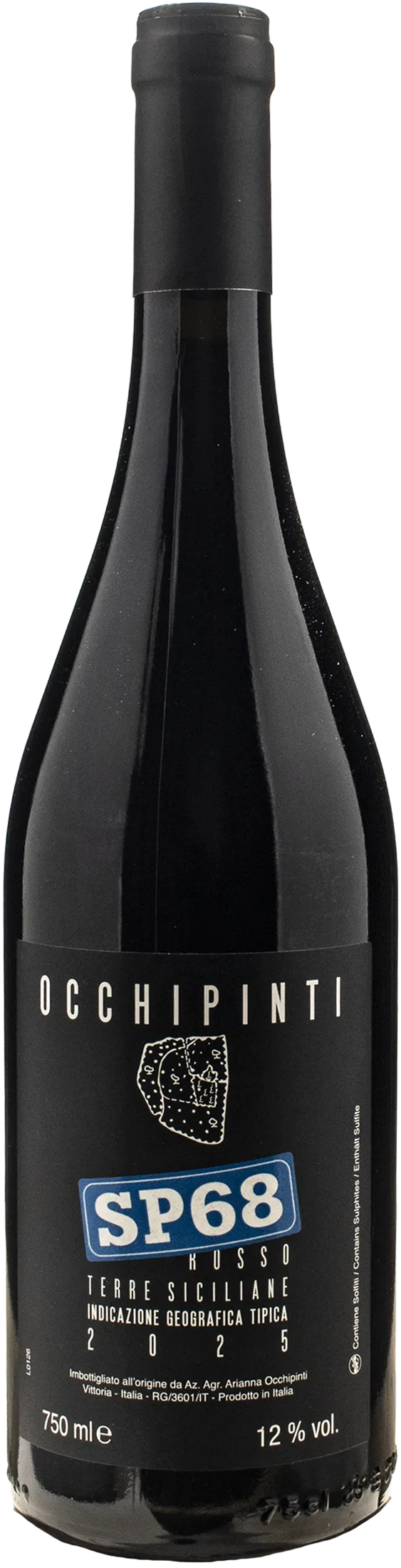
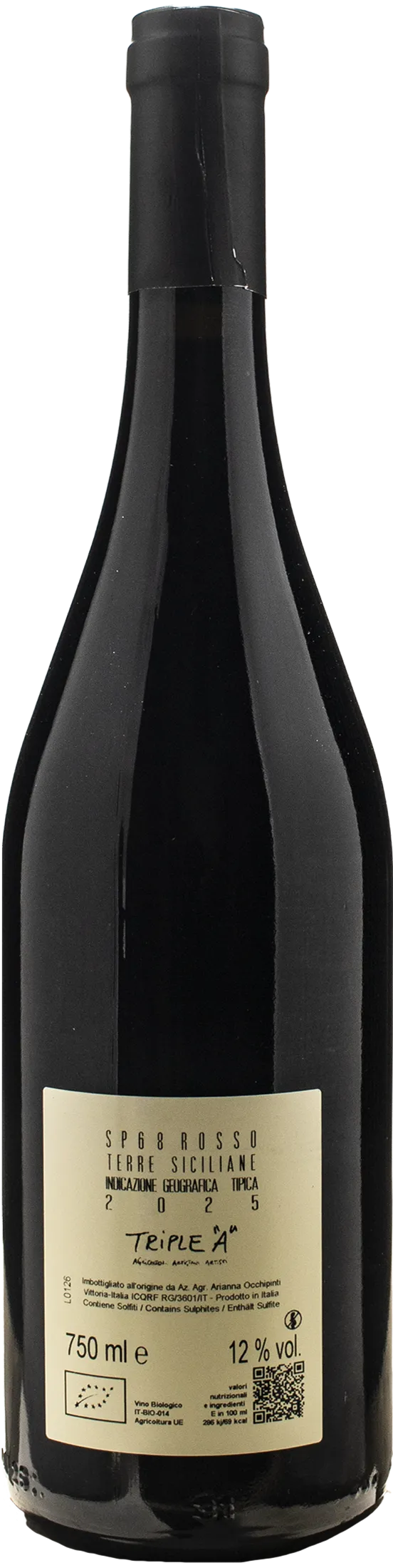
SP68 Rosso 2025
| Denomination | IGT Terre Siciliane |
|---|---|
| Size | 0,75 l |
| Alcohol content | 12.0% by volume |
| Area | Sicily (Italy) |
| Grape varieties | 70% Frappato, 30% Nero d'Avola |
| Aging | 6 months in cement tanks, 1 month in bottle; no filtration |
- Grape varieties: 70% Frappato and 30% Nero d’Avola; organic red Terre Siciliane IGT
- Aromas: notes of red rose, black pepper, liquorice, rhubarb and myrtle
- Palate: solid and harmonious sip, velvety tannins and balanced freshness
- Vinification: fermentation with indigenous yeasts, 15 days on the skins; unfiltered
- Ageing and area: 6 months in concrete + 1 in bottle; Vittoria (RG) at 280 m
Description
What kind of wine is it
SP68 Rosso by Arianna Occhipinti is an organic wine made from a blend of Frappato and Nero d’Avola grapes. A pure expression of the Sicilian lands, it ferments with indigenous yeasts and matures in concrete, presenting a concentrated ruby colour and aromas of red roses, black pepper, liquorice, rhubarb and myrtle. On the palate, it offers a solid approach, characterised by velvety tannins and excellent freshness, providing great balance.
Where does it come from
This red wine originates in Sicily, in the area of Vittoria, at about 280 metres above sea level. Its name pays homage to the local provincial road, reflecting a deep connection with its native landscape. The vines are trained using Guyot and spur cordon methods to ensure ideal ripening of the grapes. The roots delve into medium-textured soils, composed mainly of sub-Apennine sands of calcareous nature. This particular geological structure gives the wine great freshness and a delicate, well-balanced taste.
How is it produced
Production follows the principles of organic farming with a biodynamic approach, excluding any synthetic chemical intervention. After the harvest, spontaneous fermentation begins thanks to the action of indigenous yeasts. This is followed by a fifteen-day maceration in contact with the skins, essential for extracting colour and structure. The wine then matures for six months in concrete tanks, finishing with a month of rest in the bottle. To preserve the integrity of its sensory profile, the wine is not filtered.
History and Curiosities
This Terre Siciliane IGT takes its name from the SP68, a road in Vittoria, as a testament to Arianna Occhipinti's deep connection with her land. It is a young wine born from a passion for the region and the desire to best express the authentic Sicilian terroir.
Awards
-
2025
 2
2This guide is highly respected and offers the most comprehensive review of Italian wines. It has a long tradition and is based on blind tastings carried out by over 100 experts.
Tasting notes

Perfume

Color

Taste
Serve at:
14 -16 °C
Longevity:
05 - 10 years
Decanting time:
1 hour

- Start up year: 2004
- Oenologist: Arianna Occhipinti
- Bottles produced: 150.000
- Hectares: 40
In the first hectare of land next to my palmento, in Fossa di Lupo District, others followed. The firm grew into the Bombolieri, Pettineo and Bastonaca Districts, Yet, everything is still the same as in the first year. Bombolieri is also located on the County Road 68. The vineyard here enlarges and it stoops onto the limestone base of the area, the vineyards are twenty years old if not more, and the court on which the wineries raise themselves is able to trap all the strength of the Ibleian sun. Nowhere else I can feel to have been walking on a coherent road. Never as in Bombolieri I can feel that I'm carrying with me past and future at the same time. It was the oldest wine route ever documented. That road was used by generations of farmers to bring their own wine to the coast. Read more


| Name | Arianna Occhipinti SP68 Rosso 2025 |
|---|---|
| Type | Red organic still |
| Denomination | Terre Siciliane IGT |
| Vintage | 2025 |
| Size | 0,75 l |
| Alcohol content | 12.0% by volume |
| Grape varieties | 70% Frappato, 30% Nero d'Avola |
| Country | Italy |
| Region | Sicily |
| Vendor | Arianna Occhipinti |
| Story | History and Curiosities This Terre Siciliane IGT takes its name from the SP68, a road in Vittoria, as a testament to Arianna Occhipinti's deep connection with her land. It is a young wine born from a passion for the region and the desire to best express the authentic Sicilian terroir. |
| Origin | Vittoria (RG) |
| Climate | Altitude: 280 m a.s.l. |
| Soil composition | Medium texture; sub-Apennine sands of a calcareous nature |
| Cultivation system | Guyot and spur-pruned cordon |
| Plants per hectare | 6000 |
| Harvest | Last week of September, first ten days of October |
| Production technique | Fermentation with indigenous yeasts; 15 days maceration on the skins; no filtration; aged for 6 months in concrete tanks and 1 month in bottle |
| Wine making | Fermentation with indigenous yeasts; 15 days maceration on the skins. |
| Aging | 6 months in cement tanks, 1 month in bottle; no filtration |
| Allergens | Contains sulphites |