

Fontanafredda
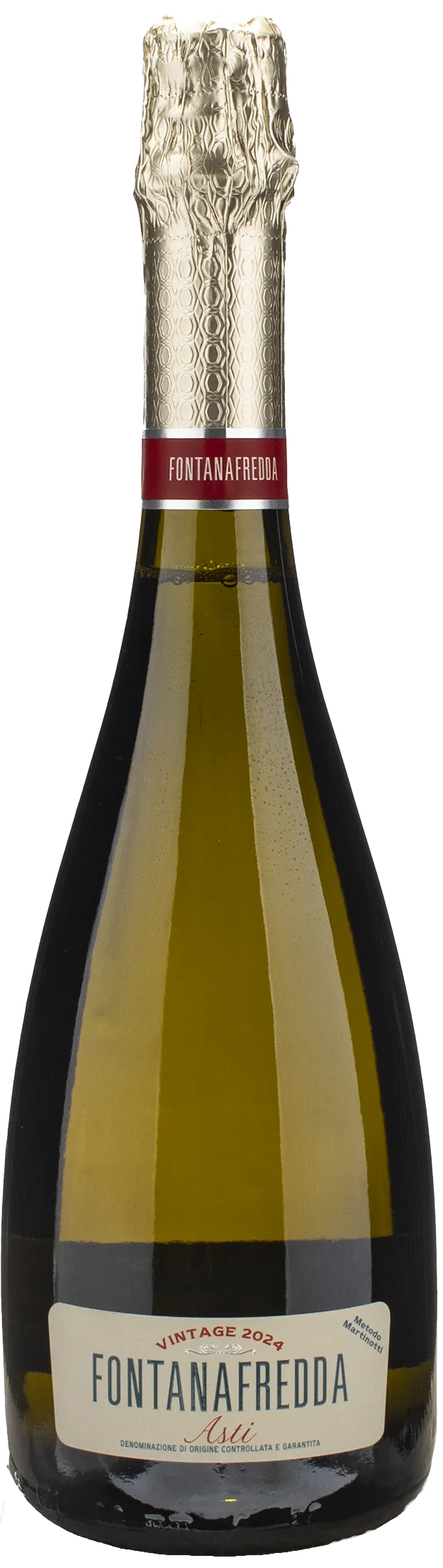
Asti Spumante Metodo Martinotti Vintage Dolce 2024
Other years:
2023| Denomination | DOCG Asti Spumante |
|---|---|
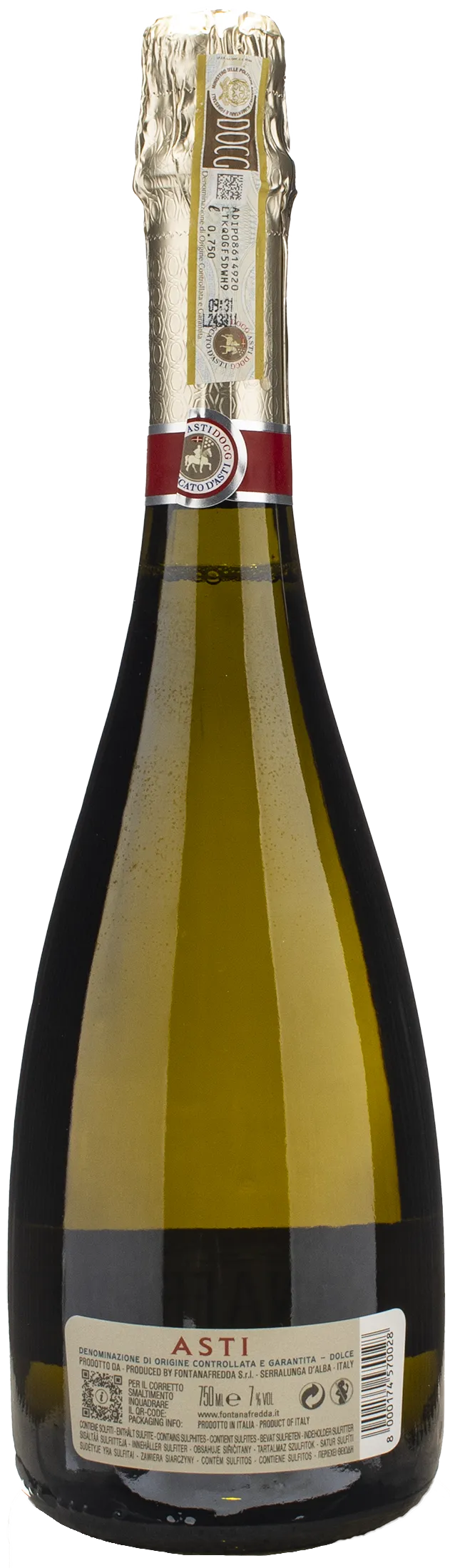
| Size | 0,75 l |
| Alcohol content | 7.0% by volume |
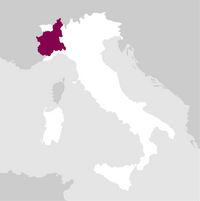
| Area | Piedmont (Italy) |
| Grape varieties | 100% Moscato Bianco/Moscato Reale |
| Year | 2024 |
| Product name | Asti Spumante Metodo Martinotti Vintage Dolce 2024 |
| Color | Straw-yellow. |
| Perfume | On the nose, the fragrant aroma, typical of the grapes from which it comes, infuses this wine with sweet exuberant aromas of musk, lime blossom, acacia, hawthorn and orange blossom, sage II decade of September 14% vol, of which 7% vol already developed 7 - 8 °C 0.75L and honey, and provokes captivating emotions prolonged by the persistence of a joyful flavour. |
| Taste | On tasting, in the classic goblet that highlights its straw-yellow colour, it confirms all the premises: the flavour is that of ripe grapes, fragrant and characteristic, pleasantly sweet but balanced. |
| Pairings | Very enjoyable at any time, it is also a perfect match for many sweets, especially fine, delicately- flavoured desserts. Outstanding with fruit. |
| Region | Piedmont |
| Country | Italy |
| Other years | 2023 |
Description
The Moscato Bianco grape variety, from which Fontanafredda Asti Spumante Dolce is made, is one of the oldest grapes grown in Italy. In fact, it seems that even the ancient Greeks and Romans drank wine made from these grapes during their banquets. The name Moscato grape variety appears in the Middle Ages and derives from muscum, meaning moss, which refers to the intense aroma and sweet flavor of this product. Moscato Bianco grapes are grown in Piedmont, in an area comprising 52 municipalities in the provinces of Alessandria, Asti, and Cuneo, covering a total area of approximately 9,700 hectares. These areas have unique characteristics, alternating between the elongated, steep hills of the Langhe and the softer, rounded hills of Monferrato. The climate, typical of hilly areas, and the calcareous soils enhance the characteristics of the grape variety. The grapes used to produce Fontanafredda Asti Spumante Dolce are harvested in early September and are still done by hand to preserve the integrity of the bunches and retain the aromatic properties of each individual berry. Pressing is also done delicately, and the must is immediately chilled at low temperatures to prevent spontaneous fermentation. The must is then brought to 20 degrees Celsius (68 degrees Fahrenheit) and alcoholic fermentation begins with the use of selected yeasts. When the alcohol content reaches 5.5 degrees, it is time for the secondary fermentation: the sparkling wine, a DOCG product, is born. Spumante Asti Dolce can be served in a glass named after it: the Coppa Asti, a glass created specifically for serving sweet and aromatic sparkling wines.
Details

Perlage

Perfume

Color

Taste
Serve at:
10 - 12 °C.
Longevity:
03 - 05 years

Pairings
- Start up year: 1878
- Oenologist: Giorgio Lavagna
- Bottles produced: 7.000.000
- Hectares: 120
Like all beautiful things, Fontanafredda originates from a love story between the first King of Italy, Vittorio Emanuele II, and Rosa Vercellana.
Producers of Barolo and sumptuous wines of the Langhe, it was the scene of many firsts: they were the first Barolo to go overseas, the first to produce the first Classic Method in 1959, which was to be the forerunner of Alta Langa.
The founding principle of the winery is the concept of community.
Since 2018, Fontanafredda has been cultivating 120 organically certified hectares that are the setting for Italy's first Storytelling Village ('Villaggio Narrante'), which is still home to 12 families of workers who make the village an authentic village, alive and productive.
Fontanafredda is also hospitality, a meeting place where everyone is welcome thanks to its 4-star hospitality.
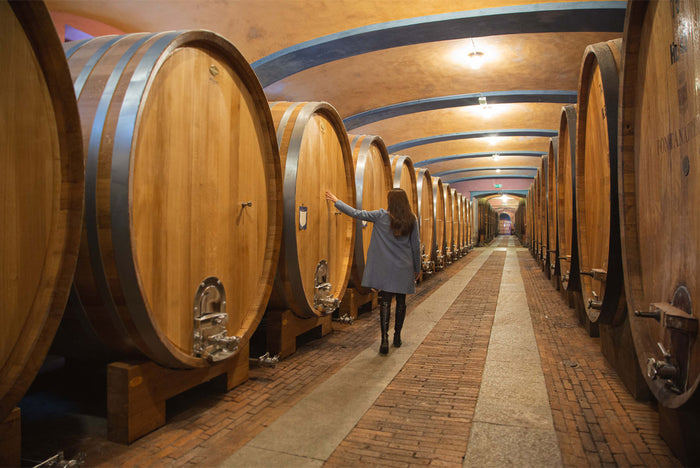
Today, the company preserves intact the testimonies of its noble past - the hunting lodge, the village, the extensive cellars, the vineyards - but continues to renew itself and experiment, perfecting what nature and history have handed down. For this reason, in the Langhe, where vines and wine bind generations to each other and shape the landscape, Fontanafredda is an essential reference point. The expression of a wine culture that comes from the earth, from the vineyard, and is refined through the work and creativity of people.
In 2021, the Alta Langa DOCG Contessa Rosa Rosé 2014 was named 'Best Sparkling Wine in the World' according to Tastingbook 2021.
In 2022 the BAROLO SERRALUNGA 2018 entered the TOP100 of WINE SPECTATOR in 78th place. Read more

| Name | Fontanafredda Asti Spumante Metodo Martinotti Vintage Dolce 2024 |
|---|---|
| Type | White charmat method sparkling wine dessert wine aromatic |
| Denomination | Asti DOCG |
| Vintage | 2024 |
| Size | 0,75 l |
| Alcohol content | 7.0% by volume |
| Grape varieties | 100% Moscato Bianco/Moscato Reale |
| Country | Italy |
| Region | Piedmont |
| Vendor | Fontanafredda |
| Origin | Langa astigiana and albese |
| Climate | Altitude: 200 - 300 m. sl.m. Exposure: South-East, South-West. |
| Soil composition | Calcareous soils. |
| Cultivation system | Guyot |
| Plants per hectare | 4000 - 5000 |
| Harvest | II decade of September. ing is carried out when the grapes have reached considerable aromatic ripeness and a very high concentration of sugars. The acidity is preserved thanks to the selection of particularly suitable vineyards that are able to naturally provide an important acid heritage even with 'pushed' ripening. |
| Wine making | In the cellar, the must is prepared traditionally with soft pressing and avoiding oxidation that could reduce the wine's aromatic heritage. Fermentation is conducted 200 - 300 m .a.s.l. South - East South - West System: guyot 4000 - 5000 vines/ha by a yeast that is stored from previous fermentations and serves to improve fermentation performance. The stay on the yeast is prolonged for several weeks in order to fix all the aromas even better. |
| Allergens | Contains sulphites |