Feudo Principi di Butera
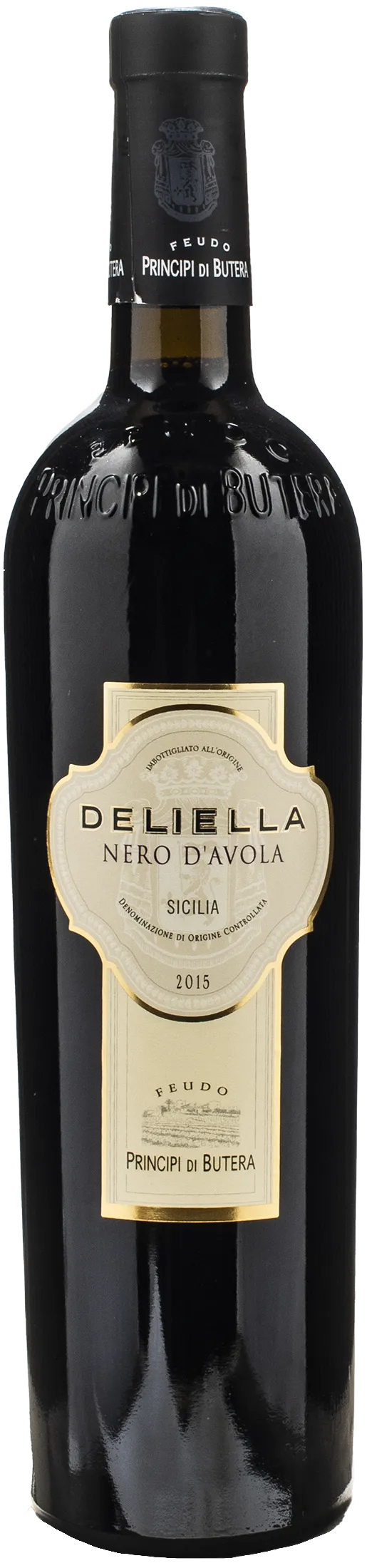
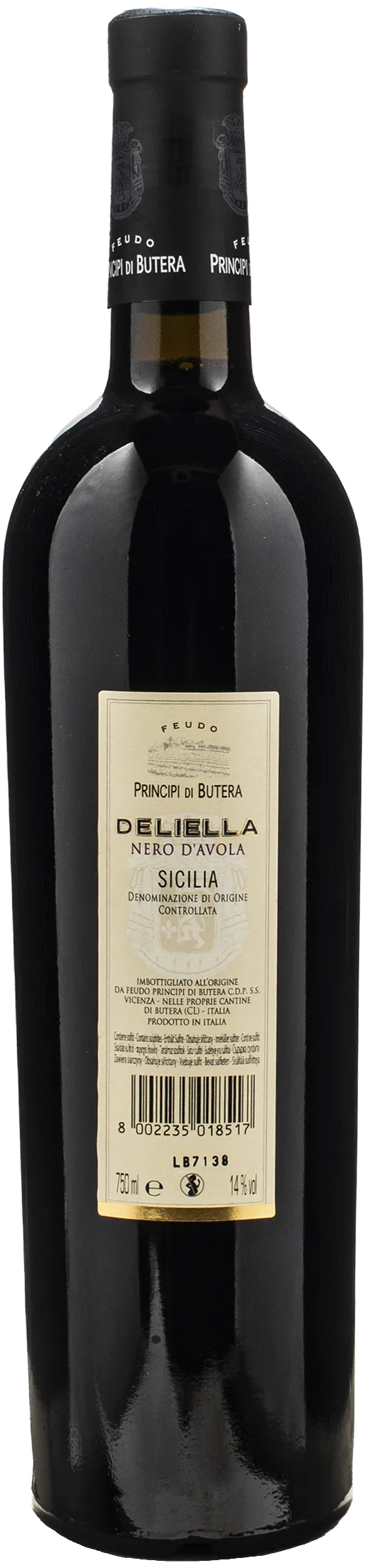
Deliella Nero d'Avola 2015
| Denomination | Sicilia DOC |
|---|---|
| Size | 0,75 l |
| Alcohol content | 14.0% by volume |
| Area | Sicily (Italy) |
| Grape varieties | 100% Nero d'Avola |
| Aging | Deliella matures for 14 months, 90% in 30 and 60 hl large casks and 10% in 350-litre second-passage tonneaux. After blending in steel, the wine matures in the bottle for about a year. |
| Year | 2015 |
| Product name | Deliella Nero d'Avola 2015 |
| Color | Ruby red. |
| Perfume | Red fruits with dominant notes of morello cherry, juniper and myrtle. |
| Taste | The balsamic side is perfectly balanced with acidity and minerality. The body is slender with a long, persistent finish. It closes on the same red fruits perceived on the nose, in perfect gustatory-olfactory continuity. |
| Production method | Very important is the green management, which is carried out strictly by hand with meticulous care. Leaf stripping is carried out on the east side, the so-called 'morning side', an operation that allows the skin of the berries to thicken, encourages gradual ripening from light rather than heat and avoids over-ripening. In order to guarantee high quality levels, strict thinning out is carried out, which significantly reduces yields per hectare. In addition, it has been possible to completely eliminate weed control, thanks to skilful sub-row cultivation. |
| Pairings | Excellent with full-flavoured first courses, white and red meats - either grilled or served with sauces - ideal with baked lamb and matured but not marbled cheeses. |
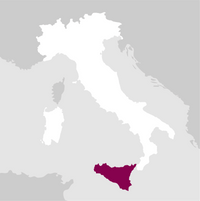
| Region | Sicily |
| Country | Italy |
Description
Deliella Nero d'Avola, a Sicilian still red, 14% ABV, produced by Feudo Principi di Butera. 100% Nero d'Avola, 2015 vintage. A wine born from a thousand-year history, linked to the nobility of Sicily. The vines are trained using the spurred cordon system, using a unique, custom-designed pruning system. Deliella ages for 14 months, 90% in 30- and 60-hl barrels and 10% in 350-liter second-passage tonneaux. After blending in stainless steel, the wine ages in bottle for approximately one year. Red fruit with dominant notes of morello cherry, juniper, and myrtle. Ruby red. The balsamic notes appear perfectly balanced with the acidity and minerality. The body is supple with a long, persistent finish. It closes with the same red fruit aromas perceived on the nose, in perfect continuity with the palate.
Awards
-
2015
 93
93/100
James Suckling is an influential American wine critic and journalist who worked at Wine Spectator for 30 years. He left the magazine in 2010 to start his own website and guidebook (JamesSuckling.com). He specialises in Italian and Bordeaux wines.
Details

Perfume

Color

Taste
Serve at:
16 - 18 °C.
Longevity:
10 - 15 years
Decanting time:
2 hours

Pairings
- Start up year: 1997
- Oenologist: Antonio Paolo Froio
- Bottles produced: 800.000
- Hectares: 180
The name Butera appears to have its origins in Re Bute, the first king of the Siculi, who along with the Sicani and Grek colonisers, inhabited the strategically important southern central region of Sicily which acted as the border between the three civilisations.
Saracen occupation of the island started in 854 AD and continued until their expulsion in 1089 at the hands of the Norman Roger of Altavilla. The history of the principality was then characterised by three great families in succession: the Santapau, the Bracinforte and the Lanza.
The Santapau held the Feudo Principi di Butera for two centuries before ceding it to the Bracinforte, a noble family originally from the Piacenza region. In 1543 King Philip of Spain then nominated Ambrogio Bracinforte as Lord of Feudo Principi di Butera, which remained the most important noble title in Sicily up until the 19th century. The Bracinforte dynasty became one of the most powerful in the history of Sicily and it is estimated that at the turn of the 18th century they owned what amounted to about ten percent of the entire island’s income.
The Bracinforte dynasty came to an end with marriage of Stefania Bracinforte to Guiseppe Lanza, whose union brought together into one family dozens of titles, hundreds of manor houses, thousands of hectares of land and unbound riches. In 1895 the Lanza heir was also awarded the title of Prince of Deliella.
In the previous century, the Italian Royal Family of Savoia had founded the Principality of Deliella, on the very lands which today represent the borders of the Feudo Principi di Butera
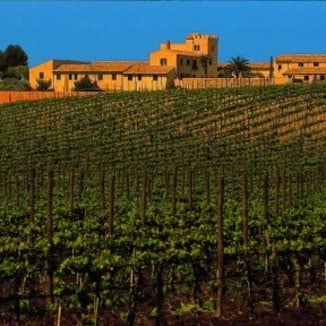
The ancient Baglio (fortified manor house) of the Feudo Principi di Butera, having been completely restored with great attention being paid to its ancient structures, has come back to life and the intense ochre colours of its walls are even more striking when they meet the incredible blues and greens of the surrounding Sicily.
The Zonin family has thus also taken on the role of custodian of the territory, convinced that they have a definite responsibility to care for and highlight the history, architecture and landscape of the island. Read more
| Name | Feudo Principi di Butera Deliella Nero d'Avola 2015 |
|---|---|
| Type | Red still |
| Denomination | Sicilia DOC |
| Vintage | 2015 |
| Size | 0,75 l |
| Alcohol content | 14.0% by volume |
| Grape varieties | 100% Nero d'Avola |
| Country | Italy |
| Region | Sicily |
| Vendor | Feudo Principi di Butera |
| Origin | Butera, south-central Sicily |
| Soil composition | Clay, silt, sand with a good percentage of skeleton and presence of up to 15% active limestone. |
| Cultivation system | The vines are trained using the spurred cordon system, with a special custom-made pruning system, which aims to guarantee the natural lymphatic flow of the plant by reducing the size of the cuts. |
| Plants per hectare | 4200 |
| Yield per hectare | 40-50 q. |
| Harvest | Manual in 15 kg crates. Last week of September. |
| Production technique | Very important is the green management, which is carried out strictly by hand with meticulous care. Leaf stripping is carried out on the east side, the so-called 'morning side', an operation that allows the skin of the berries to thicken, encourages gradual ripening from light rather than heat and avoids over-ripening. In order to guarantee high quality levels, strict thinning out is carried out, which significantly reduces yields per hectare. In addition, it has been possible to completely eliminate weed control, thanks to skilful sub-row cultivation. |
| Aging | Deliella matures for 14 months, 90% in 30 and 60 hl large casks and 10% in 350-litre second-passage tonneaux. After blending in steel, the wine matures in the bottle for about a year. |
| Allergens | Contains sulphites |