
Under the law of Hong Kong, intoxicating liquor must not be sold or supplied to a minor in the course of business. | 根據香港法律,不得在業務過程中,向未成年人售賣或供應令人醺醉的酒類。


Benanti
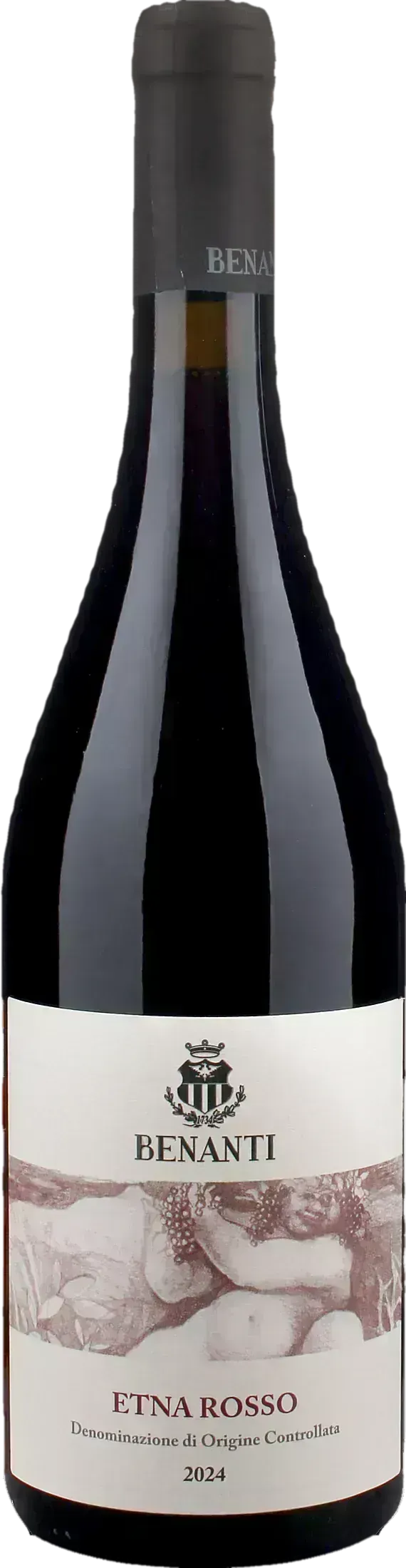
Etna Rosso 2024
Other years:
2023| Denomination | DOC Etna Rosso |
|---|---|
| Size | 0,75 l |
| Alcohol content | 13.5% by volume |
| Area | Sicily (Italy) |
| Grape varieties | 85% Nerello Mascalese, 15% Nerello Cappuccio |
| Aging | Approximately 80% of the Nerello Mascalese matures in stainless steel and 20% in French oak barriques (2nd–3rd fill) for approximately 8–10 months; the Nerello Cappuccio matures only in stainless steel; bottle ageing for approximately 3 months. |
| Other years | 2023 |
- Type and grapes: Etna DOC red wine from Nerello Mascalese and Nerello Cappuccio
- Aroma profile: Hints of ripe red fruit and light nuances of vanilla, ethereal bouquet
- Tasting notes: Dry and harmonious flavour, savoury minerality, freshness and refined tannins
- Soil origin: Vineyards located between 450 and 900 metres on sandy and mineral soils of Mount Etna
- Ageing: Aged for 8-10 months in steel and French oak; 90 points Wine Spectator

Description
What type of wine it is
Etna Rosso Benanti is a still red wine that fully expresses the volcanic character of Sicily, produced by the winery of the same name. Belonging to the renowned Etna denomination, this harmonious blend combines the indigenous varieties Nerello Mascalese and Nerello Cappuccio. On the palate, it reveals itself to be dry, fresh and savoury, supported by a well-integrated tannic structure and intense aromas of ripe red fruit and notes of vanilla. Its elegant and persistent style is the result of careful vinification and ageing that combines the use of stainless steel and French oak barrels.
Provenance
The grapes destined for this wine come from the northern, south-eastern and south-western slopes of Mount Etna in Sicily, grown at an altitude of between 450 and 900 metres. The vines, trained using traditional bush-vines (alberello) and trellis systems, are rooted in sandy volcanic soils, which are distinctly rich in minerals and have a sub-acid reaction. The area's mountain climate ensures a significant temperature range between day and night and constant ventilation. These particular soil and climate conditions favour the aromatic development of the bunches and give the wine its unmistakable mineral savouriness.
How it is produced
Production begins around mid-October with the harvesting of the grapes, followed by rigorous separate vinification for the two varieties. Following destemming, the must undergoes maceration on the skins for about fifteen days and fermentation in temperature-controlled stainless steel tanks, triggered by indigenous yeasts. Once malolactic fermentation is complete, the Nerello Mascalese matures partly in stainless steel and partly in French oak barrels, while the Nerello Cappuccio ages exclusively in stainless steel. The process concludes with blending and an appropriate period of rest in the bottle.
History and curiosities
A benchmark for viticulture since 1988, the Benanti winery produces Etna Rosso by selecting grapes from the slopes of the volcano. The historic vines, aged between 10 and 60 years, yield precious bunches. Fermentation uses selected indigenous yeasts from the winery, the result of research conducted to enhance the identity of the territory. The wine received a prestigious accolade with 90 points awarded by Wine Spectator.
Tasting notes

Perfume

Color

Taste
Serve at:
16 - 18 °C
Longevity:
10 - 15 years
Decanting time:
1 hour

- Start up year: 1988
- Oenologist: Enzo Calì
- Bottles produced: 250.000
- Hectares: 30
The Benanti family has been instrumental in Etna’s viticulture throughout history, contributing first hand to its evolution. Now managed by Giuseppe Benanti’s two sons, Antonio and Salvino Benanti, the winery has an annual production of about 250.000 bottles that are distributed throughout the most important markets worldwide. Read more


| Name | Benanti Etna Rosso 2024 |
|---|---|
| Type | Red still |
| Denomination | Etna DOC |
| Vintage | 2024 |
| Size | 0,75 l |
| Alcohol content | 13.5% by volume |
| Grape varieties | 85% Nerello Mascalese, 15% Nerello Cappuccio |
| Country | Italy |
| Region | Sicily |
| Vendor | Benanti |
| Story | History and curiosities A benchmark for viticulture since 1988, the Benanti winery produces Etna Rosso by selecting grapes from the slopes of the volcano. The historic vines, aged between 10 and 60 years, yield precious bunches. Fermentation uses selected indigenous yeasts from the winery, the result of research conducted to enhance the identity of the territory. The wine received a prestigious accolade with 90 points awarded by Wine Spectator. |
| Origin | Northern, south-eastern and south-western slopes of Mount Etna, Sicily |
| Climate | Mountainous and high-hill climate; humid and rainy during the cold season, very windy with a significant temperature range between day and night. |
| Soil composition | Sandy volcanic soils, rich in minerals, with a sub-acidic reaction |
| Cultivation system | Bush-trained and espalier |
| Plants per hectare | 6,000–8,000 vines per hectare |
| Yield per hectare | 7,000–8,000 kg per hectare |
| Harvest | Around mid-October |
| Fermentation | About 15 days |
| Production technique | Vinification in stainless steel at a controlled temperature with destemming and maceration on the skins (approximately 15 days) using indigenous yeasts; malolactic fermentation; ageing in stainless steel and in French oak barriques. |
| Wine making | The varieties are vinified separately: destemming, then fermentation in temperature-controlled stainless steel tanks with approximately 15 days of maceration on the skins, using indigenous yeasts selected by the winery; malolactic fermentation follows. Ageing: Nerello Mascalese partly in stainless steel and partly in French oak barriques (2nd–3rd fill) for 8–10 months; Nerello Cappuccio only in stainless steel; then blending and resting, with bottle ageing for approximately 3 months. |
| Aging | Approximately 80% of the Nerello Mascalese matures in stainless steel and 20% in French oak barriques (2nd–3rd fill) for approximately 8–10 months; the Nerello Cappuccio matures only in stainless steel; bottle ageing for approximately 3 months. |
| Allergens | Contains sulphites |