

Agricola Punica
Isola dei Nuraghi Barrua 2021
| Denomination | IGT Isola dei Nuraghi |
|---|---|
| Size | 0,75 l |
| Alcohol content | 15.0% by volume |
| Area | Sardinia (Italy) |
| Grape varieties | 85% Carignano, 10% Cabernet Sauvignon, 5% Merlot |
| Aging | Matured in new French oak barriques for approximately 18 months, followed by bottle ageing (in glass) for at least 12 months. |
- Blend and style: Still red wine IGT Isola dei Nuraghi, with a powerful and elegant character
- Grapes: Carignano 85%, Cabernet Sauvignon 10%, Merlot 5%
- Ageing: 18 months in new French oak barriques and 12 months in bottle
- Aroma and taste: Notes of black cherry, spices, liquorice, myrtle, sage and pepper, with a persistent finish
- Serving: Decant for 1 hour at 18-20°C, ideal with meats and mature cheeses
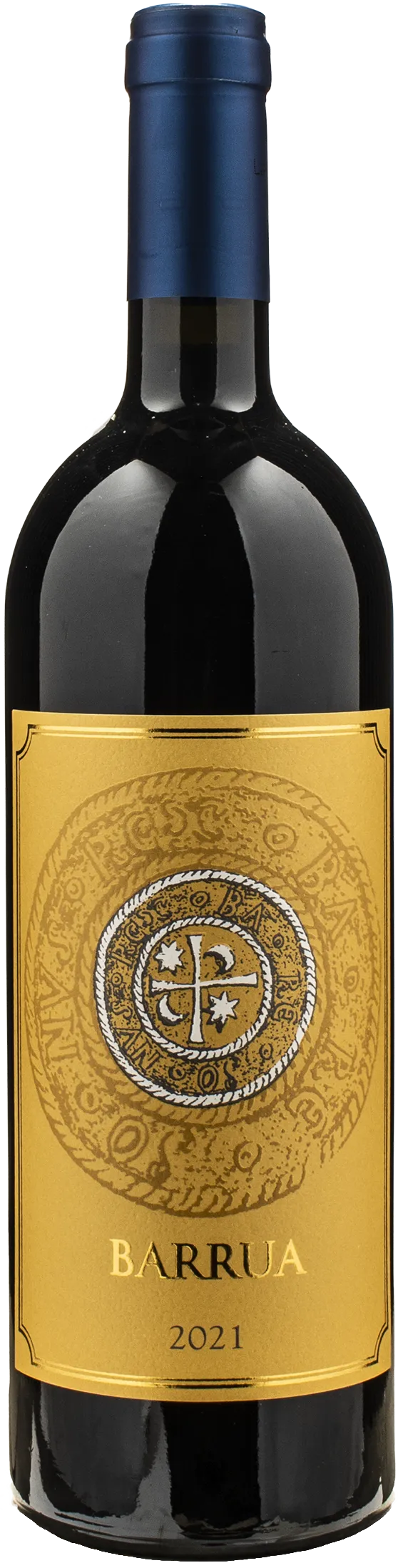
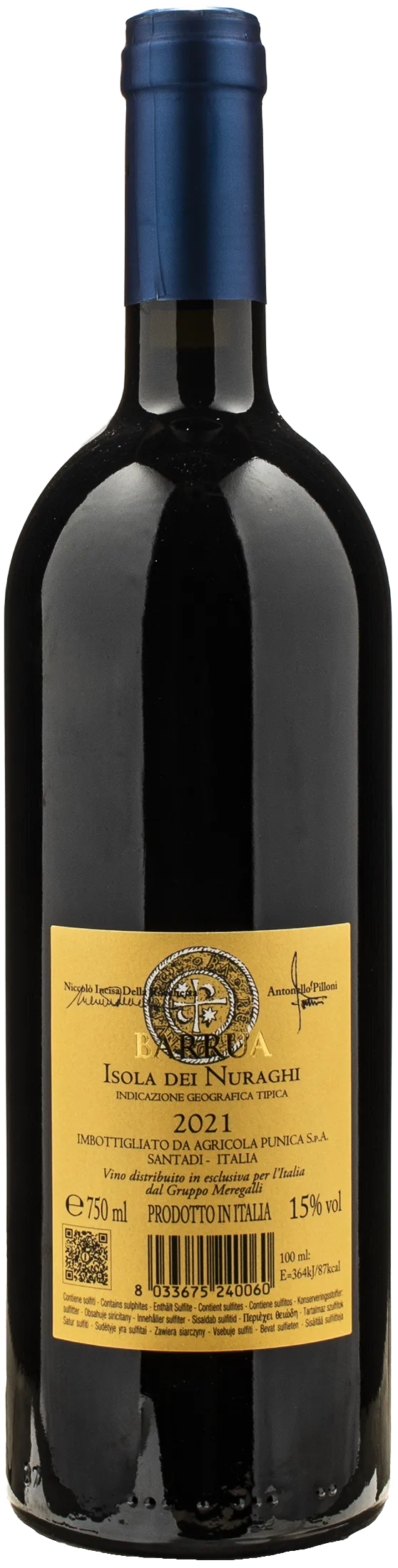
Description
What kind of wine it is
Barrua by Agricola Punica is a red wine that elegantly expresses the character of Sardinia, born from a refined blend of Carignano, Cabernet Sauvignon and Merlot. Linked to the territory of the Isola dei Nuraghi denomination, this wine reveals an impressive structure and a marked aptitude for ageing. With a deep ruby red colour, it releases a complex bouquet with notes of black cherry, spices, liquorice and myrtle. On the palate it is smooth, harmonious and enveloping, enriched by hints of sage and pepper that lead to a persistent finish, ideal for accompanying robust meat dishes and mature cheeses.
Where it comes from
The grapes for Barrua grow in Basso Sulcis, at the estates of Narcao and the locality of Barrua. This area is characterised by a hot, arid climate in summer and mild winters, conditions that ensure perfect ripening of the fruit. The vineyards are rooted in medium-textured soils, composed of clay, limestone and sand, giving the wine a solid structure and a unique aromatic definition. The Agricola Punica project was created to enhance the winegrowing vocation of this corner of Sardinia, offering a rigorous interpretation and deep insight into the potential of the territory.
How it is produced
Production involves a manual harvest carried out between the second half of September and the beginning of October. The must ferments in contact with the skins in temperature-controlled steel tanks, with regular pumping over to encourage the extraction of noble components. After malolactic fermentation, the wine matures for about eighteen months in new French oak barrels, concluding its journey with an ageing process that softens its structure. It is recommended to decant for one hour before tasting, serving the wine at an ideal temperature of eighteen to twenty degrees.
History and Curiosities
Born in 2002 in Basso Sulcis, Barrua by Agricola Punica seals the excellent union between Tenuta San Guido, Cantina Santadi and Sebastiano Rosa. The flair of the renowned oenologist Giacomo Tachis was able to interpret the hot and arid climate of Sardinia to enhance the noble Carignano grapes, giving life to a fine Isola dei Nuraghi IGT red wine. Now overseen by oenologist Giorgio Marone, this elegant wine wins over connoisseurs all over the world, boasting prestigious awards such as 93 points from James Suckling and 5 Grappoli from Bibenda.
Awards
-
2021
 5
5Italian Sommelier Foundation (FIS) guide This has been one of the most prestigious wine guides in Italy for over 10 years.
-
2021
 93
93/100
James Suckling is an influential American wine critic and journalist who worked at Wine Spectator for 30 years. He left the magazine in 2010 to start his own website and guidebook (JamesSuckling.com). He specialises in Italian and Bordeaux wines.
-
2021
 4
4Italian Sommelier Association (AIS) guide
Tasting notes

Perfume

Color

Taste
Serve at:
18 - 20 °C
Longevity:
10 - 15 years
Decanting time:
1 hour
- Start up year: 2002
- Oenologist: Giorgio Marone
- Bottles produced: 300.000
- Hectares: 70
Sebastiano Rosa Mr. Sebastiano Rosa, wine expert for the S. Guido Estate and the Santadi's cellar, detain the majority share, that is the 40% for each one.
The S. Guido Estate is managed by the Marquis Nicolò Incisa della Rocchetta, who detains the 10%, while Giacomo Tachis and Antonello Pilloni, President of Santadi, detain in equal parts the remaining 10%.
Various are the ties among these personalities. In cooperation with Mario Incisa della Rocchetta and his son, Nicolò, Tachis revealed himself as essential for the development of Sassicaia wine, the resounding "super Tuscan" produced at the S. Guido Estate since 1968.
Tachis continues to cooperate as adviser together to the wine expert Sebastiano Rosa.
During the middle of the 80's, he started to offer his advice for the Association of the Regional Sardinian Wine and then, above all, for the wine growers' association of Santadi.
That was the first time that he began to think to a joint-venture.
Mr. Rosa tells:
"Was really Giacomo Tachis to draw our attention to the Sardinia - Carignano match. He persuaded us to produce a fantastic Carignano wine. In the 2002 we bought a land, as we know very well the potentialities of this land. In fact, we have made our first grape harvest, and we agreed that it will be a great wine".
Read more


| Name | Agripunica Barrua Isola dei Nuraghi 2021 |
|---|---|
| Type | Red still |
| Denomination | Isola dei Nuraghi IGT |
| Vintage | 2021 |
| Size | 0,75 l |
| Alcohol content | 15.0% by volume |
| Grape varieties | 85% Carignano, 10% Cabernet Sauvignon, 5% Merlot |
| Country | Italy |
| Region | Sardinia |
| Vendor | Agricola Punica |
| Story | History and Curiosities Born in 2002 in Basso Sulcis, Barrua by Agricola Punica seals the excellent union between Tenuta San Guido, Cantina Santadi and Sebastiano Rosa. The flair of the renowned oenologist Giacomo Tachis was able to interpret the hot and arid climate of Sardinia to enhance the noble Carignano grapes, giving life to a fine Isola dei Nuraghi IGT red wine. Now overseen by oenologist Giorgio Marone, this elegant wine wins over connoisseurs all over the world, boasting prestigious awards such as 93 points from James Suckling and 5 Grappoli from Bibenda. |
| Origin | Località Barrua, Santadi (CI), lower Sulcis (Sardinia) |
| Climate | Hot-arid in summer, temperate in winter |
| Soil composition | Soils tending to be of medium texture, clayey, calcareous and partly sandy. |
| Cultivation system | Spurred cordon |
| Harvest | Between the second half of September and the first half of October |
| Fermentation temperature | 25–30 °C |
| Fermentation | About 15 days (fermentation on the skins) + about 2 weeks (malolactic fermentation) |
| Production technique | Manual harvest; fermentation of the must with the skins in stainless steel tanks at controlled temperature with pump-overs; malolactic fermentation on the skins in steel; maturation in new French oak barriques and ageing in bottle. |
| Wine making | The must ferments with the skins in stainless steel tanks at a controlled temperature (25–30 °C) for about 15 days with periodic pump-overs; malolactic fermentation on the skins in steel for about two weeks; maturation in new French oak barriques for about 18 months, followed by bottle ageing for at least 12 months. |
| Aging | Matured in new French oak barriques for approximately 18 months, followed by bottle ageing (in glass) for at least 12 months. |
| PH | 3.7 |
| Allergens | Contains sulphites |