


Prince Laurent
Champagne Brut
| Denomination | AOC Champagne Brut |
|---|---|
| Size | 0,75 l |
| Alcohol content | 12.5% by volume |
| Area | Champagne region (France) |
| Grape varieties | Chardonnay, Pinot Meunier, Pinot Nero |
| Aging | No ageing |
- Origin: Brut Sparkling Wine AOC from the Charly-sur-Marne area, France
- Method and grape varieties: Traditional with Chardonnay, Pinot Noir and Pinot Meunier. Suitable for vegans
- Aroma and taste: Apple, citrus, yeast and brioche, with hints of almond and spices
- Perlage and colour: Pale gold with fine and persistent bubbles. Creamy and smooth palate
- At the table: Ideal aperitif with sushi, shellfish and cheeses. Serve at 6-8 °C
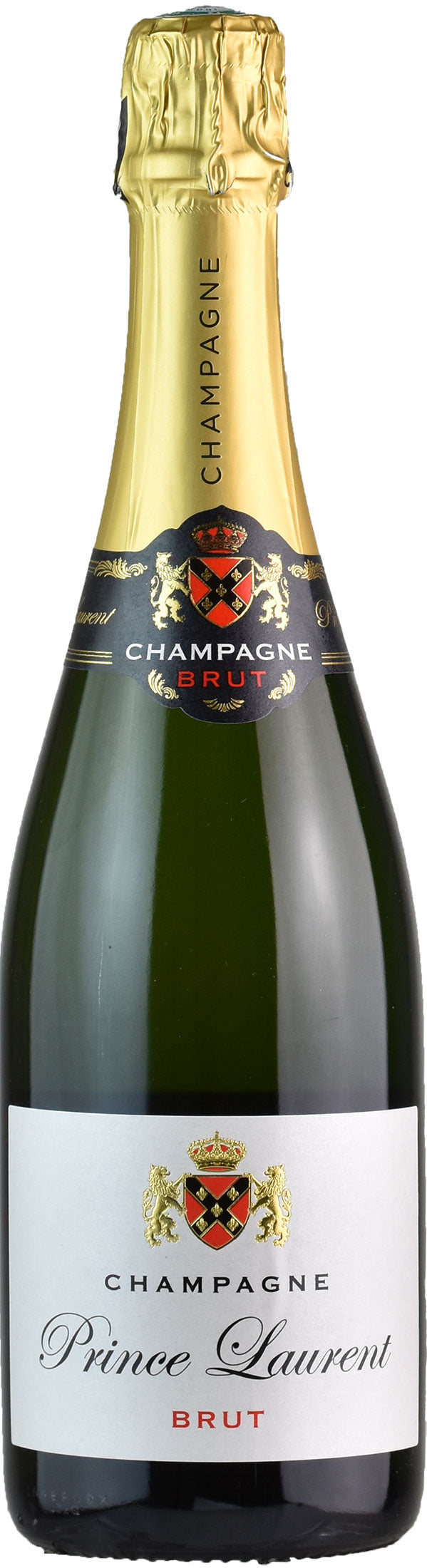
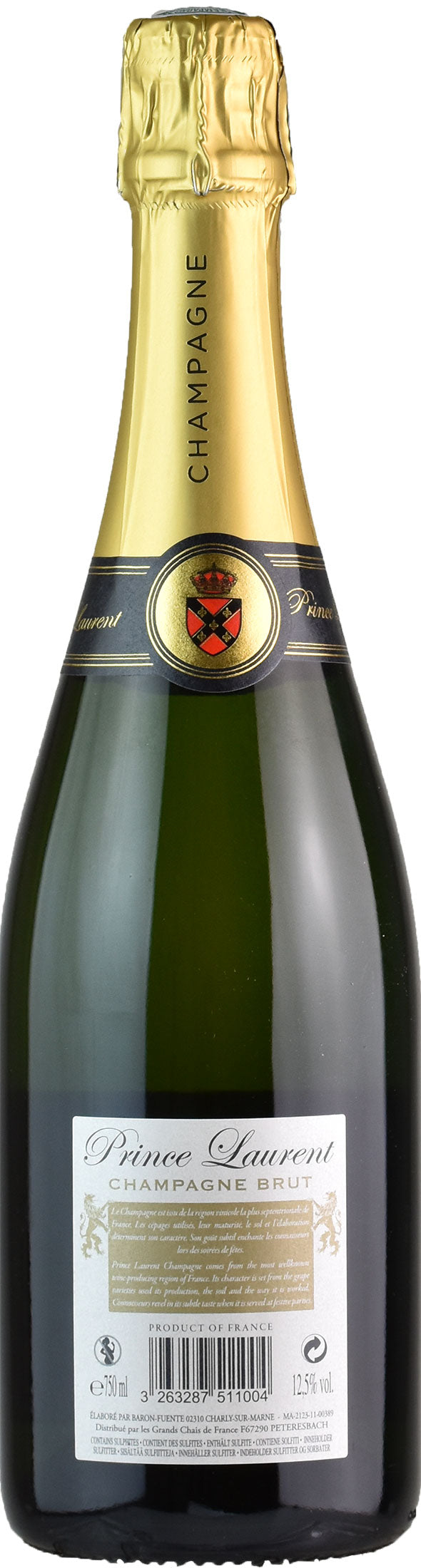
Description
What kind of wine it is
Prince Laurent Champagne Brut is a sparkling wine with a dry and decisive style, produced using the Traditional Method. It is created from a harmonious blend in which Chardonnay stands out, accompanied by Pinot Noir and Pinot Meunier. Visually, it displays a pale gold hue, enlivened by a fine and persistent perlage. On the nose, it offers clear notes of white-fleshed fruit and citrus, followed by fragrant hints of yeast, bread crust and brioche. On the palate, the creamy and savoury texture balances excellent freshness, fading into delicate hints of almond and sweet spices, with a long and clean finish. The cuvée is also suitable for those following a vegan diet.
Where it comes from
The grapes come from the historic region of the Champagne appellation, more specifically from the canton of Charly-sur-Marne, along the banks of the Marne. In this area, the vines grow on renowned chalky soils, essential for imparting pronounced mineral tension and savouriness to the raw material. The brand pays tribute to Laurent, a winegrower and First World War hero, celebrated upon his return as prince of these lands. Thanks to the unique geographical and pedoclimatic characteristics, the Champagne produced here expresses an authentic and unmistakable profile, intimately linked to the roots of the territory.
How it is produced
Production strictly follows the Traditional Method, an essential technique to ensure a slow prise de mousse and achieve an elegant, silky effervescence. The process aims to enhance the natural liveliness of the fruit, maintaining a fragrant bouquet. Served at an ideal temperature between 6 and 8°C, it proves to be an excellent aperitif. At the table, its pronounced acidity makes it perfect for pairing with sushi and shellfish, and it also harmonises beautifully with salmon, tuna, pork dishes and cheese selections.
History and Curiosities
The Prince Laurent brand celebrates the legacy of Laurent, a hero of the First World War who was welcomed on his return as the true Prince of Champagne. This fascinating story intertwines with that of the Baron-Fuenté winery, founded in 1967. On the prized chalky soils of Charly-sur-Marne, the estate carefully selects the finest grapes of Chardonnay, Pinot Noir and Pinot Meunier. Through the rigorous traditional method, a refined cuvée comes to life, enhancing the region with a distinctive, fresh and fruity profile.
Tasting notes

Perlage
Perfume

Color
Taste
Serve at:
06 - 08 °C
Longevity:
05 - 10 years

Hence his nickname, the Prince of Champagne, as he was brave and tremendous during the war. Thanks to his expertise and confidence he elaborated a special Cuvee that he named Prince Laurent. The Prince Laurent Champagnes are still produced with strict adherence to this traditional method, with a rigorous selection of the best grapes to offer fresh and fruity quality sparkling wines for the pleasure of most. Read more



| Name | Prince Laurent Champagne Brut |
|---|---|
| Type | White classic method sparkling wine brut |
| Denomination | Champagne AOC |
| Size | 0,75 l |
| Alcohol content | 12.5% by volume |
| Grape varieties | Chardonnay, Pinot Meunier, Pinot Nero |
| Country | France |
| Region | Champagne region |
| Vendor | Prince Laurent |
| Story | History and Curiosities The Prince Laurent brand celebrates the legacy of Laurent, a hero of the First World War who was welcomed on his return as the true Prince of Champagne. This fascinating story intertwines with that of the Baron-Fuenté winery, founded in 1967. On the prized chalky soils of Charly-sur-Marne, the estate carefully selects the finest grapes of Chardonnay, Pinot Noir and Pinot Meunier. Through the rigorous traditional method, a refined cuvée comes to life, enhancing the region with a distinctive, fresh and fruity profile. |
| Origin | Canton of Charly-sur-Marne (western Champagne, Picardy), on the banks of the river Marne |
| Soil composition | Calcareous soils |
| Production technique | Classic method (traditional) |
| Wine making | Classic method (traditional) |
| Aging | No ageing |
| Allergens | Contains sulphites |