


Sena
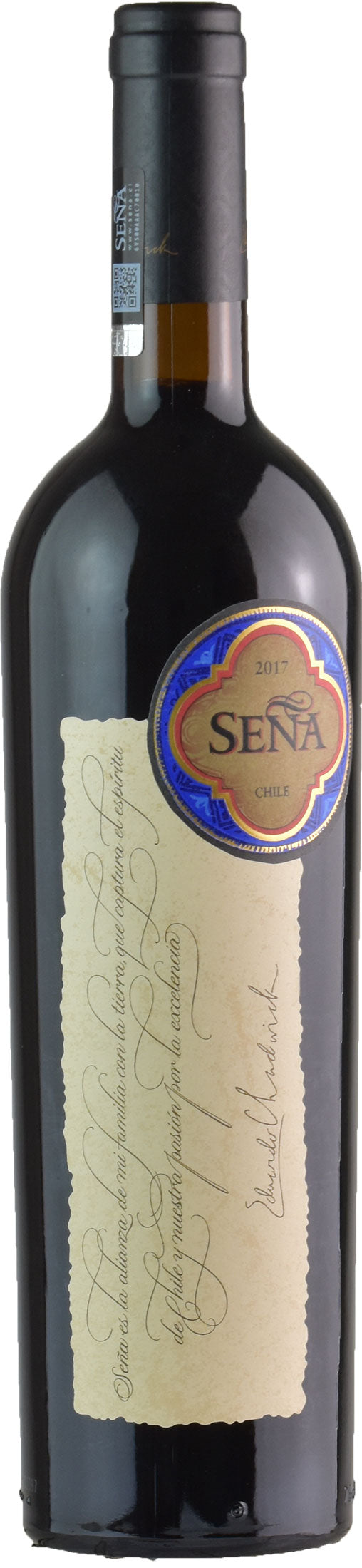
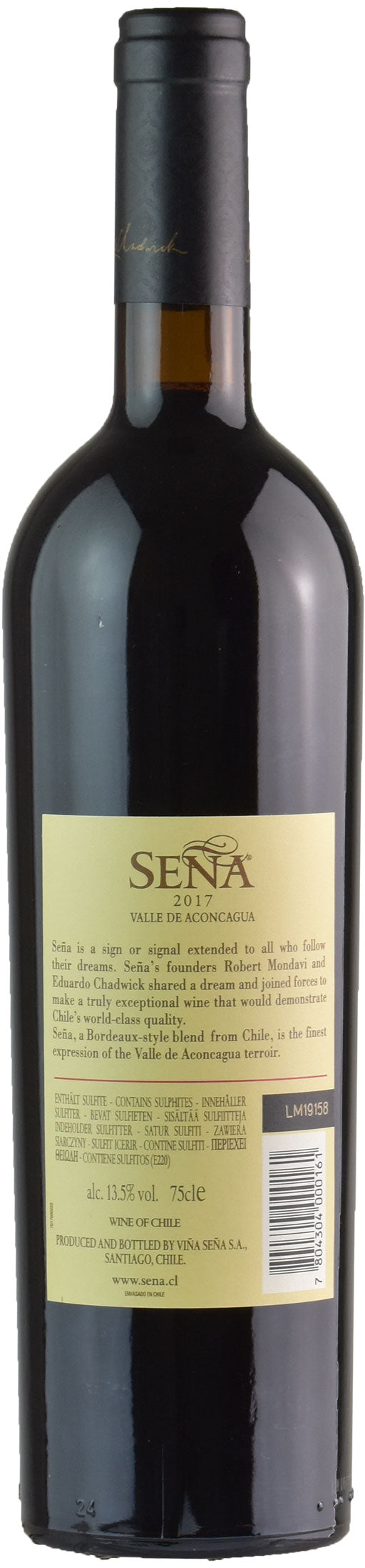
Vineyard Sena 2017
| Denomination | N/A |
|---|---|
| Size | 0,75 l |
| Alcohol content | 13.5% by volume |
| Area | Aconcagua Valley (Chile) |
| Grape varieties | 52% Cabernet Sauvignon, 15% Carmènere, 15% Malbec, 10% Cabernet Franc, 8% Petit Verdot |
| Aging | 22 months in French oak barrels: 66% new, 14% second and third use, 20% in Stockinger foudres; malolactic fermentation occurred naturally during maturation. |
- Origin: Still Chilean red wine from the Aconcagua Valley, produced by Sena
- Grape blend: Composed of 52% Cabernet Sauvignon, 15% Carmènere, 15% Malbec and other varieties
- Ageing: Matured for 22 months in French oak (66% new) and large Stockinger barrels
- Aromatic notes: Scents of blueberry, cherry, violet and sweet spices with a liquorice finish
- Serving/pairings: Temperature 16–18°C, decant for 1 hour; ideal with lamb and mature cheeses
Description
What kind of wine it is
Sena Vineyard Sena is an elegant Chilean red blend of Cabernet Sauvignon, Carmenère, Malbec, Cabernet Franc and Petit Verdot. It appears a garnet red colour with violet highlights. The bouquet reveals a pronounced purity of fruit, with aromas of blueberries, cherries and blackcurrants, followed by balsamic notes, violet, sweet spices and cocoa. On the palate it is juicy and lively, supported by firm and fine tannins that provide excellent structure. The finish is deep and persistent, enhanced by subtle hints of liquorice and graphite.
Where it comes from
This wine originates in the Aconcagua Valley, from hillside vineyards that benefit from a cooler climate compared to the valley floor, ensuring balanced phenolic development. The estate, founded by Robert Mondavi and Eduardo Chadwick, operates according to the principles of biodynamic agriculture. These sustainable practices maximise the value of the local terroir, delivering an authentic and complex expression that faithfully reflects the geological and climatic identity of the Chilean wine landscape.
How it is produced
A careful manual harvest in the morning and a double sorting table ensure a rigorous selection of the grapes. Fermentation takes place at controlled temperature in stainless steel and concrete vats, with daily pump-overs. Each individual variety undergoes targeted maceration for optimal extraction. This is followed by a long maturation in wood for twenty-two months in French oak barrels and large Stockinger foudres, during which malolactic fermentation is completed naturally. This slow ageing softens the structural components and consolidates the harmony of the wine.
History and Curiosities
Born in 1995 in the Aconcagua Valley from the vision of Robert Mondavi and Eduardo Chadwick, this iconic Chilean blend stands alongside the great Bordeaux and the finest Super Tuscans in terms of prestige. The wine expresses a rare elegance, the result of management that follows the strict principles of biodynamic agriculture. The 2017 vintage seals the ongoing pursuit of excellence and deep respect for the terroir, achieving extraordinary international recognition, including 99/100 from James Suckling.
Awards
-
2017
 97
97/100
Decanter is a wine and lifestyle magazine, published monthly in around 90 countries. The magazine includes industry news, classic guides and advice on wine and spirits.
-
2017
 99
99/100
James Suckling is an influential American wine critic and journalist who worked at Wine Spectator for 30 years. He left the magazine in 2010 to start his own website and guidebook (JamesSuckling.com). He specialises in Italian and Bordeaux wines.
-
2017
 96
96/100
The prestigious international wine guide from the renowned Robert Parker, the world's most experienced and trusted wine taster.
-
2017
 94
94/100
Wine spectator is the most influential wine guide on the internet.
Tasting notes

Perfume

Color
Taste
Serve at:
16 - 18 °C
Longevity:
10 - 15 years
Decanting time:
1 hour
- Start up year: 1995
The wine is a blend of Cabernet Sauvignon (typically 55 to 60 percent) with Carmenere, Merlot, Cabernet Franc and Petit Verdot. Its hillside vineyard extends to 42 hectares (104 acres) on a range of soils and is slightly cooler than those on the Aconcagua valley floor, with harvest usually taking place a fortnight later. Ravines between the plots are used to create habitats for flora and fauna. Farming has been biodynamic since the mid 2000s. Read more



| Name | Sena Vineyard Sena 2017 |
|---|---|
| Type | Red still |
| Denomination | N/A |
| Vintage | 2017 |
| Size | 0,75 l |
| Alcohol content | 13.5% by volume |
| Grape varieties | 52% Cabernet Sauvignon, 15% Carmènere, 15% Malbec, 10% Cabernet Franc, 8% Petit Verdot |
| Country | Chile |
| Region | Aconcagua Valley |
| Vendor | Sena |
| Story | History and Curiosities Born in 1995 in the Aconcagua Valley from the vision of Robert Mondavi and Eduardo Chadwick, this iconic Chilean blend stands alongside the great Bordeaux and the finest Super Tuscans in terms of prestige. The wine expresses a rare elegance, the result of management that follows the strict principles of biodynamic agriculture. The 2017 vintage seals the ongoing pursuit of excellence and deep respect for the terroir, achieving extraordinary international recognition, including 99/100 from James Suckling. |
| Origin | Aconcagua Valley (Chile) |
| Fermentation temperature | 23–28 °C |
| Production technique | Manual harvest; fermentation 75% in stainless steel tanks and 25% in concrete tanks; ageing 22 months in French oak barrels and in Stockinger foudres |
| Wine making | 75% of the grapes were fermented in stainless steel tanks and 25% in cement vats at 23–28°C, with daily open pump-overs; total maceration lasted 12–30 days (Cabernet Sauvignon, Carménère, Malbec and Cabernet Franc) and 8–12 days (Petit Verdot). Aged for 22 months in wood: 66% in new French oak barrels, 14% in second and third-use French oak barrels, and 20% in Stockinger foudres; malolactic fermentation occurred naturally during ageing. |
| Aging | 22 months in French oak barrels: 66% new, 14% second and third use, 20% in Stockinger foudres; malolactic fermentation occurred naturally during maturation. |
| Total acidity | 6.19 gr/L |
| PH | 3.44 |
| Residual sugar | 2.55 gr/L |
| Allergens | Contains sulphites |