


Scarpa
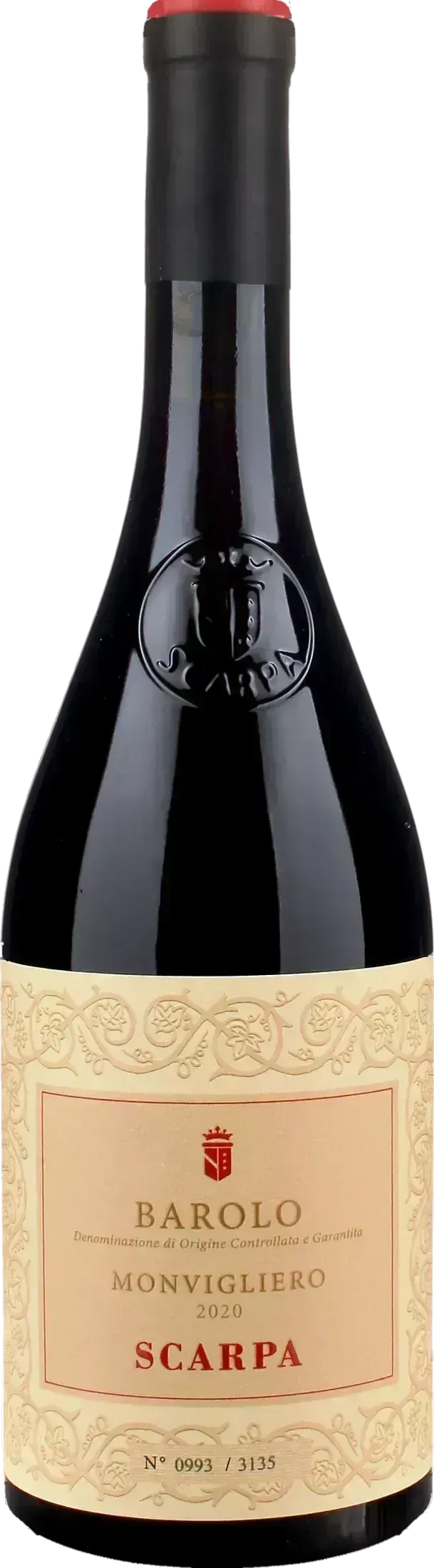
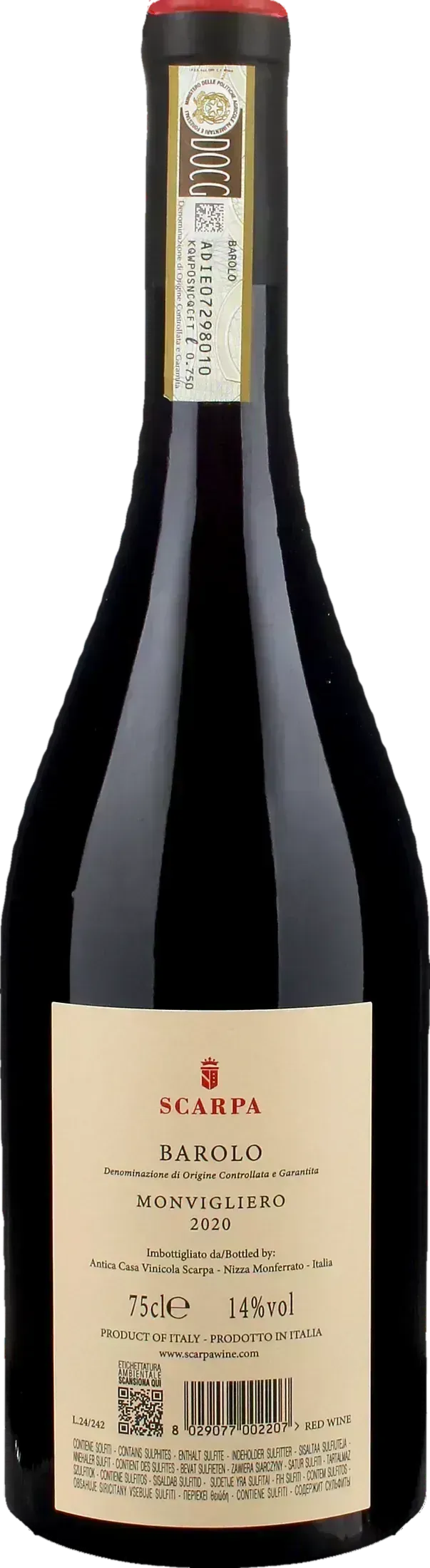
Barolo Monvigliero 2020
| Denomination | DOCG Barolo |
|---|---|
| Size | 0,75 l |
| Alcohol content | 14.0% by volume |
| Area | Piedmont (Italy) |
| Grape varieties | 100% Nebbiolo |
| Aging | At the end of alcoholic fermentation, racking takes place in steel tanks, with subsequent ageing until malolactic fermentation is complete. For ageing we use a 30 hl French Allier oak barrel, for a period of 32 months. After bottling, the wine rests for 18 months before being put on the market. |
Description
A very important point of our philosophy is to work the vineyards with the aim of reducing environmental impact, avoiding the use of chemical herbicides and preferring mechanical weeding. Our vineyards have voluntary SQNPI (Sistema di Qualità Nazionale di Produzione Integrata) certification. The grapes are harvested by hand, in small baskets, and immediately transported to our historic wine cellar in Nizza Monferrato, one of the few to have a special dispensation for the vinification of Nebbiolo for Barolo and Barbaresco outside the grape production area.
Tasting notes

Perfume

Color
Taste
Serve at:
18 - 20 °C
Longevity:
10 - 15 years
Decanting time:
1 hour
- Start up year: 1854
- Oenologist: Silvio Trinchero, Gianfranco Cordero
- Bottles produced: 150.000
- Hectares: 32
From founder Antonio Scarpa to Mario Pesce, from Carlo Castino to Silvio Trinchero: style, elegance and longevity have never gone out of fashion. Because Scarpa «knows how to wait» and continues to write a story of greatness.
Our modern vision is simple: to expand our wine heritage to the most prestigious crus of Langhe and Monferrato and continue producing legendary labels. We believe that winemaking goes beyond the product: it is an emotion. That is why we decided to build the Scarpa Villas, offering an immersive experience among vineyards located in UNESCO World Heritage Sites: a place of luxury and relaxation, where the excellence of wine becomes beauty.
Today our goal is to invest in your emotions. Read more


| Name | Scarpa Barolo Monvigliero 2020 |
|---|---|
| Type | Red still |
| Denomination | Barolo DOCG |
| Vintage | 2020 |
| Size | 0,75 l |
| Alcohol content | 14.0% by volume |
| Grape varieties | 100% Nebbiolo |
| Country | Italy |
| Region | Piedmont |
| Vendor | Scarpa |
| Climate | Altitude: 300 m above sea level Exposure: south, south-west |
| Soil composition | Loose, light-coloured soils, rich in limestone, sand and microelements. |
| Wine making | Vinification, as is traditional at Scarpa, involves 24 days' maceration on the skins in French Allier oak vats, with 2 manual pumpings over per day. |
| Aging | At the end of alcoholic fermentation, racking takes place in steel tanks, with subsequent ageing until malolactic fermentation is complete. For ageing we use a 30 hl French Allier oak barrel, for a period of 32 months. After bottling, the wine rests for 18 months before being put on the market. |
| Allergens | Contains sulphites |