


Cantina Kurtatsch
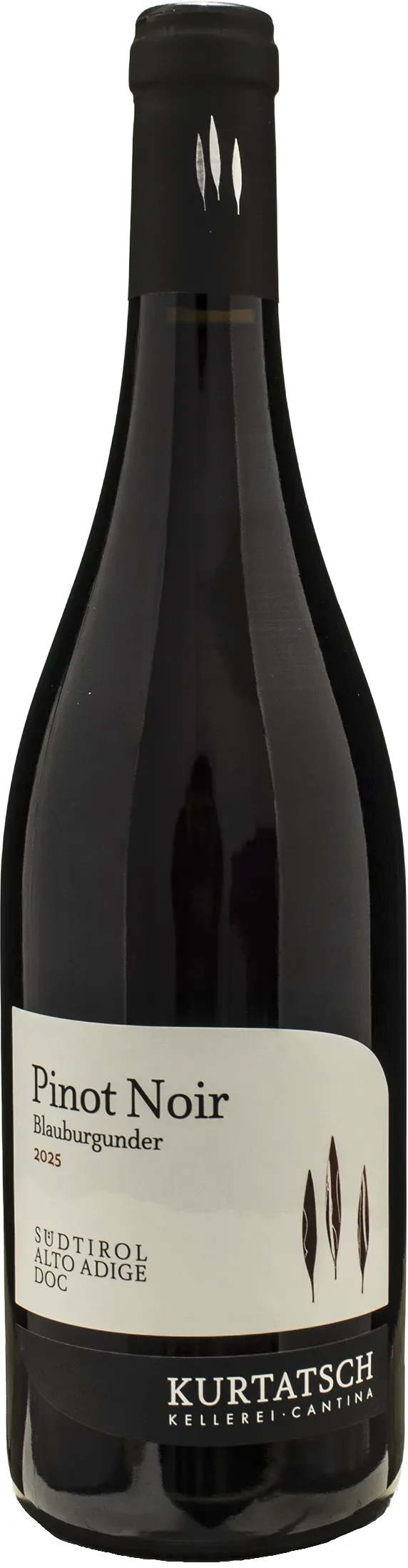
Pinot Nero 2025
| Denomination | DOC Alto Adige Pinot Nero |
|---|---|
| Size | 0,75 l |
| Alcohol content | 13.0% by volume |
| Area | Trentino Alto Adige (Italy) |
| Grape varieties | 100% Pinot Nero |
| Aging | Malolactic fermentation and ageing in cement tanks and large wooden barrels. |
- Origin and vineyards: Alto Adige DOC, Gleno 400–650 metres, south-west exposure
- Grape variety and vintage: 100% Pinot Noir, harvested in 2025, 13.5% vol, 0.75 litre bottle
- Vinification: brief cold maceration followed by fermentation in stainless steel
- Ageing: malolactic fermentation and maturation in concrete tanks and large wooden barrels
- Tasting notes and pairings: notes of cherry and spices, freshness; ideal with game and cheeses

Description
What kind of wine it is
Kurtatsch Pinot Noir is a still red wine with controlled designation of origin that elegantly expresses the character of Alto Adige. On the nose, it reveals a clear and refined aromatic profile, with notes of cherry, plum and redcurrant, enhanced by earthy nuances and delicate spices. On the palate, it is dry and fresh, supported by juicy tannins and a velvety texture that brings harmony to each sip. The overall balance, refined in concrete and large barrels after fermentation in stainless steel, leads to a long and pleasantly persistent finish.
Where it comes from
The Pinot Noir grapes come from the vineyards of Gleno, located in the municipality of Montagna in Bassa Atesina. In this area, the wide temperature variations between warm days and cool Alpine nights favour aromatic concentration. The rows, facing south and west between 400 and 650 metres above sea level, grow on sandy and clayey soil rich in minerals. This grape variety, introduced from Burgundy about 150 years ago, has found in this region an ideal Alpine microclimate to express its typical character.
How it is produced
Vinification involves a brief cold maceration, essential for delicately extracting colour and aromatic precursors. Fermentation takes place in stainless steel, using open vats at controlled temperature to preserve the fragrance of the fruit. After malolactic fermentation, which softens the flavour profile, maturation continues in concrete tanks and large barrels. This process allows the structure of the wine to be integrated while respecting the varietal characteristics of Pinot Noir.
History and Curiosities
Founded in 1900, Cantina Kurtatsch brings together 190 families dedicated to sustainable viticulture. Introduced to South Tyrol from Burgundy around 150 years ago thanks to Edmund Mach, Pinot Noir has found its ideal home in the vineyards of Gleno. The cool Alpine nights shape a refined interpretation with a Burgundian profile, an authentic expression of the Alto Adige DOC denomination. Under the guidance of Erwin Carli, this prestigious label boasts 93 points from James Suckling and, sealed with a natural cork, brings a century-old story of pure excellence to the glass.
Tasting notes

Perfume

Color
Taste
Serve at:
14 -16 °C
Longevity:
05 - 10 years
Decanting time:
1 hour
- Start up year: 1900
- Oenologist: Erwin Carli
- Bottles produced: 1.600.000
- Hectares: 190
Outstanding wine is made in the vineyard. That’s why we consider our members – who do the vineyard work – to be the protagonists. For generations, they have cultivated a special connection to their vineyards, and know every single grapevine. This invaluable knowledge, paired with the small structure of our winery, offers the best prerequisites for the production of unique, characterful wines.
Thanks to the 190 small-structured family farms that cultivate 190 hectares of vineyards in a sustainable way, we are able to select the best grape material for each individual location.
We, together with our 190 members, have committed ourselves to producing nature-oriented wines through a comprehensive policy of sustainibility. The goal: sustainability in all areas – from the work in the vineyard through to the final product. During the year, we are in continuous exchange with our members to advise and support. Sustainibility is also a topic in the cellars: continuing education and optimizing guarantee sustainably designed work methods. Read more


| Name | Kurtatsch Pinot Nero 2025 |
|---|---|
| Type | Red still |
| Denomination | Alto Adige DOC |
| Vintage | 2025 |
| Size | 0,75 l |
| Alcohol content | 13.0% by volume |
| Grape varieties | 100% Pinot Nero |
| Country | Italy |
| Region | Trentino Alto Adige |
| Vendor | Cantina Kurtatsch |
| Story | History and Curiosities Founded in 1900, Cantina Kurtatsch brings together 190 families dedicated to sustainable viticulture. Introduced to South Tyrol from Burgundy around 150 years ago thanks to Edmund Mach, Pinot Noir has found its ideal home in the vineyards of Gleno. The cool Alpine nights shape a refined interpretation with a Burgundian profile, an authentic expression of the Alto Adige DOC denomination. Under the guidance of Erwin Carli, this prestigious label boasts 93 points from James Suckling and, sealed with a natural cork, brings a century-old story of pure excellence to the glass. |
| Origin | Gleno (Municipality of Montagna), Bassa Atesina, Alto Adige (Trentino-Alto Adige), Italy |
| Climate | Alpine microclimate with warm days and cool nights |
| Soil composition | Reddish-brown sandy and clayey soil with clay minerals and oxides |
| Production technique | Short cold maceration, fermentation in stainless steel, malolactic fermentation and ageing in concrete tanks and large wooden barrels |
| Wine making | Brief cold maceration, fermentation in stainless steel; followed by malolactic fermentation and maturation in concrete tanks and large wooden casks. |
| Aging | Malolactic fermentation and ageing in cement tanks and large wooden barrels. |
| Total acidity | 5.3 gr/L |
| Residual sugar | 1.8 gr/L |
| Allergens | Contains sulphites |