


Graci
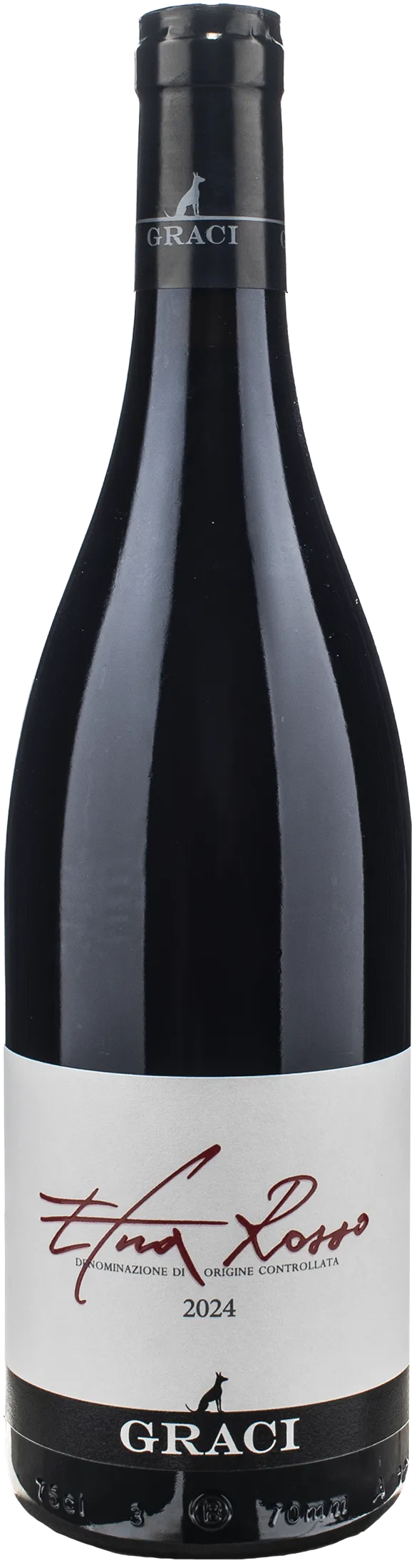
Etna Rosso 2024
| Denomination | DOC Etna Rosso |
|---|---|
| Size | 0,75 l |
| Alcohol content | 14.5% by volume |
| Area | Sicily (Italy) |
| Grape varieties | 100% Nerello Mascalese |
| Aging | After fermentation, it matures for 18 months in concrete tanks and completes its ageing in the bottle for two months before being released for sale. |
- Denomination: Etna Rosso DOC, a still red wine with a volcanic character.
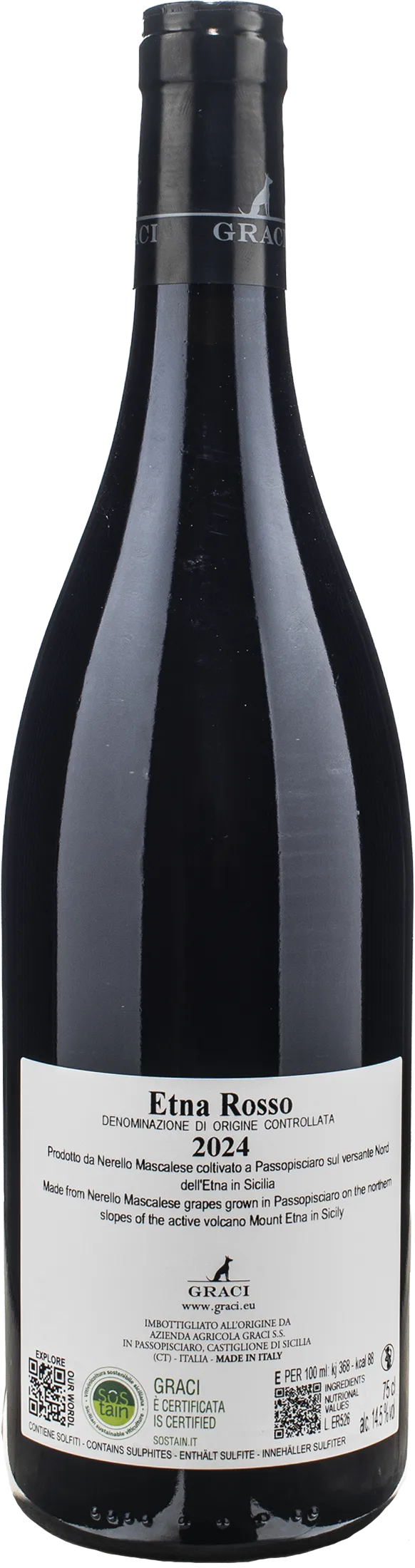
- Grape variety: 100% Nerello Mascalese from vineyards on the north-eastern slope of Etna.
- Vinification: Traditional fermentation with maceration on the skins for about thirty days
- Ageing: 18 months in concrete vats and 2 months in the bottle.
- Taste: Dry, elegant and dynamic with vertical tannins and mineral freshness.
Description
Type of wine
Graci's Etna Rosso is a still red wine with a Controlled Designation of Origin that clearly expresses the volcanic character of Sicily. Produced from Nerello Mascalese grapes, this Etna Rosso presents itself with a brilliant ruby red appearance. The olfactory profile offers refined aromas of blood orange, accompanied by light floral notes and hints of medicinal herbs. On the palate, it reveals itself to be dry, elegant and dynamic, outlined by vertical tannins and a pleasant mineral freshness, developing a harmonious persistence enriched by maturation in concrete tanks.
Where it comes from
This wine is born on the north-eastern slope of Etna, between Passopisciaro and Castiglione di Sicilia, in an environment with unique pedoclimatic characteristics. The vineyards are located at an altitude of between six hundred and one thousand metres above sea level, where the cool climate and strong temperature variations guarantee optimal and gradual ripening of the bunches. The vines take root in brown volcanic soils, characterised by a sandy-loam matrix and an abundant presence of stones. These neutral pH soils are particularly rich in iron and nitrogen, giving the wine its unmistakable territorial footprint.
How it is produced
The harvest takes place between the end of September and the beginning of October, following the natural rhythms of the plant. In the cellar, vinification begins with fermentation accompanied by maceration on the skins lasting about thirty days, an essential step in defining the structure of the wine. After spontaneous malolactic fermentation, the process continues with maturation in concrete tanks for eighteen months, an ideal method for faithfully preserving the linear expression of the fruit and the essence of the raw material. A short final ageing of two months consolidates the overall harmony before release.
History and interesting facts
Graci Etna Rosso is produced using exclusively Nerello Mascalese grapes, a red grape variety indigenous to Sicily. The origins of this fascinating vine date back historically to the ancient colonisation of the island by the Greeks, which took place as far back as the 7th century BC. The tradition of cultivating these vines has continued uninterrupted until the present day due to the uniqueness of the product.
Tasting notes

Perfume

Color

Taste
Serve at:
14 -16 °C
Longevity:
10 - 15 years
Decanting time:
1 hour

- Start up year: 2004
- Oenologist: Alberto Aiello Graci, Emiliano Falsini
- Bottles produced: 85.000
- Hectares: 30
Grapes and volcano, these are the wines of Graci, unique interpreters of an extraordinary terroir. The winery is an old and majestic palmento skilfully restored by Alberto. Here, one part is occupied by the production structure, while another part, with cross vaults, still houses the old barrels and tools for wine production. Read more


| Name | Graci Etna Rosso 2024 |
|---|---|
| Type | Red green still |
| Denomination | Etna DOC |
| Vintage | 2024 |
| Size | 0,75 l |
| Alcohol content | 14.5% by volume |
| Grape varieties | 100% Nerello Mascalese |
| Country | Italy |
| Region | Sicily |
| Vendor | Graci |
| Story | History and interesting facts Graci Etna Rosso is produced using exclusively Nerello Mascalese grapes, a red grape variety indigenous to Sicily. The origins of this fascinating vine date back historically to the ancient colonisation of the island by the Greeks, which took place as far back as the 7th century BC. The tradition of cultivating these vines has continued uninterrupted until the present day due to the uniqueness of the product. |
| Origin | North-eastern slope of Mount Etna, Passopisciaro, Castiglione di Sicilia (Catania) |
| Climate | Cool climate typical of the volcanic area |
| Soil composition | Brown soils of volcanic origin, rich in coarse fragments, ranging from sandy loam to loamy sand, with a neutral pH, non-calcareous, rich to very rich in iron and with a high nitrogen content. |
| Plants per hectare | 6,000–10,000 plants per hectare |
| Harvest | Last week of September and first week of October |
| Fermentation | About 30 days |
| Production technique | Traditional red fermentation with maceration on the skins for approximately 30 days; spontaneous malolactic fermentation. |
| Wine making | Traditional red wine fermentation with maceration on the skins for approximately 30 days; spontaneous malolactic fermentation; maturation for 18 months in concrete tanks and bottle ageing for 2 months. |
| Aging | After fermentation, it matures for 18 months in concrete tanks and completes its ageing in the bottle for two months before being released for sale. |
| Allergens | Contains sulphites |