


Fratelli Alessandria
Barolo del Comune di Verduno 2022
| Denomination | DOCG Barolo |
|---|---|
| Size | 0,75 l |
| Alcohol content | 14.5% by volume |
| Area | Piedmont (Italy) |
| Grape varieties | 100% Nebbiolo |
| Aging | Approximately 3 years in French and Slavonian oak barrels (20-40 hectolitres), 2 months in steel and at least 6 months in the bottle. |
- Name: Barolo DOCG 2022 from Nebbiolo grapes, with an alcohol content of 14.5% vol.
- Origin Verduno: Grapes from five historic crus located at 250-370 m on calcareous-silty soil.
- Vinification: Fermentation and maceration in steel for 25-30 days at 26-28 °C.
- Ageing: 3 years in oak barrels, 2 months in steel and 6 months in bottle.
- Sensory profile: Hints of wet earth, dark spices, cherry, liquorice and mineral notes.
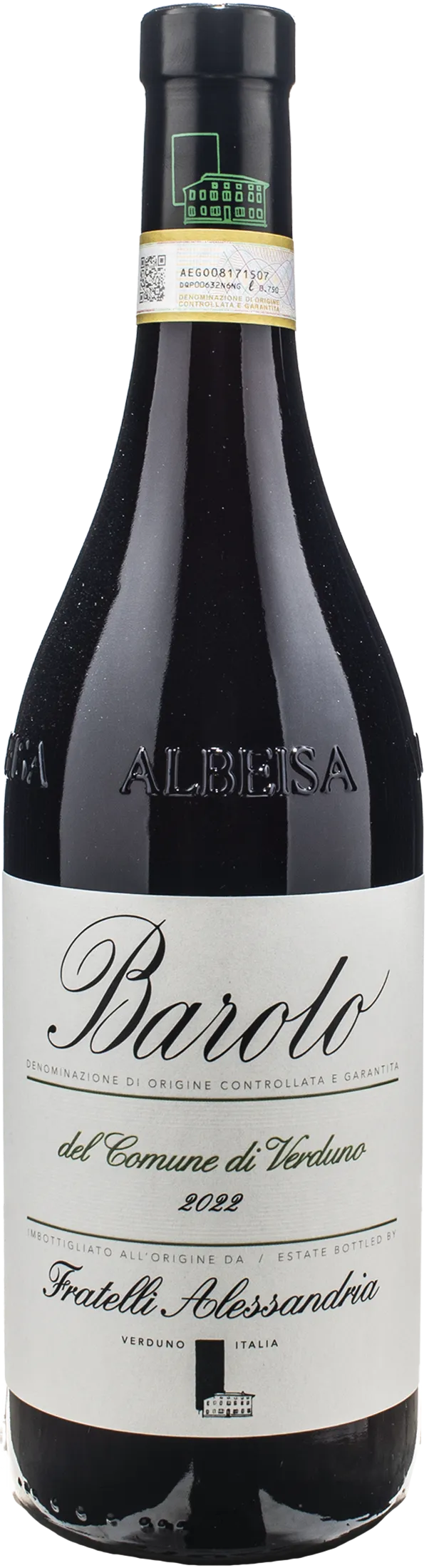
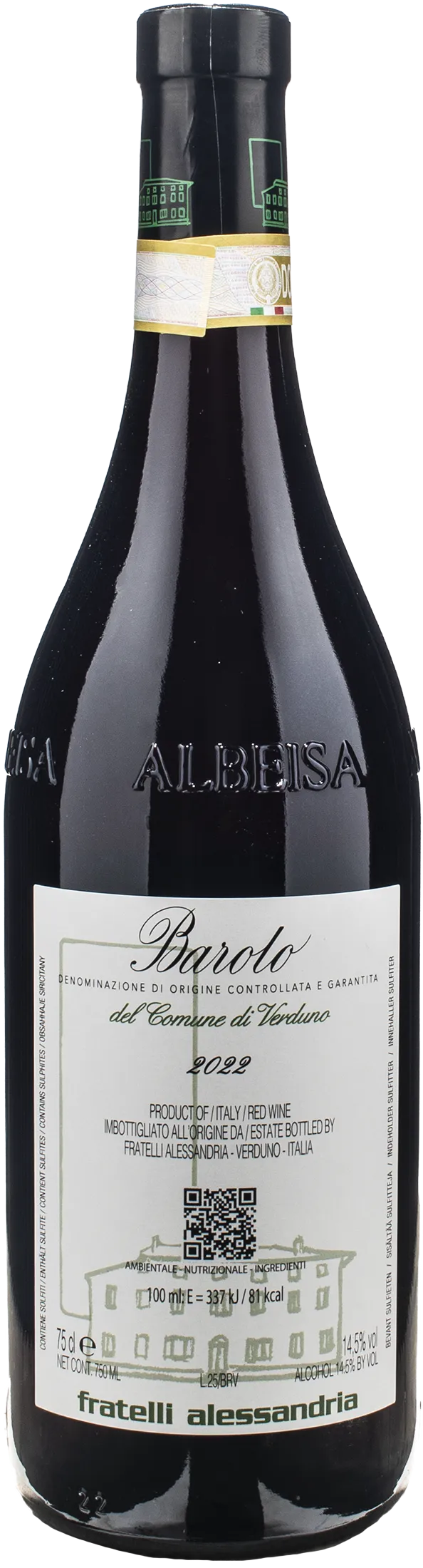
Description
What kind of wine it is
The Barolo from the Municipality of Verduno by Fratelli Alessandria enhances Nebbiolo in a still red wine with Denomination of Controlled and Guaranteed Origin from Piedmont. Fermented in steel and aged in oak barrels, the bouquet opens with notes of wet earth, bark, dark spices, wild berry jam and crisp cherry. On the palate, the sip is full and fresh, supported by a clear mineral imprint and elegant tannins that give a velvety texture. This solid structure ensures a high ageing potential, making it ideal for long-term cellaring.
Where it comes from
This Barolo originates in the Verduno area, a region of Piedmont renowned for the natural elegance and characteristic spicy notes of its wines. The grapes come from five historic crus: Pisapola, Campasso, Riva Rocca, Boscatto and Rocche dell’Olmo. Situated between 250 and 370 metres above sea level, the Nebbiolo vines grow on calcareous and silty soil, ideal for promoting a precise phenolic structure. Thanks to the average age of the vines, around twenty-five years, and a favourable eastern exposure, the bunches reach optimal ripeness, expressing a deep fruit with a strong sense of place.
How it is produced
Production begins with a meticulous manual harvest of the bunches. Fermentation and maceration take place in temperature-controlled steel tanks for about a month, allowing for a delicate and targeted extraction of the noble components. Subsequently, the wine matures for three years in French and Slavonian oak barrels, a long period that shapes its structure while preserving the purity of the fruit. The process concludes with a two-month rest in steel and an essential bottle ageing of at least six months, resulting in a Barolo that is complex, harmonious and full of character.
History and Curiosities
The Barolo del Comune di Verduno by Fratelli Alessandria revives the ancient tradition of blending Nebbiolo grapes from five prestigious vineyards: Pisapola, Campasso, Riva Rocca, Boscatto and Rocche dell’Olmo. First produced with the 2017 vintage, this red wine captivates with its typical spicy elegance. The meticulous artisanal care includes ageing for three years in French and Slavonian oak barrels, followed by further maturation in the bottle. Bottled in the fourth year, it boasts an ageing potential of up to 14 years.
Awards
-
2022
 91
91/100
Vinous is the online guide from Antonio Galloni, one of the world's leading wine connoisseurs.
Tasting notes

Perfume

Color

Taste
Serve at:
18 - 20 °C
Longevity:
10 - 15 years
Decanting time:
1 hour

- Start up year: 1870
- Oenologist: Franco Alessandria
- Bottles produced: 90.000
- Hectares: 15
Gian Battista, his wife Flavia, brother Alessandro and son Vittore are the proud custodians of the family’s winemaking tradition and passion, which date back over a century, and represent the seventh and eighth generations of winemakers (the first three generations as Fratelli Dabbene and then as Fratelli Alessandria following a marriage which took place in around 1870).
The winery vinifies only estate grown grapes and has maintained a family dimension. These qualities make it possible to establish a direct and "personal" relationship with the individual vineyards and barrels, an invisible but important connection that we hope will reach and inspire consumers when they drink our wines. Read more


| Name | Fratelli Alessandria Barolo del Comune di Verduno 2022 |
|---|---|
| Type | Red still |
| Denomination | Barolo DOCG |
| Vintage | 2022 |
| Size | 0,75 l |
| Alcohol content | 14.5% by volume |
| Grape varieties | 100% Nebbiolo |
| Country | Italy |
| Region | Piedmont |
| Vendor | Fratelli Alessandria |
| Story | History and Curiosities The Barolo del Comune di Verduno by Fratelli Alessandria revives the ancient tradition of blending Nebbiolo grapes from five prestigious vineyards: Pisapola, Campasso, Riva Rocca, Boscatto and Rocche dell’Olmo. First produced with the 2017 vintage, this red wine captivates with its typical spicy elegance. The meticulous artisanal care includes ageing for three years in French and Slavonian oak barrels, followed by further maturation in the bottle. Bottled in the fourth year, it boasts an ageing potential of up to 14 years. |
| Origin | Pisapola, Campasso, Riva Rocca, Boscatto, Rocche dell’Olmo |
| Climate | Exposure and Altitude: Pisapola (South/East, 280-350 metres), Campasso (East, 250-350 metres), Riva Rocca (South-South/East, 270-340 metres), Boscatto (East, 250-370 metres), Rocche dell’Olmo (East, 310-360 metres) |
| Soil composition | Medium-textured calcareous soil tending towards silty. |
| Cultivation system | Guyot |
| Plants per hectare | 4500 vines per hectare |
| Harvest | October, manual harvest |
| Fermentation temperature | 26-28 °C |
| Fermentation | 25-30 days |
| Production technique | Fermentation and maceration in stainless steel tanks at controlled temperature (26-28 °C) for 25-30 days |
| Wine making | Fermentation and maceration in stainless steel tanks at a controlled temperature (26-28 °C) for 25-30 days. |
| Aging | Approximately 3 years in French and Slavonian oak barrels (20-40 hectolitres), 2 months in steel and at least 6 months in the bottle. |
| Allergens | Contains sulphites |