


Franz Haas
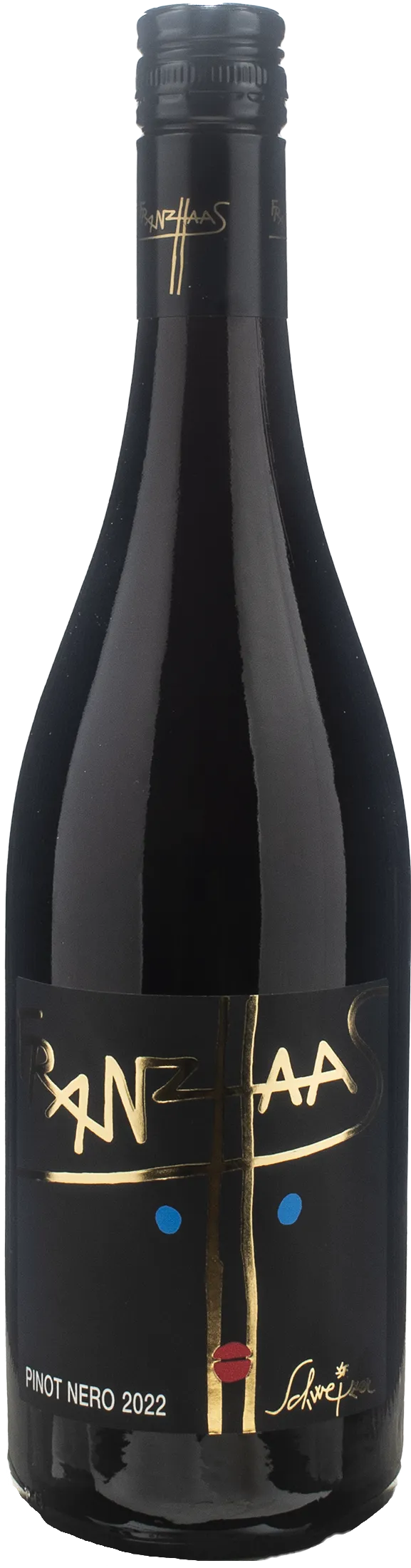
Pinot Nero Schweizer 2022
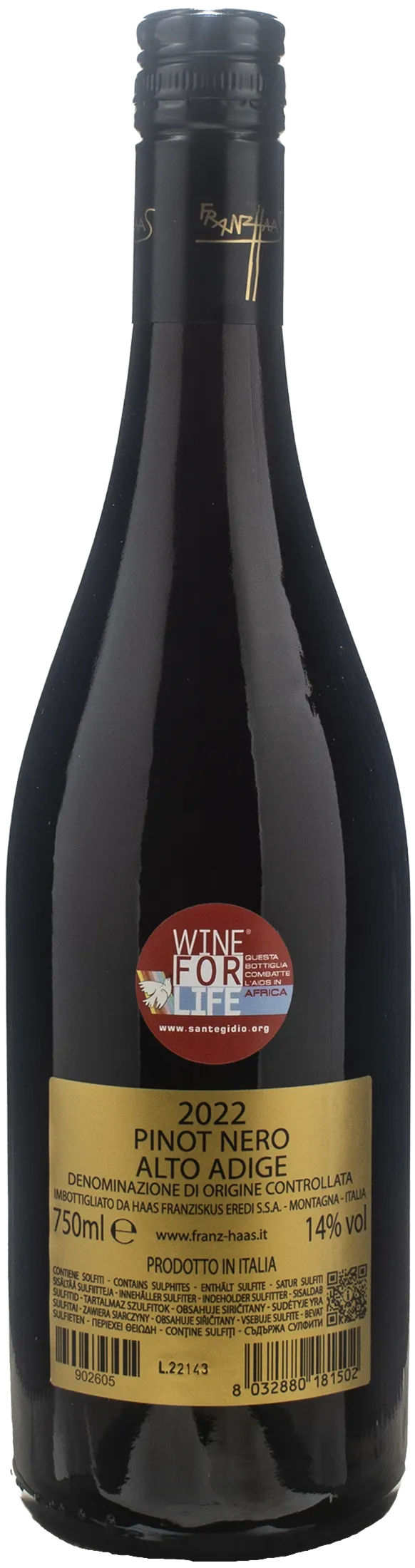
| Denomination | DOC Alto Adige Pinot Nero |
|---|---|
| Size | 0,75 l |
| Alcohol content | 14.0% by volume |
| Area | Trentino Alto Adige (Italy) |
| Grape varieties | 100% Pinot Nero |
| Aging | After fermentation, the wine is transferred from stainless steel to barriques, where malolactic fermentation and maturation take place for 12 months; after bottling, it is refined for about 12 months in the bottle. |
- Identity: Still red wine 14% vol, Alto Adige DOC, 100% Pinot Noir, 2022 harvest
- Aromatic profile: notes of ripe wild berries, cherries, pepper and leather
- Structure: soft tannins, elegant and refined character; ageing potential 10-15 years
- Vinification and wood: fermentation in open vats, malolactic fermentation and 12 months in barrique
- Recognition: rated 93/100 by James Suckling
Description
What kind of wine is it
Franz Haas Pinot Nero Schweizer is a still red wine that expresses the authentic character of Alto Adige, made from Pinot Noir grapes. In the glass, it reveals a ruby hue, hinting at a complex aromatic profile that combines notes of ripe wild berries and cherries with hints of pepper and leather. On the palate, it stands out for its enveloping tannins and a harmonious structure that promotes longevity. Its intrinsic elegance makes it ideal to accompany red meats, game, and mature cheeses.
Where does it come from
The grapes destined for this wine grow in high-altitude vineyards situated between 350 and 700 metres above sea level. This altitude, combined with silty soils with sandy and calcareous infiltrations, encourages an excellent expression of the grape variety. Franz Haas respects the natural inclinations of the landscape to achieve superior quality. Thanks to low yields and environmental factors, the bunches faithfully reflect their origin, ensuring a measured structural complexity.
How is it produced
The process begins with vinification in open vats, where the must remains in constant contact with the skins. Extractive techniques such as pumping over and punching down allow the acquisition of colour and aromatic substances. After a period in steel, the wine rests in small barrels, where it completes malolactic fermentation. The process continues with maturation in barrels for twelve months, which is essential for stabilising the body. A further year of ageing completes the production cycle.
History and Curiosities
Since 1880, the Franz Haas winery has passed down the passion of seven generations to express the authentic character of Alto Adige. The Pinot Nero Schweizer 2022 is produced at altitudes between 350 and 700 metres, on silty, calcareous and gravelly soils that give it great complexity. Under the expert guidance of oenologist Stefano Tiefenthaler, the wine matures in barriques before completing its journey with a 12-month bottle ageing. This tireless pursuit of perfection has earned it an excellent score of 93/100 from James Suckling.
Awards
-
2022
 93
93/100
James Suckling is an influential American wine critic and journalist who worked at Wine Spectator for 30 years. He left the magazine in 2010 to start his own website and guidebook (JamesSuckling.com). He specialises in Italian and Bordeaux wines.
Tasting notes

Perfume

Color

Taste
Serve at:
16 - 18 °C
Longevity:
10 - 15 years
Decanting time:
1 hour

- Start up year: 1880
- Oenologist: Stefano Tiefenthaler
- Bottles produced: 450.000
- Hectares: 60
Franz Haas is not just a winery, it is not just a brand. Franz Haas is a man, a family who has been producing wine for seven generations, and for seven generations has put into its wines the same philosophy of life: the constant and endless pursuit of perfection. Each Franz Haas with his own touch and style.
According to Franz Haas, science and calculations are indeed necessary to obtain superb wines, but it is love, passion, and determination that are essential to give them character and complexity.
It takes art, the one you have in your blood, a loving creative genius, like the one of Franz Haas VII, who today leads the winery with his team. Read more


| Name | Franz Haas Pinot Nero Schweizer 2022 |
|---|---|
| Type | Red still |
| Denomination | Alto Adige DOC |
| Vintage | 2022 |
| Size | 0,75 l |
| Alcohol content | 14.0% by volume |
| Grape varieties | 100% Pinot Nero |
| Country | Italy |
| Region | Trentino Alto Adige |
| Vendor | Franz Haas |
| Story | History and Curiosities Since 1880, the Franz Haas winery has passed down the passion of seven generations to express the authentic character of Alto Adige. The Pinot Nero Schweizer 2022 is produced at altitudes between 350 and 700 metres, on silty, calcareous and gravelly soils that give it great complexity. Under the expert guidance of oenologist Stefano Tiefenthaler, the wine matures in barriques before completing its journey with a 12-month bottle ageing. This tireless pursuit of perfection has earned it an excellent score of 93/100 from James Suckling. |
| Origin | Alto Adige, Italy |
| Soil composition | Silty soils, with plots close to sandy, calcareous and gravelly soils |
| Plants per hectare | 8000 2500 |
| Yield per hectare | 35 hl/ha |
| Production technique | Vinification in open tanks with frequent pump-overs and punch-downs; malolactic fermentation and maturation in barriques |
| Wine making | The vinification of the grapes takes place in open vats with frequent pumping over and punching down; at the end of fermentation, the wine is transferred from steel to barriques, where malolactic fermentation and maturation occur for 12 months; after bottling, it is refined for about 12 months in the bottle. |
| Aging | After fermentation, the wine is transferred from stainless steel to barriques, where malolactic fermentation and maturation take place for 12 months; after bottling, it is refined for about 12 months in the bottle. |
| Allergens | Contains sulphites |