


Cantina Roccafiore
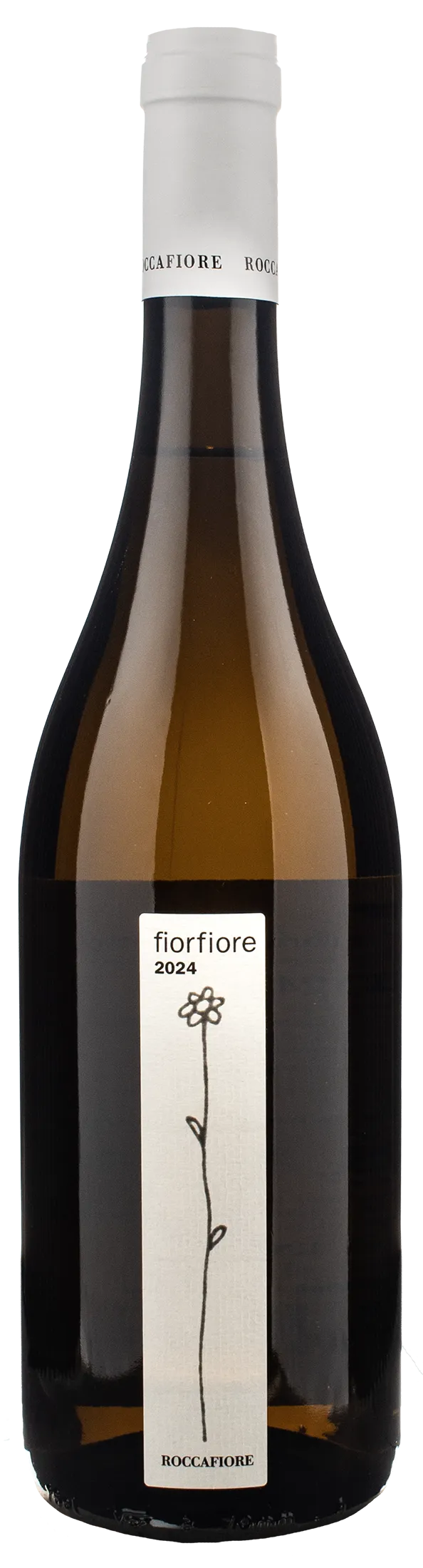
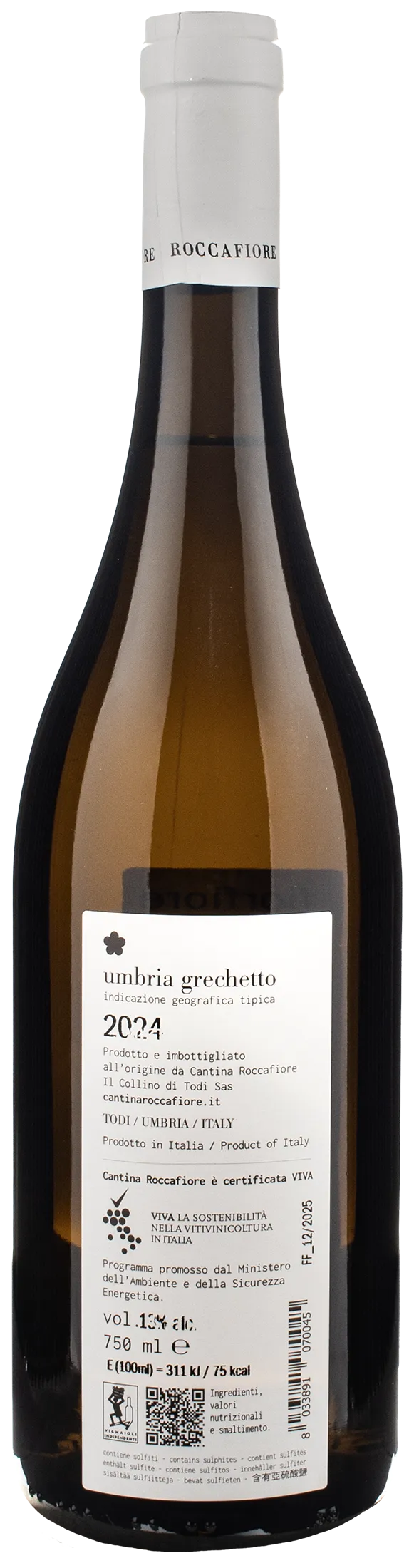
Grechetto Fiorfiore 2024
| Denomination | IGT Umbria |
|---|---|
| Size | 0,75 l |
| Alcohol content | 13.0% by volume |
| Area | Umbria (Italy) |
| Grape varieties | 100% Grechetto |
| Aging | 12 months in amphorae and large Slavonian oak casks in contact with the fine lees; minimum 6 months' ageing in the bottle after bottling. |
- Wine and grapes: Dry white Umbria IGT, 100% Grechetto di Todi, 13% vol.
- Olfactory profile: Pineapple, apple, kiwi, yellow flowers, sweet spices and balsamic notes.
- Palate: Fresh, savoury and mineral, creamy texture, long finish.
- Winemaking method: Manual harvesting, indigenous yeasts, no malolactic fermentation.
- Awards and pairings: Gambero Rosso Tre Bicchieri; ideal with shellfish and white meats.
Description
What type of wine it is
Fiorfiore is a still white wine with a Typical Geographical Indication (IGT) by Roccafiore, produced in Umbria with Grechetto di Todi grapes fermented spontaneously and aged in amphorae and large barrels. The bouquet offers hints of pineapple, Golden Delicious apple and kiwi combined with nuances of yellow flowers, while on the palate it is fresh, supported by a distinct minerality and a creamy texture. The elegant finish, enriched by notes of white chocolate and toasted nuts, makes it the ideal accompaniment for shellfish dishes, soft cheeses and white meats.
Where it comes from
The grapes come from a single hillside vineyard located in the Todi area, surrounded by woodland. The vines, Guyot-trained and north-east facing, take root in soils composed of white clays, calcareous marls, gypsum and gravel. This pedological composition gives the wine a vibrant freshness and an unmistakable savoury character. Vineyard management follows the strict principles of organic and sustainable agriculture, in full respect of the local ecosystem. This care results in a wine with remarkable expressive vitality, which is certified vegan.
How it is produced
Vinification begins with a manual harvest and a gentle pressing of the bunches. After natural settling of the musts, spontaneous fermentation, triggered by indigenous yeasts, begins in temperature-controlled steel tanks and concludes in the maturation vessels. To preserve the natural acidity of the Grechetto, malolactic fermentation is not carried out. The wine ages for twelve months in amphorae and large Slavonian oak barrels, remaining in contact with the fine lees for a long period. The process concludes with a final rest of six months, which is fundamental for perfectly harmonising the flavour components.
History and Trivia
Fiorfiore is a Grechetto Umbria IGT from Cantina Roccafiore, a pure expression of the Todi hills. Produced from a single vineyard cultivated under organic management, this vegan wine is created from a manual harvest and spontaneous fermentation with indigenous yeasts. To preserve its natural freshness, it does not undergo malolactic fermentation and matures for twelve months in amphorae and large oak barrels on the fine lees, before a final period of rest in the bottle. An excellence of vibrant elegance, it has been awarded the prestigious Tre Bicchieri (Three Glasses) by Gambero Rosso.
Awards
-
2024
 3
3This guide is highly respected and offers the most comprehensive review of Italian wines. It has a long tradition and is based on blind tastings carried out by over 100 experts.
Tasting notes
Perfume

Color
Taste
Serve at:
10 - 12 °C
Longevity:
03 - 05 years
- Start up year: 2000
- Oenologist: Alessandro Biancolin
- Bottles produced: 100.000
- Hectares: 16
Respect for the locations is expressed in the exaltation of the unique facets of the native vines that have been grown here for centuries. This requires commitment, technique and knowledge, resulting in the production of wines bearing an unmistakable style and identity, in which the bold choices, patience and attention are distilled. This is to underline that Roccafiore does not pursue innovation as means to an end but rather as the realisation of visions and objectives that Leonardo and Luca seek to faithfully convey in their wines. Read more


| Name | Cantina Roccafiore Grechetto Fiorfiore 2024 |
|---|---|
| Type | White green still |
| Denomination | Umbria IGT |
| Vintage | 2024 |
| Size | 0,75 l |
| Alcohol content | 13.0% by volume |
| Grape varieties | 100% Grechetto |
| Country | Italy |
| Region | Umbria |
| Vendor | Cantina Roccafiore |
| Story | History and Trivia Fiorfiore is a Grechetto Umbria IGT from Cantina Roccafiore, a pure expression of the Todi hills. Produced from a single vineyard cultivated under organic management, this vegan wine is created from a manual harvest and spontaneous fermentation with indigenous yeasts. To preserve its natural freshness, it does not undergo malolactic fermentation and matures for twelve months in amphorae and large oak barrels on the fine lees, before a final period of rest in the bottle. An excellence of vibrant elegance, it has been awarded the prestigious Tre Bicchieri (Three Glasses) by Gambero Rosso. |
| Origin | Todi, Umbria, Italy |
| Soil composition | White clays, calcareous marls, gypsum and a portion of gravel |
| Cultivation system | Guyot |
| Plants per hectare | 6,500 vines/ha |
| Yield per hectare | 80 quintals per hectare |
| Harvest | Manual harvesting in the second ten days of September |
| Production technique | Spontaneous fermentation with indigenous yeasts; ageing in amphora and in large Slavonian oak barrels |
| Wine making | Manual harvest in the second ten days of September; gentle pressing; natural clarification/settling of the musts; spontaneous fermentation with indigenous yeasts at a controlled temperature in steel tanks (completed in maturation vessels); no malolactic fermentation; 12 months of ageing in amphorae and large Slavonian oak barrels in contact with the fine lees; a further minimum rest of 6 months in the bottle. |
| Aging | 12 months in amphorae and large Slavonian oak casks in contact with the fine lees; minimum 6 months' ageing in the bottle after bottling. |
| Total acidity | 6.3 gr/L |
| Residual sugar | 1.2 gr/L |
| Allergens | Contains sulphites |