


Tenuta Campo di Sasso (Biserno)
Insoglio del Cinghiale 2024
| Denomination | IGT Toscana |
|---|---|
| Size | 1,50 l |
| Alcohol content | 13.5% by volume |
| Area | Tuscany (Italy) |
| Grape varieties | Cabernet Franc, Cabernet Sauvignon, Merlot, Petit Verdot, Syrah |
| Aging | 40% of the wine was aged for 4 months in used French oak barriques. |
- Magnum format: Still red Tuscany IGT, 2024 vintage, 1.5 L, 13.5% vol.
- Blend: Primarily Syrah, with Merlot, Cabernet Franc, Cabernet Sauvignon and Petit Verdot
- Aromas and flavours: Notes of forest fruits, peppery spices, Mediterranean herbs and soft tannins
- Production: Fermentation for 14-21 days at 25-28 °C, then 4 months in used French oak
- Service and awards: Decant for 1 hour; ideal until 2031. 90 pts Decanter, 92 pts Wine Spectator
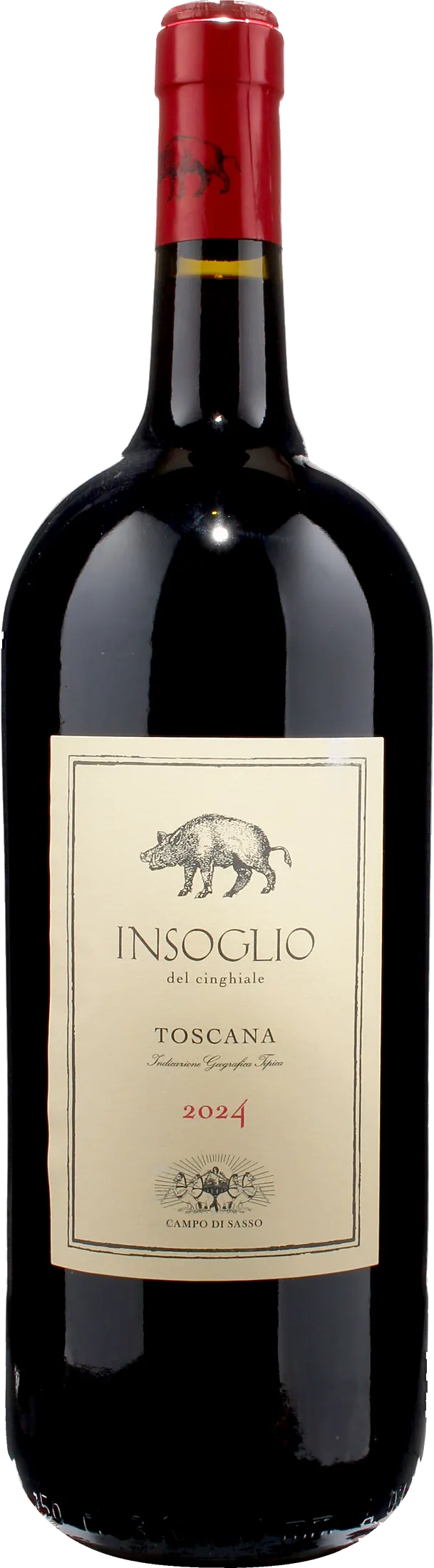

Description
What type of wine it is
Tenuta Campo di Sasso’s Insoglio del Cinghiale is a still red wine that faithfully expresses the character of Tuscany. It is born from a careful blend of Syrah, Merlot, Cabernet Franc, Cabernet Sauvignon and Petit Verdot, distinguishing itself with a medium body and fine tannins. Intense notes of forest fruits and peppery spices emerge on the nose, alongside hints of Mediterranean scrub and light toasting. The measured contribution of wood integrates perfectly into the fruity texture, offering a sip with a balanced profile and excellent prospects for evolution over time.
Where it comes from
The vineyards of origin are located in Bibbona, at Tenuta Campo di Sasso, rooted in soils where clay, local conglomerates and warm sandy areas alternate. The vines are cultivated using spurred cordon training to ensure optimal and consistent ripening. The territory’s climatic conditions offer a perfect balance between rainfall and bright days, a fundamental element for the preservation of varietal aromas. This natural pedoclimatic combination gives the palate a well-defined acidity, which supports the wine, making it dynamic, smooth and of fine persistence.
How it is produced
The vinification process involves a careful selection of the bunches on a vibrating belt, followed by soft pressing. Temperature-controlled fermentation allows for a slow and calibrated extraction, useful for obtaining soft tannins and a clear expression of the fruit. Malolactic fermentation is divided between oak barrels and stainless steel to reconcile roundness and formal elegance. The final ageing again employs both French wood and steel, an approach aimed at protecting and highlighting the natural aromatic freshness that characterises this red.
History and interesting facts
Born in Bibbona, at Biserno's Tenuta Campo di Sasso estate, this celebrated Tuscan red represents the signature wine that launched the project inaugurated in 2003. The captivating Insoglio del Cinghiale Magnum 2024, thanks to an atypical and cool vintage, expresses an intense aromatic profile and a lively acidity. Appreciated by critics and made iconic by the wild boar on the label, it establishes itself as a formidable Toscana IGT.
Awards
-
2024
 90
90/100
Decanter is a wine and lifestyle magazine, published monthly in around 90 countries. The magazine includes industry news, classic guides and advice on wine and spirits.
-
2024
 89
89/100
The prestigious international wine guide from the renowned Robert Parker, the world's most experienced and trusted wine taster.
-
2024
 92
92/100
Wine spectator is the most influential wine guide on the internet.
Tasting notes

Perfume

Color

Taste
Serve at:
14 -16 °C
Longevity:
05 - 10 years
Decanting time:
1 hour
- Hectares: 56
The terroir is predominantly sandy, and the microclimate is influenced by proximi- ty to the Tyrrhenian Sea: at Campo di Sasso, sea breezes blow constantly, reducing humidity and softening the hot summer temperatures in the vineyard, resulting in perfect grape ripening. In addition to Syrah—a historic variety for Campo di Sasso—Merlot, Sangiovese, and Petit Verdot are grown for red wines, and Vermentino for white wines.
The wines of Campo di Sasso express the territory with elegance and immediacy. Read more



| Name | Campo Di Sasso Insoglio del Cinghiale Magnum 2024 |
|---|---|
| Type | Red still |
| Denomination | Toscana IGT |
| Vintage | 2024 |
| Size | 1,50 l |
| Alcohol content | 13.5% by volume |
| Grape varieties | Cabernet Franc, Cabernet Sauvignon, Merlot, Petit Verdot, Syrah |
| Country | Italy |
| Region | Tuscany |
| Vendor | Tenuta Campo di Sasso (Biserno) |
| Story | History and interesting facts Born in Bibbona, at Biserno's Tenuta Campo di Sasso estate, this celebrated Tuscan red represents the signature wine that launched the project inaugurated in 2003. The captivating Insoglio del Cinghiale Magnum 2024, thanks to an atypical and cool vintage, expresses an intense aromatic profile and a lively acidity. Appreciated by critics and made iconic by the wild boar on the label, it establishes itself as a formidable Toscana IGT. |
| Origin | Bibbona (Livorno) |
| Soil composition | The soil is partly clayey, partly composed of Bolgheri conglomerate and warmer sandy soils suitable for Syrah. |
| Cultivation system | Spurred cordon |
| Plants per hectare | Six thousand five hundred |
| Harvest | From 10 September to 9 October. |
| Fermentation temperature | 25–28 °C |
| Fermentation | 14–21 days |
| Production technique | Selection of the grapes on a vibrating belt; destemming and soft pressing; fermentation for 14–21 days at 25–28 °C; malolactic fermentation (10% in oak casks, the rest in stainless steel); ageing of part of the wine for 4 months in used French oak barriques. |
| Wine making | The grapes were strictly selected on a vibrating conveyor belt in the cellar; they were subsequently destemmed and gently crushed. Fermentation took place for 14–21 days at 25–28 °C. 10% of the wine underwent malolactic fermentation in oak barrels, with the remainder in stainless steel. |
| Aging | 40% of the wine was aged for 4 months in used French oak barriques. |
| Total acidity | 5.7 gr/L |
| PH | 3.66 |
| Allergens | Contains sulphites |