


Bibi Graetz
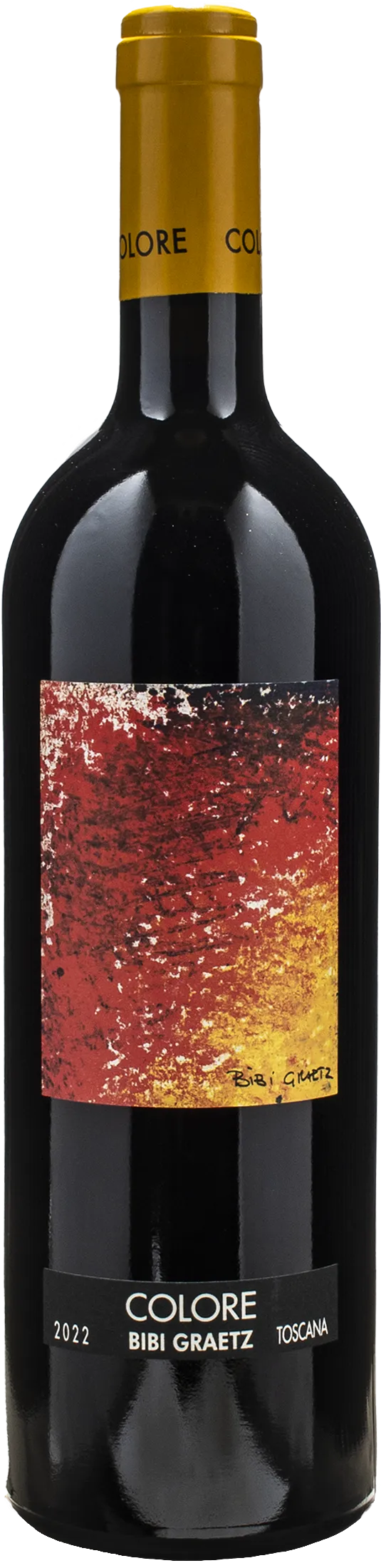
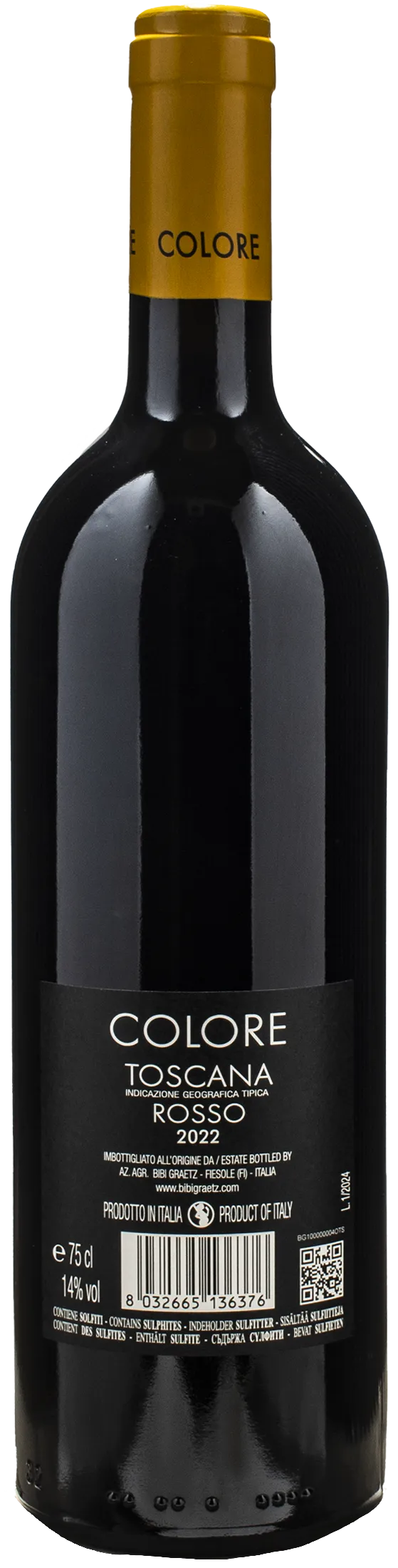
Colore Toscana Rosso 2022
| Denomination | IGT Toscana |
|---|---|
| Size | 0,75 l |
| Alcohol content | 14.0% by volume |
| Area | Tuscany (Italy) |
| Grape varieties | 80% Sangiovese, 10% Canaiolo Nero, 10% Colorino |
| Aging | Extended ageing in barriques (18 months) |
| Other years | 2016 , 2020 |
- Blend: Sangiovese with Canaiolo Nero and Colorino, Toscana Indicazione Geografica Tipica red
- Old vines: grapes sourced from vines over 70 years old, trained using bush vine and Guyot methods
- Fermentation: spontaneous with indigenous yeasts, parcels vinified separately
- Ageing: 18 months in barriques and casks, with malolactic fermentation in wood
- Awards: 100 out of 100 James Suckling, 98 Decanter, 95 Robert Parker
Description
What kind of wine it is
Colore Toscana Rosso, crafted by Bibi Graetz, is a pure expression of Sangiovese, Canaiolo Nero and Colorino. Visually, it displays a bright ruby red hue with purple highlights, revealing a complex bouquet ranging from floral notes of rose to hints of blackberry, cocoa and Mediterranean scrub. On the palate, it is warm and energetic, supported by a vibrant freshness and noble tannins that are perfectly integrated. This wine, persistent and long-lived, pairs ideally with robust meat dishes, red meats and mature cheeses, best served after an hour of decanting.
Where it comes from
This red originates from selected plots located in the most renowned areas of Tuscany, including Lamole, Vincigliata, Olmo and Siena. The wine's profile draws strength from vines over seventy years old, trained as bush vines and Guyot on poor soils. Here, the presence of galestro and clay combines with sand and stones, creating the ideal conditions for environmentally respectful viticulture. This combination of soil and climate ensures a tense aromatic yield, giving the fruit extraordinary concentration and fully reflecting the essence of the Tuscan territory.
How it is produced
The process begins with a rigorous double manual selection of the bunches, both in the vineyard and on sorting tables. The must undergoes a spontaneous fermentation with indigenous yeasts, carried out separately for each individual plot in open barriques, steel or truncated conical vats. The cap management involves manual punching down and pumping over, calibrated for optimal extraction. The wine is then aged in wooden barrels and barriques for eighteen months, during which malolactic fermentation is completed. The various components are finally tasted to define the final blend, capable of expressing extreme elegance.
History and Curiosities
Colore Toscana Rosso 2022 is the prestigious Grand Vin of Bibi Graetz, an outstanding wine that encapsulates the authentic soul of the Tuscan terroir. Produced from old vines over 70 years old grown on galestro soils, this wine is born from spontaneous fermentation followed by 18 months of ageing in barriques. On the palate, it releases a refined energy, offering vibrant freshness, noble tannins and enveloping aromas of red fruits and spices. An unforgettable sensory experience, crowned by the prestigious score of 100 points from James Suckling.
Awards
-
2022
 98
98/100
Decanter is a wine and lifestyle magazine, published monthly in around 90 countries. The magazine includes industry news, classic guides and advice on wine and spirits.
-
2022
 100
100/100
James Suckling is an influential American wine critic and journalist who worked at Wine Spectator for 30 years. He left the magazine in 2010 to start his own website and guidebook (JamesSuckling.com). He specialises in Italian and Bordeaux wines.
-
2022
 96
96/100
The prestigious international wine guide from the renowned Robert Parker, the world's most experienced and trusted wine taster.
-
2022
 94
94/100
Vinous is the online guide from Antonio Galloni, one of the world's leading wine connoisseurs.
Tasting notes

Perfume

Color

Taste
Serve at:
16 - 18 °C
Longevity:
15 - 25 years
Decanting time:
1 hour
- Start up year: 2000
- Oenologist: Bibi Graetz
- Bottles produced: 400.000
- Hectares: 70
Red grapes are cultivated on the hillsides above Florence and sourced from prime sites in the Chianti Classico region, such as Montefili and Lamole. His whites from the island of Giglio are also an inspiration, proving that Tuscany can make great white wine, as well as red. You have an opportunity to experience an amazing place where art, beauty and a unique winery become a setting for one of the best wine productions on the Tuscan and global scene. Read more


| Name | Bibi Graetz Colore Toscana Rosso 2022 |
|---|---|
| Type | Red green still |
| Denomination | Toscana IGT |
| Vintage | 2022 |
| Size | 0,75 l |
| Alcohol content | 14.0% by volume |
| Grape varieties | 80% Sangiovese, 10% Canaiolo Nero, 10% Colorino |
| Country | Italy |
| Region | Tuscany |
| Vendor | Bibi Graetz |
| Story | History and Curiosities Colore Toscana Rosso 2022 is the prestigious Grand Vin of Bibi Graetz, an outstanding wine that encapsulates the authentic soul of the Tuscan terroir. Produced from old vines over 70 years old grown on galestro soils, this wine is born from spontaneous fermentation followed by 18 months of ageing in barriques. On the palate, it releases a refined energy, offering vibrant freshness, noble tannins and enveloping aromas of red fruits and spices. An unforgettable sensory experience, crowned by the prestigious score of 100 points from James Suckling. |
| Origin | Vineyards of Siena, Lamole and Vincigliata |
| Soil composition | Galestro and clay, poor soils mixed with sand and stones |
| Cultivation system | Alberello and Guyot |
| Production technique | Spontaneous fermentation with indigenous yeasts |
| Wine making | After an initial selection in the vineyard, a second selection of the grapes takes place in the winery on sorting tables. Spontaneous fermentation with indigenous yeasts occurs in open 225-litre barriques, stainless steel tanks or 50-hectolitre truncated conical wooden vats, with parcels vinified separately. During the peak of fermentation, 3 pump-overs or manual punch-downs are carried out daily (up to 8 manual punch-downs per day), then gradually reduced to 1 after about a week. After fermentation, the wine is transferred to barriques and wooden casks where malolactic fermentation takes place. |
| Aging | Extended ageing in barriques (18 months) |
| Allergens | Contains sulphites |